
"I'm doing this all for my dead wife" - William Wallace, balls deep in the Princess of Wales.
We use cookies to personalize your experience and analyze traffic. You can opt out at any time.

Regie Mel Gibson
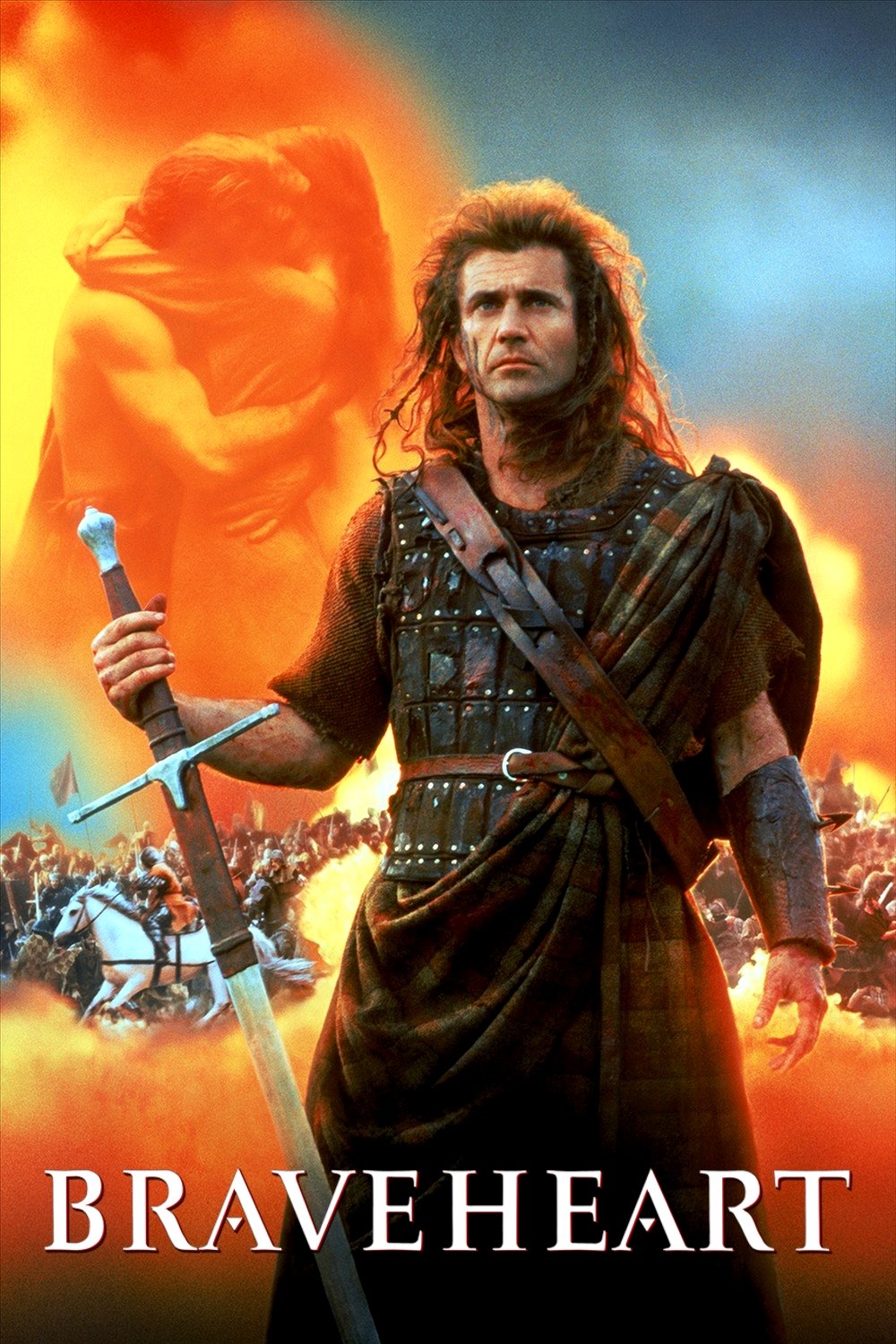
An acclaimed, spectacular action.
Ende des 13. Jahrhunderts ermorden britische Besatzer die geliebte Frau des in Schottland lebenden William Wallace. Von dieser Tat aufgestachelt und blind vor Rache, mobilisiert er seine schottischen Landleute für einen Feldzug gegen die übermächtigen Engländer. Trotz ihrer nicht nur zahlenmäßigen Unterlegenheit schafft man das Unfassbare und besiegt die Armee des britischen Königs. Nach dem Sieg stehen jedoch nicht alle Schotten hinter Wallace und verraten ihren Freiheitskämpfer.
Heute keine Spielzeiten für Braveheart in Los Angeles.
Spielzeiten zu Braveheart, jeden Morgen aktualisiert
Wähle dein Kino und bekomm einen Hinweis, bevor der Film aus dem Programm fällt.


"I'm doing this all for my dead wife" - William Wallace, balls deep in the Princess of Wales.

poor horses :(

I apologize in advance for coming across as an even bigger pedantic dick than usual, but I just cannot step over this film's fabricated history lesson.I know, I know, historical accuracy is always a tricky thing and most films present a romanticised version of events. But this film portrays 'recent' history from a rather well documented time period. And it isn't so much the small things that were changed for cinematic convenience that bother me, it's the big things. So it's not the fact that the Scots didn't wear kilts in those days, nor did they paint their faces. There are many of those things in it, changed for the audience's understanding. Search the internet and you'll find lists upon lists of them. No, it's not the small inconsequential alterations, it's the big ones, the complete and utter fabrications that annoy me to no end. Princess Isabelle of France never met Wallace and she was four years old at the time. The romantic subplot never happened and is a lie. Why is it in this film? Because of some misguided notion that a big story like this needs a love angle? No. If a story isn't worth telling, don't tell it, let alone add things to it.Robert the Bruce didn't betray Wallace. He actually supported him. Again, this is added for the film's sake not the story or the depiction of what happened. It is embellishments like this that rub me the wrong way. As a storyteller you have a certain responsibility and when you tell a story like this, being dubious in the margins is fine, but not in the main meat of the story. I won't bore you with other examples, but these two represent the main problem I have with this film. The real story is interesting enough on its own, these additions cheapen the intentions of this film and make it come across as a desperate suitor trying for its audience's hand a bit too eagerly.As a film there is enough to enjoy though. Gibson gives the story a bit too much running time, but he handles the action sequences really well, which are probably the strongest feature of this film. He probably should have cast someone Scottish for the main role, but I guess that little idiosyncrasy is ironically fitting.
A Scottish warrior seeks vengeance against the English after his bride is murdered, eventually leading a rebellion for his nation's independence.
Mel Gibson directed this 1995 historical epic, which won the Academy Award for Best Picture.
Yes, it won five Academy Awards, including Best Picture and Best Director.