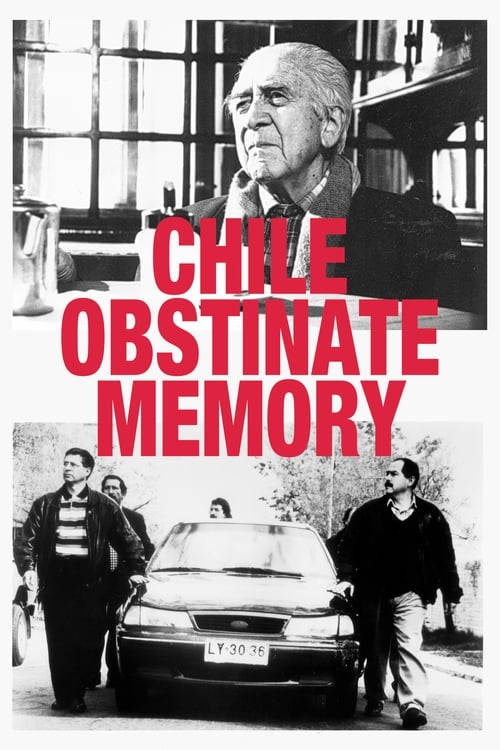

☆"You can't progress without dreams, because dreams are the way we understand life."☆It's probably no surprise to learn that all three parts of Patricio Guzmán's The Battle of Chile were forbidden to air in the filmmaker's home country during General Augusto Pinochet's fascist regime. Only in 1997 could he finally return to Chile to screen his landmark film.The feature Chile: la memoria obstinada ["Chile, Obstinate Memory"] is the documentation of this screening, a hopeful postscript to the events of the 1970s which he filmed, analyzed, and saw crew die and exiled for creating.The trauma of his youth and of an entire generation couldn't be reconciled even in the most basic ways because of those not able to return to Santiago. Now, more than two decades later, with the film in hand and some of his crew and contemporaries at his side, Guzmán intends to finally show the work that not only documents the fall of a democratically-elected leader but the resilience of the socialist revolution amidst the violence and chaos of those times. In Chile, Obstinate Memory he first catches up with men who fought with Allende in the Presidential Palace and others who maintained the struggle even after Pinochet's junta took power, as they view still photos from the attack and overthrow which they had never seen before. But when The Battle of Chile is screened for both this group and the generation of Chileans who come of age during the fascist era, we see the contrasts. The older men remember a Chile of freedom and promise, peaceful revolution and people's power; the younger citizens were brainwashed ("grown up in ignorance" as Guzmán says, through no fault of their own) into believing it was necessary to crush this Left-aligned government to keep the country from collapse. History is written by the victors, especially when the conquered are all killed or disappeared. As one reviewer noted, it "draws back the curtain on the consequences of erasures of history…as eloquent in its silences as in its words."Short clips of the film are shown again to us, as we also watch Chilean audiences witnessing this renowned documentary for the first time. Tears of joy, tears of sorrow; cries of solidarity, cries of anguish. There's a happy scene where a group of 50-somethings keep pausing the movie to point out their comrades and themselves. There's a shocking scene where a group of 20-somethings seem to learn the real history that had never been allowed to be taught to them.Then there's Guzmán's only living relative, his 80-year-old Uncle Ignacio. He held onto the film reels in late 1973 while his nephew was imprisoned, and Swedes were able to smuggle the film out of the country for Guzmán to edit later. This one man was responsible for keeping the reels safe before they could be relinquished to friendly hands.History is big and broad and complicated, but sometimes it's just one man's choice at the right moment.Added to Patricio Guzmán ranked.