
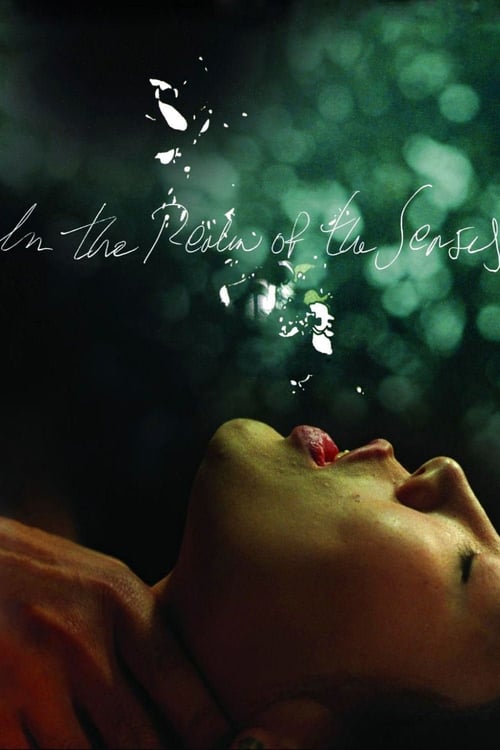




The key moment comes at about one hour and twenty minutes into the film, where Kichi (for the first time in the film, I think?) walks outside by himself, and we see marching soldiers and children waving Japanese nationalist flags. Kichi looks downward - maybe in shame, maybe in protest, maybe both. But this moment recontextualizes everything that has come before and contextualizes everything that will come: this hidden world that Sada and Kichi create - the 'realm of the senses' so to speak, is one made not as an extension of culture, but as a kind of suspension from it. Not just sex, but love becomes a reaction against the world. To be offended by this film, one really must be a real prude. On revisiting there only seems a kind of all-encompassing romanticism to this film, a romanticism which attacks the most base ideas of matrimony, proprietary and purtianicalism. Sada does come to Kichi as a servant woman, so we begin with a traditional master-slave dialectic. But they both willingly choose to leave the traditional constructs, finding an equal footing with each other in the bedroom, subtracted from the cruelty of the world itself. The dynamic becomes reversed in the bedroom, to the point where Sada becomes master, and Kichi becomes slave - willingly so for both. This even effects one's own viewing experience - there are few things in cinema that are more disempowering for a man's eyes than a knife merely in the same shot as a penis. If Kichi chooses to die willingly, it's probably because of the joint realization that this paradise has no future within such a horrible world. So the ending - almost read as though a newspaper headline, is all the more moving: "The sympathy of the public made her strangely popular." And suddenly we realize it's not just a national question, but a universalist one. (Addendum written June 29 2026, 8 years after typed this: I think I was off the mark here and was trying to express something more complex to put into words - I have a far more moving - quite deeply so - perspective now)I don't know if I can call this the greatest film ever made, but I can say with a good bit of certainty that it is the freest. And for all the nudity, its strangely the images of Sada and Kichi walking around in the middle of the night in a torrential downpour, laughing like nothing else exists, antagonizing those who come around them for the hell of it - moments like this almost made me cry, because I found it so beautiful.









