


and who knows maybe same way a palestine girl is writing her dairy too!! and i feel so emotional whenever this thought comes...
Wir nutzen Cookies, um dein Erlebnis persönlicher zu machen und den Traffic zu messen. Du kannst jederzeit widersprechen.
Die Familie Frank versteckt sich in einem Amsterdamer Hinterhaus vor den Nationalsozialisten. In dieser Zeit schreibt Anne an ihrem später weltbekannt gewordenen Tagebuch. Doch bald darauf wird das Versteck entdeckt, und die jüdischen Versteckten in die Konzentrationslager deportiert. Anne Frank stirbt in Bergen-Belsen.
Heute keine Spielzeiten für The Diary of Anne Frank in Los Angeles.
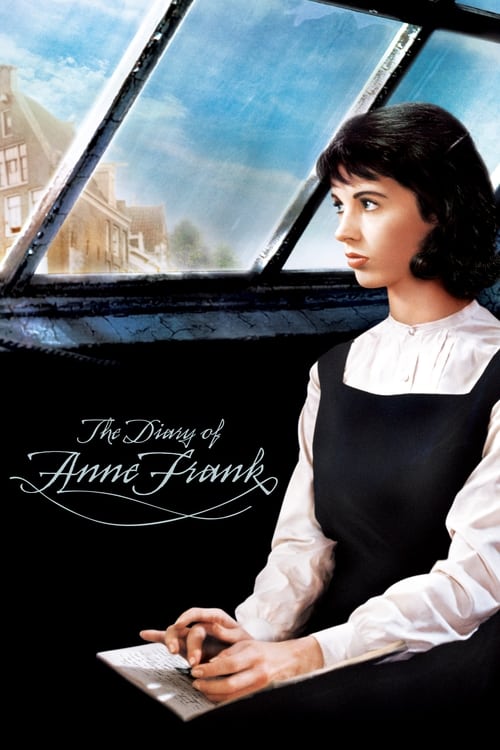
Spielzeiten zu The Diary of Anne Frank, jeden Morgen aktualisiert
Wähle dein Kino und bekomm einen Hinweis, bevor der Film aus dem Programm fällt.


and who knows maybe same way a palestine girl is writing her dairy too!! and i feel so emotional whenever this thought comes...

Over a month ago me and my girfriend went over to Amsterdam.Not knowing much about the Anne Frank story it was an absolute treat to hear the story and then walking into the main secret rooms where they hid for many years until caught. Anne's pictures are still pinned to the walls and of course her precious diary which is heavily protected sitting in a glass case. Plenty of other artifacts which her family used during the hideout.I couldn't stop thinking about it after the week, it is an upsetting story but incredible of how they kept hidden away for so long.Hence why I had to watch this film being the closest to how they survived and lived in these few rooms without anybody realising they were there.How anybody can say this movie is too long is beyond me, try sitting in a house with 3 rooms, over two years with no net,one copy of this and nothing else apart from food to eat.This is how Anne and her friends/family lived together for all this time with hardly anything to read and remember...no TV!I fully recommend anyone to goto the Anne Frank house in Amsterdam. But my advice is to book it before you go.Shelley Winters said if she wins the oscar it will be given to the Anne Frank museum. This is sitting in a glass cabinet after the tour.A solid movie with great performances overall.

43/100[originally written on my blog]Randomized queue decreed that the time had finally come to get this Best Picture nominee + Cannes Competition title out of the way. Knew it was hopeless, though, as I acted in the play in high school (as Otto Frank) and disliked it even then, Pulitzer notwithstanding. Sure enough, the film has the same monotonous rhythm, alternating bland scenes of cabin-fever bickering with repetitive "suspenseful" interludes in which the Annex's inhabitants are threatened with discovery; the knowledge that it actually happened can only ennoble Goodrich and Hackett's turgid sense of drama (they were comic writers at heart) so much. But I was unprepared for the sheer awfulness of Millie Perkins, who captures none of Anne's restless intelligence and is distractingly "adorable" (especially when whining about how homely she supposedly is—they might as well have gone whole hog and cast Audrey Hepburn in the role). Stevens works hard to make this single-room production cinematic, and he does achieve one genuinely stunning effect: Anne and Peter's first kiss, which occurs in deep silhouette, after which Anne opens the door and light suddenly floods her astonished face. (A rare nice moment from Perkins, too, who seems well suited for less harrowing tales of young love.) Really, the whole idea of a dramatic work based on Anne's diary is deeply misguided, except insofar as it gives audiences an opportunity to sadly shake their heads. Barring wall-to-wall voiceover, all you've got, in lieu of a remarkable young woman's frustrated self-examination, is a bunch of people cooped up in a tiny space for a couple of years, getting on each other's nerves. For an equally tiresome current film saddled with pretty much the exact same problem, see, or rather do not see, The Forgiveness of Blood. Also, did I mention that this thing is three hours long? THREE. HOURS. LONG.
Der Film begleitet ein junges jüdisches Mädchen und ihre Familie, die jahrelang in einem engen Amsterdamer Dachboden vor dem NS-Regime untergetaucht sind.
Regie führte der US-amerikanische Filmemacher George Stevens im Jahr 1959, der dabei auf seine eigenen Dokumentarfilmerfahrungen aus dem Zweiten Weltkrieg zurückgriff.
Ja, der Film gewann mehrere Oscars, darunter für die beste Nebendarstellerin und die beste Kamera.