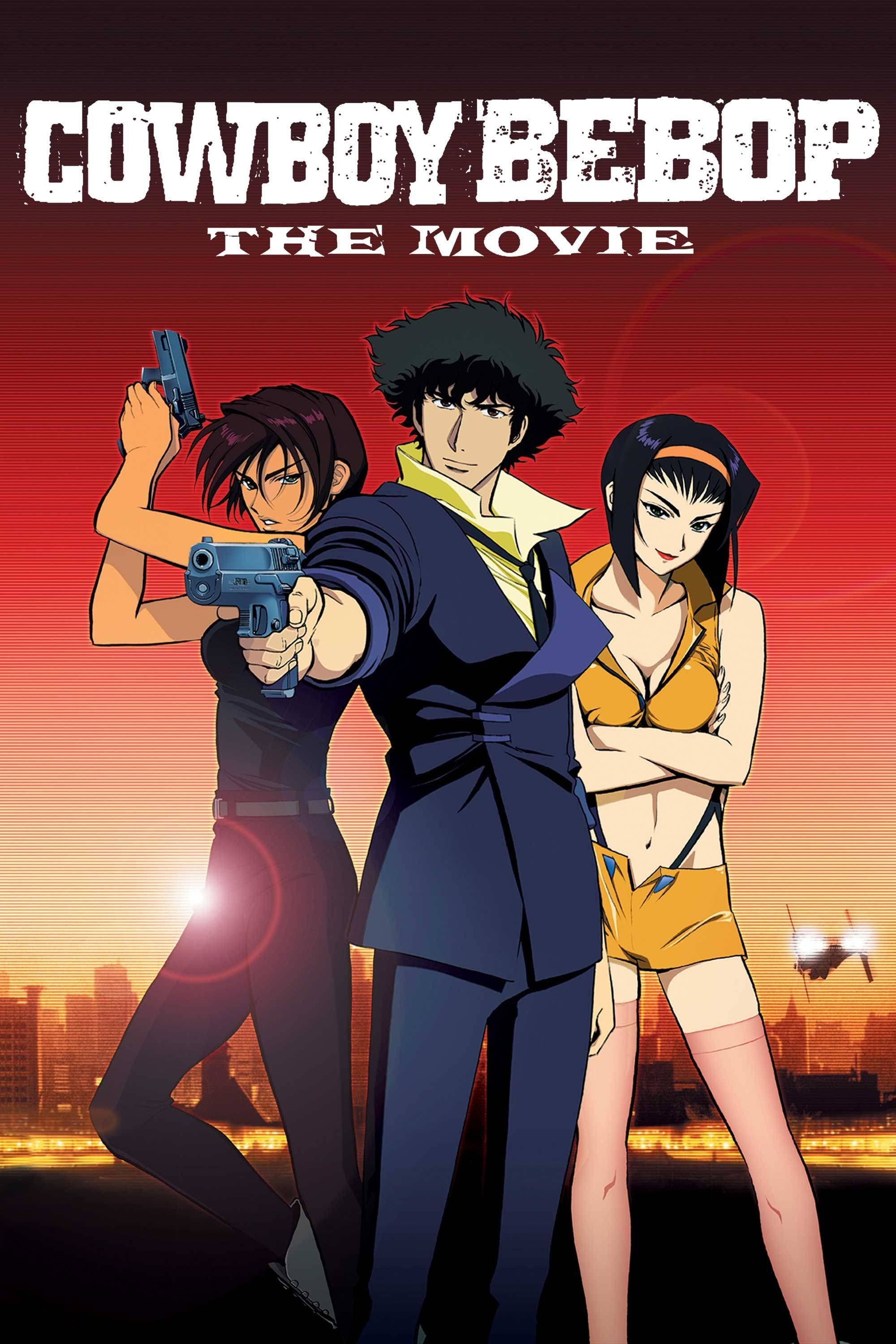
About life, of choosing the life we want to live and living fully in the present and making the most of this short life we have in the world in spite of, and because of, it being all we can do.I think, in so many ways, Knockin' on Heaven's Door is the greatest film at encapsulating this. Cowboy Bebop is known for a lot of things but one thing that always stood out to me was its dedication to verisimilitude, of portraying the little things and the little people and the little places that surround the big. I don't say 'important' for the latter because the little is important, perhaps the most important aspect to be found in the work. The action, spectacle, melodrama, dogfights, none of it matters without what's real to ground it all, and if not then what separates Bebop from any other anime? I think just that, that commitment to the world we see as we step out our doors and watch the faces in the crowd as if they were the most important people in the world before moving onto the next, the next stranger or familiar you always see around who may very well change your life forever when they cross paths with it– or remain as anonymous indelible in your continued people-watching. Humans may have migrated to the rest of the solar system in here but I've yet to see another work capture what it's like now—the long-standing now—as well as this show.The movie then takes this to a whole new level and this prerogative is evident in its opening credits. Oft referenced as "that rotoscope scene", it speaks to the great care the creators have for this verisimilitude that it actually isn't, the naturalist people and places and faces appearing that way with such visual density and likeness of motion not due to mimicry through tracing but because of such love for the little things. People running, yawning, eating hot dogs and buying newspapers and looking straight at the screen as if the camera itself is simply held by just another little person, just another face in this crowd of a place, before it ends on the silhouette of main character Spike Spiegel as he looks towards the city. This, then, is a real place, the real world, a world just as lived-in and realized as, say, New York, and it is less that the show is about these larger-than-life characters than it is these exactly-as-life people existing in it– just as you, me, and anyone else. It's a simple thing that doesn't last two minutes, but may be the most authentic piece of film there is.A while back I wrote on the work most meaningful to me, "the work which becomes a new genre itself." It's hard not to feel pulled into its setting and attached to the people that inhabit within as well as their struggles to find meaning in a life post-calamity. This last point is not so evident at first because, well, life moves on; the bills don't stop just because the world has. At an earlier point in life I felt Bebop to be a timeless work of science-fiction but as I get older I also recognize how much of its resonance resides in its factuality, that in too many ways it seems like we're also living post-calamity, a post-post-diluvian world still stuck in its pre-post-diluvian days as it idly worries and frets over a crisis that's already happened and we're all still trying to get by the crisis prior, but still: life goes on.What did it feel like to live through the past? I imagine it's a lot like what it feels now, and I imagine the future to be much the same. Existence, then, is enduring history, exerting ourselves onto history as much as it onto us even if it just means surviving its tides—much like our ancestors before and our progeny to come. But at the same time existing is not living: to truly live you have to also have the freedom to die, or, living has no purpose if it isn't a choice. You can only choose to live if you can also choose to die / you can't choose to live if you can't choose to die. Tautological, I apologize, but we forget sometimes that death gives life meaning, and given that it is the absence of everything it may be inconceivable to choose death and as a consequence it may be impossible to appreciate life in its fullness. But I think there comes a time in everyone's life where they stare death in the face in whatever form that may take and realize they've yet to fully live. Exist, certainly, but without fullness. Placidity.What does it mean then to take ownership of one's life? The answer, I'm sure, is just as myriad as there are people in the world but that's not so important as the question, of facing that question. That is the central tenet of the movie, of figuring out what one's life actually means to you and how to then best live it, take ownership of it, of living for yourself. It's too easy to be caught up in a waking dream, one where you're unable to distinguish what is real and what really matters. "I've been having a dream. And though I realize it's a dream, I still can't wake from it." A dream is a wonderful thing but it is not life.I think, then, that there is something truthful about the way this ends: a reflection of the opening credits but colored, expansed, people washed in a great rain that may be a great calamity or a great blessing but, more importantly, together. A body. Living through an historical event, as is each day, and as such the next day they live as if any other. Running, gambling, fishing, dreaming, having dreamt a shared dream the night prior to, before waking the next day to their own (in)divituated lives. Possibly just as they always have, but in facing that question, in facing death, do they find a fullness to life—even if it's just what it always was. It's the little things / it's all we can do."It was just, that he was all alone, always by himself. Never anyone to share the game. A man who lived in dreams. That's who he was."ARE YOU LIVING IN THE REAL WORLD?