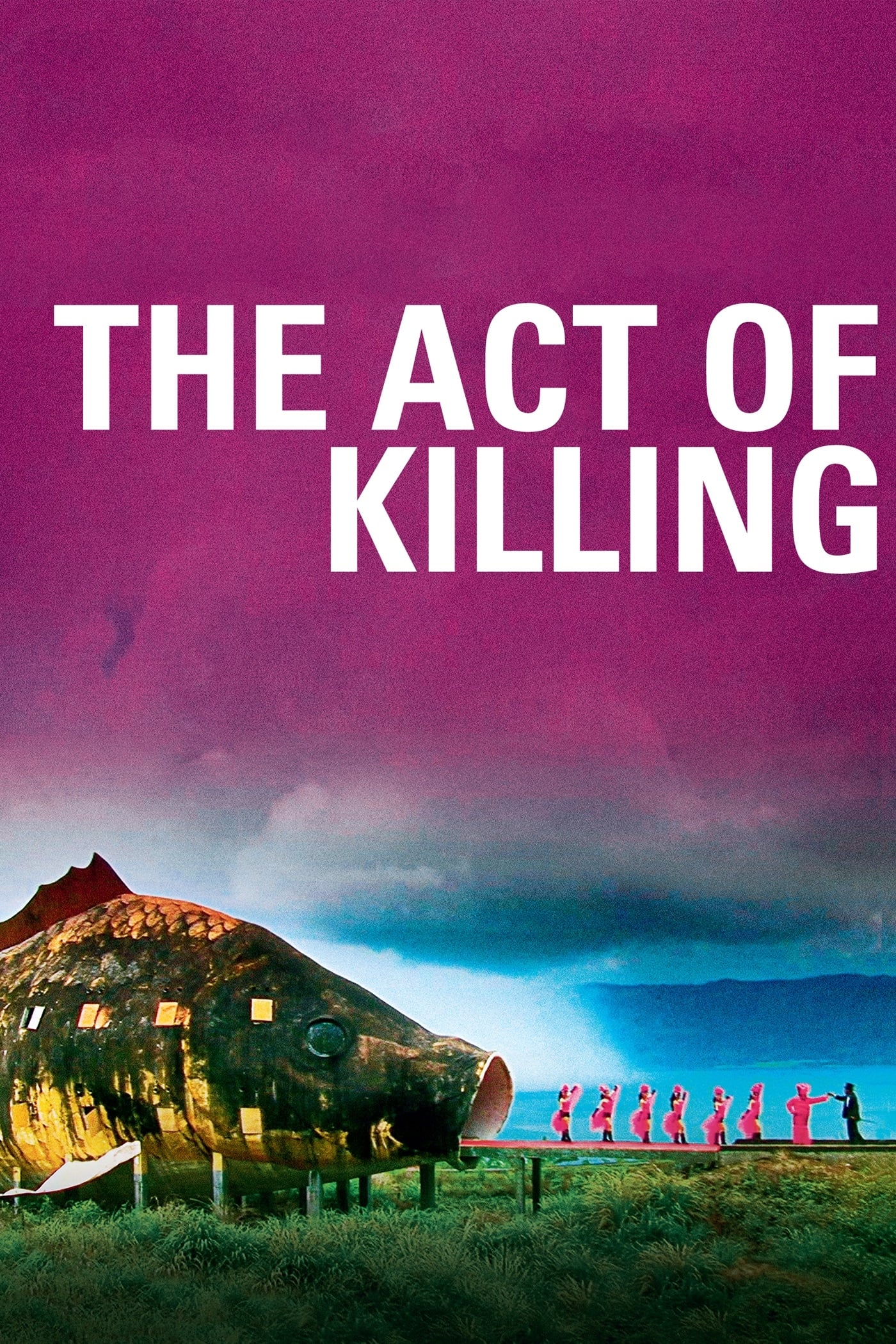
With the year drawing to a close I think it is safe to say that watching The Act of Killing has been the most profound viewing experience of 2013 for me.My country has a troubled relationship with Indonesia. We have colonized and exploited that country for a long time in the past. For Indonesian people here, that is still an open wound. The historical significance of that period for people living in Indonesia, however, is not something that many people of this generation are aware of, as brutal and demeaning as that period was.The murders of 1 million communists and Chinese in 1965, however, is something instilled in the Indonesian psyche and is still a big part of every day life there. The Act of Killing explores that period in Indonesian history, the impact it has on modern life and delves deep into the minds of some of the people responsible for so many deaths in that one horrific year.Filmmaker Oppenheimer has spent some 5 years filming in Indonesia, getting to know these characters, these unpunished mass murderers. He noticed the enormous amount of pride these men had in the horrible acts they performed. To lay that haughty pride bare, he brilliantly invited them to make a movie about that period, to have them re-enact their deeds. Oppenheimer's film documents that process and the interviews he conducted while filming.The result is terrifying, infuriating, sickening, intriguing, frustrating and above all devastating. These pompous murderers are some of the vilest human beings I have ever had the misfortune of tainting my retina with. The pride and misguided glory they feel and the joyful reminiscing when asked about how they used to go about killing people truly shows man's innate ability to be the most disgusting animals on this planet, captured in a way I have never seen before. I was shocked by the level of corruption present in Indonesian politics, a seemingly direct result of the '65-'66 killings. Political parties and paramilitary groups started working together then, enlisting gangsters and petty criminals. The shocking thing this documentary shows is that this still goes on and worse, all involved are so full of themselves they have no problem with it all being filmed.When you realize this, it is not too difficult to understand that many involved in making this film are listed as anonymous on the end credits. This group of filmmakers deserves our sincerest respect. They are fearless, surrounding themselves with criminals and mass murderers and exposing them for what they are. That amount of dedication and fearless devotion is something I am deeply in awe of.At the centre of everything lies the journey of one man called Anwar. He allegedly killed over 1000 people. It is clear from the beginning that he and Oppenheimer have a special relationship. Anwar is the only person who while filming and re-enacting his past crimes is slowly starting to feel remorse, culminating in a couple of scenes near the end in which we see a man physically manifesting repentance and grief over his past actions. He is still a proud murderer, but there seems to be a tiny speck of humanity there. Oppenheimer does not want us to feel sorry for him though, he is not concerned with that. He records without judgement, only gently giving his own stance in two occasions, one that results in one of the most ridiculous justifications of mass murder you'll ever hear and one that reduces a man to tears. A writer whose name eludes me once wrote: Man can never become an animal. He stumbles over the animal, straight into the abyss. The Act of Killing is that sentence put to film. It'll leave you questioning our species, desperately seeking for a tiny speck of light somewhere. It is essential viewing, an unbelievably important film and the best I have seen this year.
The documentarian-subject relationship can be a complicated one. I can't begin to fathom just how complex and tenuous director Joshua Oppenheimer's feelings must be for Anwar Congo, one of the most charismatic, sincere, accessible, affable... monsters... you'll ever see on screen.Strikes a blow for the ecstatic truth.
Long after watching this I am still at a loss for words and for feeling, which translates to immense praise for this documentary because its topics should be anything but. Covering the Indonesian genocide from, notably, the perspective of the perpetrators, Oppenheimer (the director of this film) convinces them to retell their stories and even re-enact their slaughter through making a film. I couldn't believe that these people were tricked by Oppenheimer until I realized, actually they know exactly what's going on. They understand they are to be filmed reminiscing upon choking people, stabbing people, beheading people, and much, much worse, and they are happy to share this with the rest of the world because to them they are right by being the "victors" of this one-sided slaughter:"We crushed their necks with wood. We hung them. We strangled them with wire. We cut off their heads. We ran them over with cars. We were allowed to do it. And, the proof is we murdered people and were never punished. The people we killed, there's nothing to be done about it. They have to accept it. Maybe I'm just trying to make myself feel better, but it works: I've never felt guilty, never been depressed, never had nightmares."It is horrifying because it is expressed with utter normalcy, these men who look like any other you'd find on the street. This is absolute evil taken form that's indistinguishable from any other human being, spoken by people who fondly remember their mass-killing days as if they were cherished memories from a happier time the same that your grandparents would eagerly share stories from their youth. How do you process something this fundamentally repellent to what most would assume to be basic human values? Reconcile the self-awareness of their actions? It is especially disconcerting when the head of the organization, Anwar Congo who claims to have personally killed a thousand people, plays the victim in his recreations and feels a tiny fraction of what it's like to be on the other side. It is disgusting and pathetic and hypocritical and pitiable, and I don't know what it is I should be feeling. It is natural to want to forgive other humans, to offer them the benefit of the doubt and think the best of them. Obviously that line is crossed somewhere on the road to a thousand murders, but am I completely wrong for feeling a tiny flicker of sympathy, a tiny belief that perhaps he really understands the overwhelming sins he has committed, knowing that he would've personally killed me and my family on-sight simply for our ethnicity? I don't know.I understand that to document something like this raises questions over ethics. Is this giving a voice and platform to exactly those we should not? Does this help inform the audience in a meaningful way? What even is the purpose of a project like this? I don't have a good answer, but after thinking about it I believe the implementation of this film is the only way it could be this effective. By coming directly from the mouths of the fascists who committed genocide, it lets them not just tell us these things to our face and in doing so de-humanizing them, but also lets us get to know them as real people instead of historical figures – simultaneously re-humanizing them. This is so critical as it makes them relatable to us, to people we know, to see that something like fascism, something this evil, can exist in anyone.This is then not a documentary for them, and to think that the point was to get them to rethink their wrongs is, I believe, incidental. It is a documentary primarily for everyone else, to remind anyone who watches in the most direct and transparent way that this is real, that these people are proud of their evils, that this can happen anywhere, and that this will happen again. This is a documentary meant for shattering the audience's preconceived notions, executed in the most truthful manner it can possibly be. There is no possible denial after witnessing first-hand The Act of Killing.