

I'll write a review for this as soon as I ditch this cop.

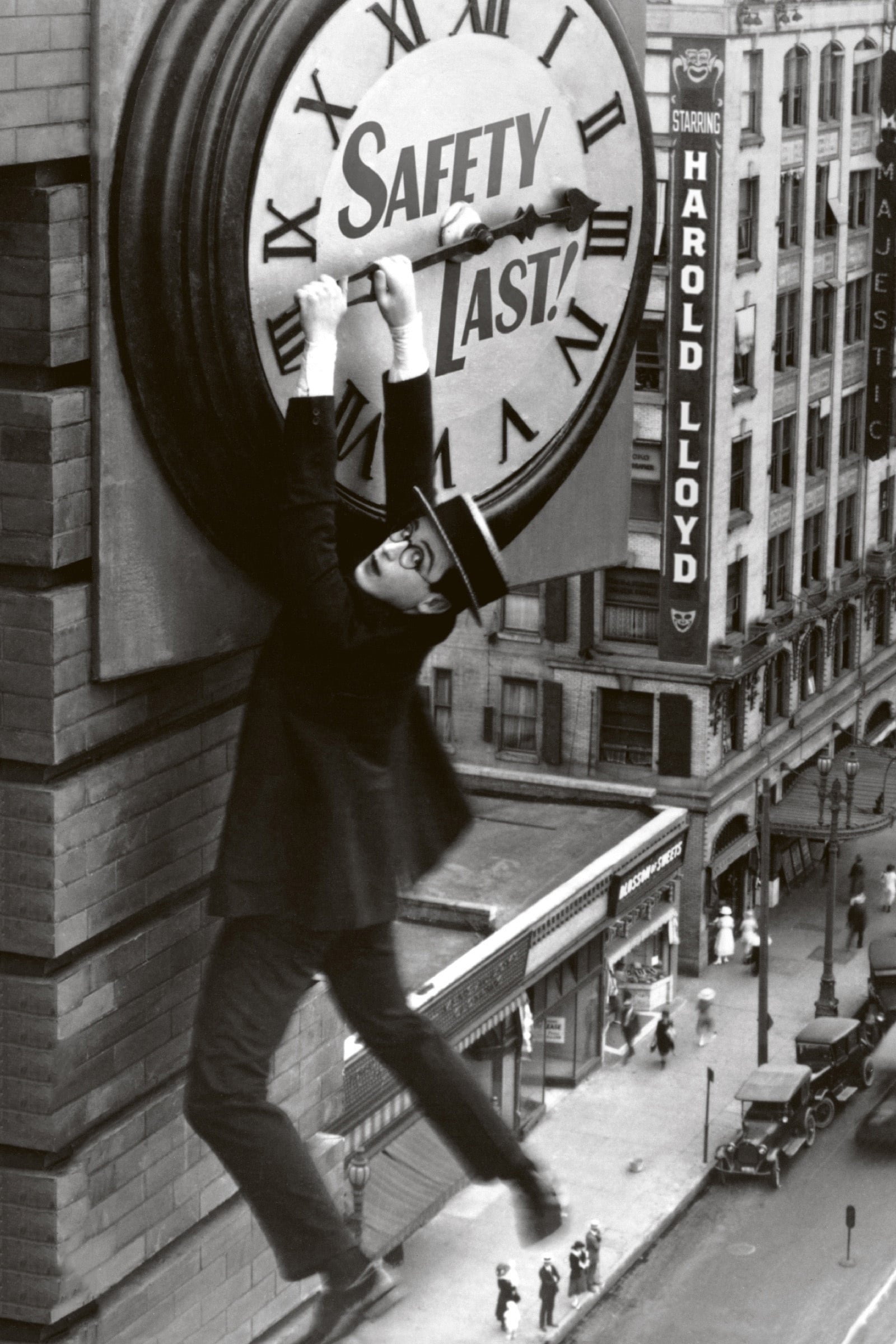
Όταν ένας υπάλληλος πολυκαταστήματος διοργανώνει έναν διαγωνισμό αναρρίχησης στην πρόσοψη ενός ψηλού κτιρίου, οι συνθήκες τον αναγκάζουν να πραγματοποιήσει ο ίδιος την επικίνδυνη ανάβαση.
Η «Μωρέ, Κουράγιο!» παίζεται σε 1 σινεμά στην πόλη Λος Άντζελες — επόμενη προβολή Κυριακή 25 Οκτωβρίου στις 14:30 στο San Gabriel Mission Playhouse.
Find more films like Μωρέ, Κουράγιο!
Showtimes in your city.


I'll write a review for this as soon as I ditch this cop.

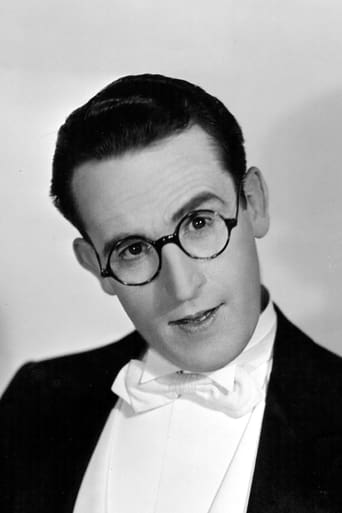
Harold Lloyd, often referred to as “The Third Genius” of silent cinema in deference to Charlie Chaplin and Buster Keaton, is seldom mentioned in the same breath as his seemingly immortal contemporaries despite the fact that he out-earned The Tramp and The Great Stone Face during their heydays, and made more films than the two of them combined. Revisiting Lloyd’s fourth feature / his masterpiece, 1922’s “Safety Last!”, it seems that Lloyd may not be remembered as one of the silent era’s greatest screen comedians in part because he may not have been a comedian at all.When discussing the fundamental core of their collaboration, Hal Roach, the producer on “Safety Last!” and the brunt of Lloyd’s greatest successes, said “Harold Lloyd worked for me because he could play a comedian. He was not a comedian. he was the best actor I ever saw being a comedian… No one worked harder than he did.”Lloyd’s signature creation was referred to as the “Glass” character, on account of the fact that he, um, sported a pair of (lensless) glasses. That’s it. Not even the character’s namesake was in any way remarkable, a notion that speaks to Lloyd’s unfailing ability to retain the human element in his work, refusing to allow his image to be subsumed by its iconography. As opposed to The Tramp, Glass was never a larger than life figure, he was resourceful and tenacious and – in “Safety Last!” – perhaps even fearless, but he wasn’t otherworldly, he could conceivably exist beyond the movies. He was expressive, yes, but never to the point at which his behavior would have become an obstacle for the empathy of his audience. His appearance was casually handsome, but ultimately unexceptional. His gait was natural, and not a waddle. His gags and theatrics were clever (and often death-defying) but they seldom involved the preternatural clumsiness of Chaplin or the frenetic chaos of Keaton. Lloyd was ordinary, and audiences loved him for that.The upward mobility of the Glass character is the American Dream in a nutshell – ostensibly unremarkable, he was self-made, relentless and utterly convinced that he deserved whatever success he might be willing to wrest for himself. The hero of “Safety Last!” (referred to only as “The Boy,” save for in an insert shot of his pay slip), is less of a comedian than he is an opportunist (much like Lloyd was, himself). From what I gather, Lloyd had an unusually broad passion for pictures, his guiding vision being only that he could see himself in them. It was through serendipity that he found his niche – the studio at which Lloyd was cranking out some one-reelers was perched at the top of a steep hill, and he noticed that – if you placed the camera just right – things worked out so as to create a perfect illusion of height, inviting him to conceive the seemingly dangerous thrill sequences for which he became famous. It’s been said that “to earn one’s living is another kind of death,” but Lloyd’s work hinged upon the kind with which all audiences are most familiar.“Safety Last!” begins with one of the cinema’s keenest conflations of work and death, as The Boy is introduced in what appears to be the gallows, where he seemingly awaits his execution. The film’s first visual gag undercuts that perception by showing The Boy to be fated for death of a different sort, as the hangman’s noose is revealed to be the trackside pickup hoop of the small-town train station from which Lloyd’s character is being shipped off to the big city to begin his blue-collar career.He bids farewell to his sweetheart (Mildred Davis, Lloyd’s actual wife), and is steamed away into the heart of metropolitan California, where he’ll be working on the first floor (figuratively and literally) for a towering department store. The Boy intends to send for his girl once he begins raking in the cash, a process he assures her won’t take very long, but his financial reality isn’t able to keep pace with the fantasies of success he perpetuates in the letters he writes home to her. In fact, the episodic series of mishaps that comprise the first half of the film find The Boy merely trying to stay employed at all – one especially memorable sequence features Lloyd being whisked away from his workplace during his ten-minute break, and being forced to connive a way back to the department store, faking an injury in order to hitch a ride from an ambulance just so that he can work for his $15 / week. Lloyd’s character is elastic, snapping back to the daily grind at the expense of a world that teems with fun and frantic adventure. Otherwise, his entire existence is confined to the De Vore Department Store and its attendant activities, trying to make a life for himself at the expense of the one he already has.All of this is ultimately little more than a prelude to the extended set-piece that dominates the film’s latter half, as The Boy is caught up in a promotional scheme in which he’ll embrace the “era of the stunt” and climb the department store building in order to attract some new business. Well, The Boy’s plan is for his friend, a natural daredevil, to be the one climbing the tower, but of course things don’t quite work out that way. The extended thrill sequence builds to one of the silent cinema’s most iconic images, as Lloyd dangles from the hands of the store’s clock, his life spared by the machinations of time (a flashbulb moment sufficiently resonant to anchor the promotional campaign for Martin Scorsese’s “Hugo” some 90 years later).In “Safety Last!,” the American Dream is complimented by the American Fantasy. After nearly 80 minutes of (often literally) hanging on for dear life, The Boy finally reaches the roof of the department store, where his wife is waiting for him (because of course she is). The payoff plays like a direct antecedent to Donkey Kong, eschewing another game’s “the princess is in another castle” mentality for the illusion of a finite ending. The immediate conflict of The Boy’s ascent is resolved, but one thing is still left hanging – will Harold reveal to his sweetheart that he is not, in fact, the store’s general manager? In a Ben Stiller movie, it’s the type of reveal that would be used to bridge the second and third acts, an unmasked deception erased by the protagonist’s climactic heroism. Perhaps it’s a moot point now that The Boy can afford to start a family in the big city, but the abruptness of the ending defiantly refuses to seal “Safety Last!” into its epoch, the story begging to be reinterpreted by future audiences.And in the years since, it has only become increasingly obvious that time has been kind to Harold Lloyd. Thanks to the preservationist efforts of a dedicated few, “Safety Last!” still looks as though it could have been shot yesterday (perhaps on an iPhone with that great 8mm app). However, the film’s contemporary feeling isn’t rooted in its immaculate presentation so much as it is Lloyd’s undaunted visual economy (i.e. the bit where The Boy watches the food he can afford fade away piece by piece) and the haplessly human nature of the Glass character, itself. It’s not a simple dichotomy of laughing at him vs. laughing with him, but rather that the laughs he inspires (of both varieties) are never in service to themselves. He’s just trying to get through it all, to keep pace with expectations. The only instance in “Safety Last!” in which a joke is made for its own sake occurs when The Boy mistakes a police officer for his old friend and knocks him over as a gag, a sequence which effectively serves as the origin story for the film’s antagonist. Whoops.The film’s anachronistic feeling of modernity is even further reinforced by recent comedies. Thanks to “Meet the Parents” and an entire genre of contemporary comedies that are dependent upon the earnest foibles and well-intentioned deceits of quietly handsome everymen – watching “Safety Last!” re-focuses our attention on the movies of the present. While Harold Lloyd may never be the defining face of his time, he was never really of his time in the first place.

For over a century (and likely many centuries to come) man's true enemy has been the forces pushing us into a literal economic climb for our life... and the dastardly pigeon.
A dedicated department store worker tries to prove his worth by organizing a high-stakes climbing stunt, only to be forced to perform the dangerous feat himself.
The film was directed by Sam Taylor and Fred C. Newmeyer in 1923, featuring legendary silent comedian Harold Lloyd in his most famous role.
Yes, this is a classic of the silent era, relying on physical gags, visual storytelling, and live orchestral accompaniment rather than spoken dialogue.
We use cookies to personalize your experience and analyze traffic. You can opt out at any time.