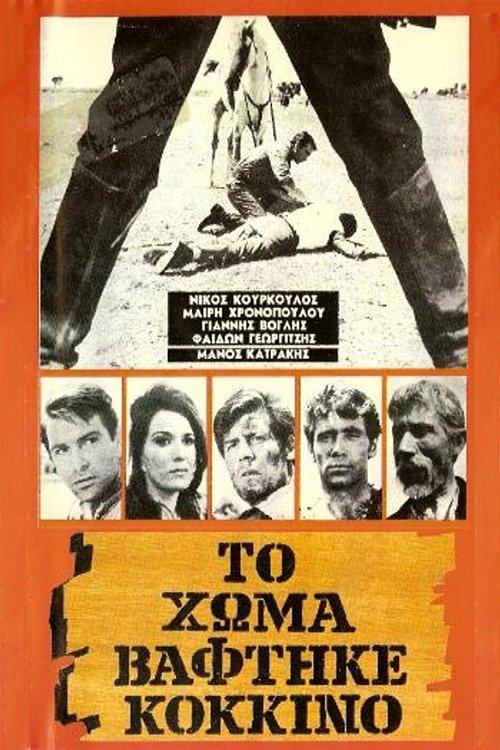




Throughout the 1960s only two Greek directors made a dent on the world cinema stage, Mihalis Kakkogiannis and Vasilis Georgiadis. Kakkogiannis' Zorba the Greek, was an international success with Anthony Quinn's Zorba becoming the cinematic embodiment of Greek ideals. Georgiadis' accomplishments were fleeting by comparison. His films The Red Lanterns (1963) and Blood On The Land (1966), both received Best Foreign Language Film nominations at the Academy Awards, only to disappear into obscurity shortly after.Released in 1966, just before the 67' military coup which enforced tough restrictions on film content. Blood On The Landis a rare Greek Western, centring on the growing conflict between peasants and wealthy-estate owners during the early 20th century. This clash is contrasted with the familial drama of the wealthy Hormova brothers, Odysseus (Nikos Kourkoulos) and Rigas (Giannis Voglis), who are ideological opposites. In the hands of a lesser screenwriter, it would've been easy to distil the films narrative into a simple paradigm of 'Good vs. Evil' but Nikos Foskolos opts for moral complexity. Sydney Pollack once said, "Good movies should be two sides of a good argument". It seems Foskolos believed that too. He doesn’t take sides, instead leaving the audience to decide who is morally just. Had this film been made a year later during the dictatorship, you can be assured that not only would it have had a definitive moral stance but it also would've glorified the peasants suffering.Blood On The Land is a near-perfect collision of sight and sound. The score by Mimis Plessas is almost operatic, perfectly complimenting the rocky terrain where cinematographer Nikos Dimopoulos masterfully moves his camera. The performances from the leads can be self-conscious at times, with both Kourkoulos and Voglis playing within type, though this is a common problem with popular Greek Cinema of the 1960s.