
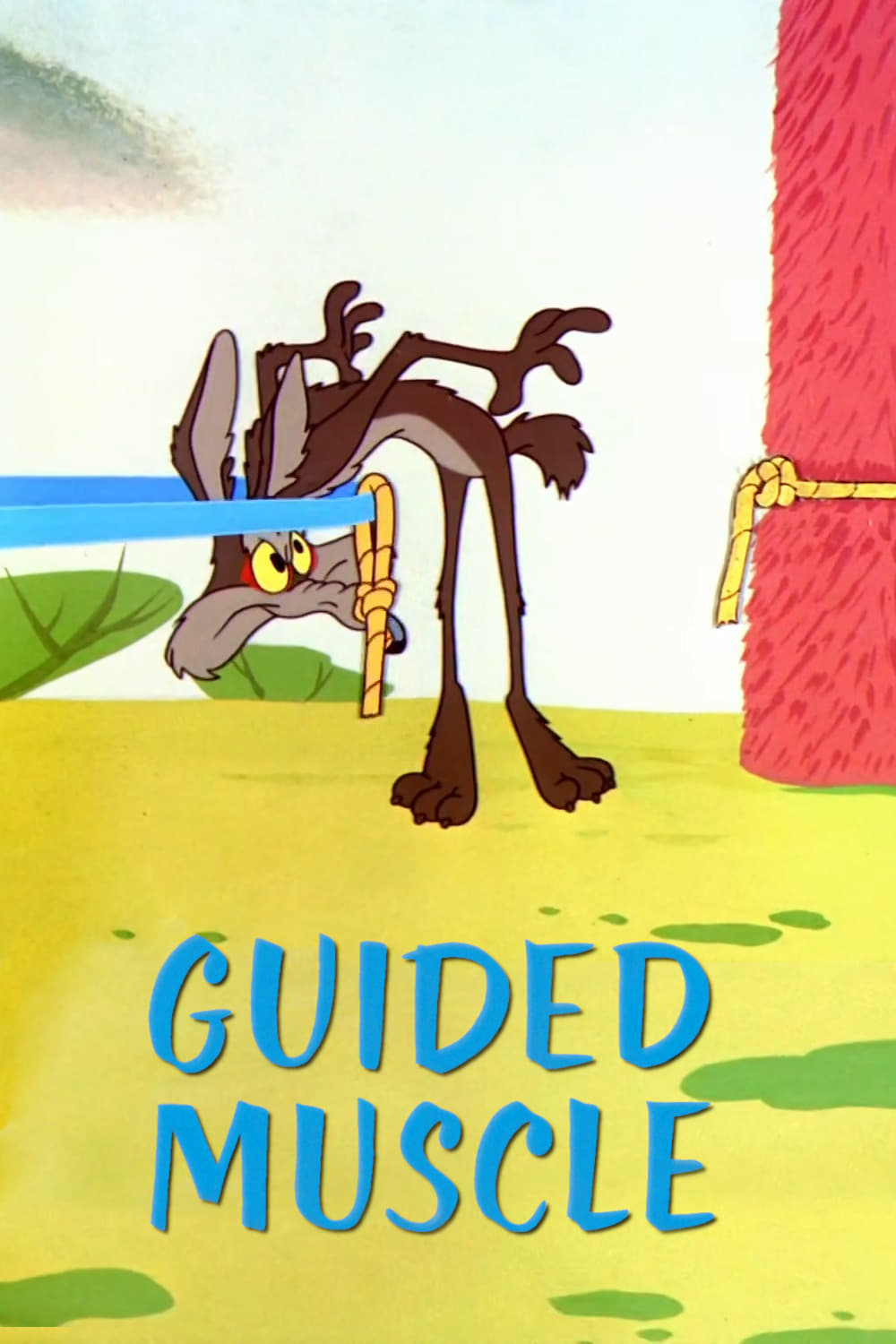
The long delay of the slingshot bit makes it so much more funny. While these shorts blend together, the best jokes often involve signs being held up.
We use cookies to personalize your experience and analyze traffic. You can opt out at any time.

Σκηνοθεσία Chuck Jones
Αστεία ταινία κινουμένων σχεδίων
Καθώς μαγειρεύει μια κονσέρβα, ο Κόγιοτ εντοπίζει ένα καλύτερο γεύμα να περνάει από δίπλα του: τον Road Runner.
Η «Guided Muscle» δεν παίζεται σε κινηματογράφους αυτή τη στιγμή.
Ακολούθησε την ταινία στην εφαρμογή για ειδοποίηση όταν προστεθούν προβολές.
Προβολές για Guided Muscle, ενημερωμένες κάθε πρωί
Διάλεξε σινεμά και πάρε υπενθύμιση πριν κατέβει.


The long delay of the slingshot bit makes it so much more funny. While these shorts blend together, the best jokes often involve signs being held up.

Like a lot of the Road Runner/Wile Coyote cartoons, the strength is the weakness - the gags are solid slapstick but the concept is the limitations. That said, the cartoon is lushly animated by Chuck Jones, and the beginning and end of the 7 minute short are genuinely noteworthy - the first thirty seconds, with Wile preparing to lovingly eat a tin can before asking himself silently what he's doing with his life has all the grace of good Steinbeck, before shifting into giving up what you have to chase what you don't mode with the Runner's arrival, and the end of the short, with Wile breaking the 4th wall to end the pursuit, kind of highlights the lie that's the ending of the other Road Runner cartoons.

Animation historian Thad Komorowski notes that this was the "last cartoon the Jones unit started before started before he was laid off", which is an enticing clue that could mean multiple things; "started" does not imply "finished", for one, so perhaps this was lying half-complete during the 1953 shutdown? For the cartoon to have been made in some kind of fuzzy in-between transition period maybe gets us somewhere to explaining the strange credit given to Philip De Guard for layouts, though he was Jones's background artist before and after the shutdown (every other time he's credited for layouts, as far as I can tell, he's also credited with the backgrounds), while Robert McKimson's background painter, Richard H. Thomas, did the backgrounds. Lot of chaotic shuffling going around in those days, but it does seem weird to have somebody besides De Guard do the backgrounds when he was right there working on the short anyways.They are, at least, excellent backgrounds and layouts: Maurice Noble may have been gone but his spirit lived on in the negative space (there's at least one layout with literally no background at all, just an empty white field) and fancifully desert-themed color palette. It's a bit simpler in its layouts than the best Coyote & Road Runner shorts, which could easily have to do with the state of the studio during its production window, but the beautiful abstraction of this series continues to evolve, even if this specific evolution ends up being in a direction that I don't think continued in quite this way after this short.Gag-wise, it's a short where I felt more engaged by the backgrounds and the mystery of why Thomas painted them than I was by the creativity of the gags, but we're still comfortably in the salad days of these characters: even a not-trying-very-hard short still has room for lots of wonderfully-timed reactions and pauses as the Coyote ponders his awful lot in life. The best of these is definitely the slingshot gag, I think, where the Coyote is able to contort himself in some beautifully-drawn poses of hapless curiosity while examining why the laws of physics have temporarily suspended themselves just to fuck with him. But the dynamite gag that ends the short is almost as perfectly timed, and leads into an especially great fourth-wall break. And the fussy, drawn-out cooking sequence at the start is a nice warm-up for the tightly-paced short to follow.
Wile E. Coyote attempts to capture the Road Runner using a variety of increasingly complex and elaborate traps in the desert, though his efforts invariably backfire.
The film was directed by Chuck Jones, a foundational figure in American animation known for his extensive work on the Looney Tunes and Merrie Melodies series.
Yes, it is a installment in the Looney Tunes series featuring the ongoing pursuit of the Road Runner by Wile E. Coyote. Watch the series on Mood.