"Is you taking notes on a criminal fucking conspiracy?" -- Stringer BellDespite its violently anti-capitalist position (which to be clear I fully endorse), this is one of the stupidest and most childishly pandering movies in recent memory, not to mention completely implausible even as a righteous cartoon. For babies.
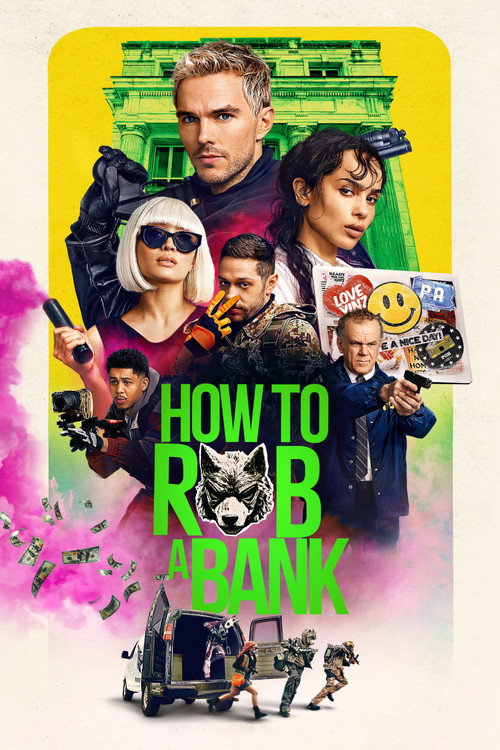
Woke 3.0 is upon us, Mr. Beast is now a furry trying to do Occupy Wall Street Heat and ending up closer to Now You See Me. Honestly, the heist crime drama is such an inherently cool subgenre that it’s baffling that someone could make one as ugly, lame and dorky as this. That’s that David Leitch magic. Laughably bad stock character shorthand writing, baffling tone that inelegantly lurches between ADD quirk and mawkish sentimentality (all the Pete Davidson troop dad stuff lmao), anti-capitalist politics as a cringey “hello fellow kids—I heard you like Hasan and TikTok” sheen designed to pacify (or maybe a psyop make revolution seem uncool?), absolutely zero style behind the camera, awful fake film imperfection transitions that feel like a YouTube plug-in, one particularly hilarious needle drop it thinks is so emotional it repeats it, and honestly, maybe worst of all, somehow there’s not even a good or memorable action/heist scene. It can’t even bring itself to harm a fictional cop or cartoonishly evil bank executive. John C. Reilly puts in a herculean effort to sell the funniest final line of a movie I've heard in some time. "Content is king" indeed, everyone say thank you Mr. Bezos! The Nicholas Hoult Bond conversation stops here.
The major Hollywood studios tend to shy away from the subject of class warfare because they know they can’t pull them off with a straight face. But young people in this country are increasingly animated by radical leftist ideas like “earning a livable wage” and “being able to buy a home before they die,” and at a certain point the movies will have to meet them where they live. Perhaps that point is now. How else to explain why Jeff Bezos would fund a Robin Hood-esque heist thriller that not only encourages its target demographic to commit armed robberies, but also kinda sorta teaches them how? (No one is going to confuse a David Leitch movie for “The Anarchist Cookbook.”) At a time when internet activists like Hasan Piker have come to occupy more space in the public imagination than Marvel superheroes, selling the masses on fanciful stories about the downward redistribution of wealth might be the billionaire class’ best protection against the threat of it actually happening in real life. It’s a lot more fun than paying a proportional tax rate, at least.Of course, the poppy and frenetic “How to Rob a Bank” wouldn’t dare to take aim at massive corporations that widen the wealth gap by destroying small businesses, normalizing exploitative labor practices, and accelerating worldwide environmental collapse. This is very specifically a film about how banks are bad and should be fucked with, an opinion that the founder of Amazon might actually share with the average ticket-buyer.And it’s not like the director of “Bullet Train” suddenly made a serious call to action that’s poised to inspire a wave of copycat robberies. Shot with all the propulsiveness of “Trainspotting” but almost none of its unbridled lust for life, Leitch’s YouTube-era fairy tale is no more dangerous to America’s power structures than “Verity” or “Project Hail Mary” (to name some of its studio’s other recent titles). Compared to the lawlessness of “Grand Theft Auto VI,” it might as well be “Nintendo Switch Sports Resort.” Still, its cast is hot, its heart is in the right place, and while the Amazon Punk of it all has a tendency to make its fantasy seem more like a sale, there’s something indivisibly real and relatable to the premise of a heist movie whose characters feel like they have to steal the most basic principles of the life they were promised.Ryan (Nicolas Hoult, channeling a very effective smidgeon of the destructive intensity that made him so terrifying in “The Order”) isn’t trying to get rich or spark a revolution, he and his accomplices just want a fair shot at the same thing that previous generations have been afforded as part of the American contract: The chance to support his family, and maybe a fair shot at revenge against the people and/or system who denied him that opportunity. In most respects, that shot has never been more unfair than it is now, but the internet — which has become the most powerful system for socioeconomic oppression this side of sharecropping — has turned attention into a currency more valuable than cash, and young people are still inventing new ways to harness those riches for themselves.For Ryan, that process starts with stealing money the old-fashioned way, as he and his four-person crew film themselves knocking off every bank in Pittsburgh (their identities protected by giant animal masks). But the cash seems to be less important than the content that it buys them, as the gang’s real passion is reserved for the splashy, hi-octane YouTube tutorials that Hugo (an upbeat Rhenzy Feliz) cuts together and posts online after each job. “You know what’s more powerful than a gun?,” Ryan says. “An audience.” That’s us! We rule.~this review continues on IndieWire~