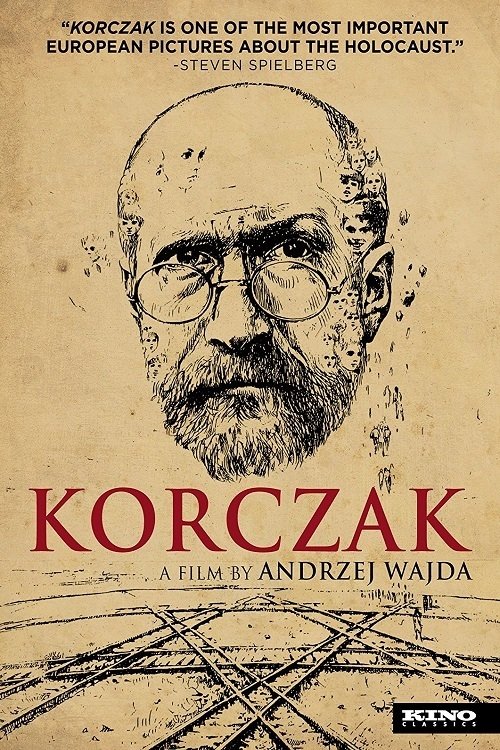


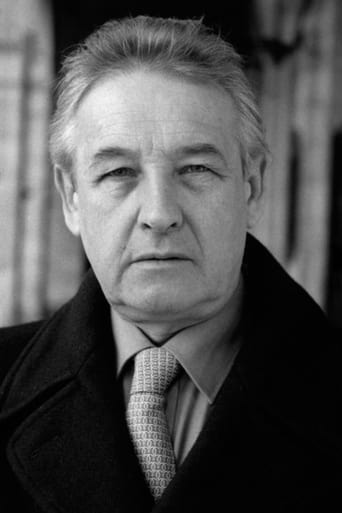




"Korczak" is a 1990 film directed by Andrzej Wajda. The film follows the true to life character of Janusz Korczak. Korczak was a pediatrician and educator who spent his efforts and energy taking care of orphans within the ghettos of Warsaw, Poland during WWII. His efforts gave a little gleam of hope and standing to the orphaned Jewish children of the ghetto, even though obviously the end result would ultimately form into dire circumstances out of his control.Obviously knowing the director's work from "Ashes and Diamonds" (1958) which is a highly revered film, I still was starting primarily with a fresh perspective due to the fact that it had been a good long while since I saw the last film. Additionally, there many years between "Ashes and Diamonds" and this, and naturally I do need to see more of Wajda's other works and plan on eventually getting around to it. I know directly that he likes to champion the Polish spirit and identity, showing its perseverance under the conditional element of strain. This is absolutely an element I saw here in the film, because yes it is about the Jewish struggle in the WWII ghettos, but also about the national identity of Poland who is getting decimated under an invading persona.Obviously, it is known that "Korczak" puts "Schindler's List" (1993) on the hot seat in terms of similarities, but truth be told I don't really take up a reason to negate one over the other. I'm easily sure that "Korczak" could have been a platform to push Spielberg forward in telling a similar story, even to the point where people can claim motives of copying, but I fully appreciate the two films still on different levels. Once again it goes back to Wajda's identity of the Polish homeland which feels to be forefront here in "Korczak". Also "Korczak" kept on reminding me of François Truffaut and a "The 400 Blows" (1959) energy as children hold big ownership over the narrative spotlight. Sure there are the stories of children in "Schindler's List", but its all displayed different. So in the end, I think "Korczak" is quite the proper film in its delivery. I can easily see the connective elements between it and "Schindler's List" but can coexist with both being good within their own measure. Trying to stop cross comparing here and just focus solely on "Korczak", I like that the story had a lot of balance to tell the child's perspective. There is a relationship of duality between Korczak himself and the orphans he cares for, and to clearly see the extent we as the viewer are given visual aid from both perspectives. Ultimately a gem of a film that I think does deserve more viewing.