

Killing yourself to own the libs.
Χρησιμοποιούμε cookies για να προσαρμόζουμε την εμπειρία σου και να μετράμε την επισκεψιμότητα. Μπορείς να εξαιρεθείς όποτε θέλεις.
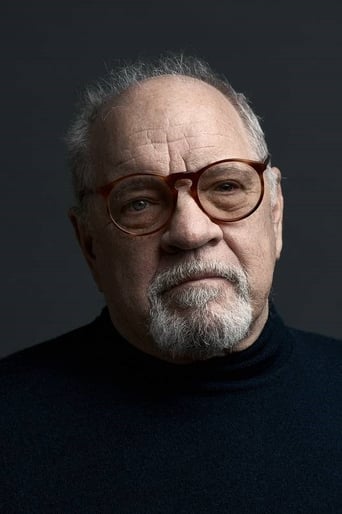
Σκηνοθεσία Paul Schrader
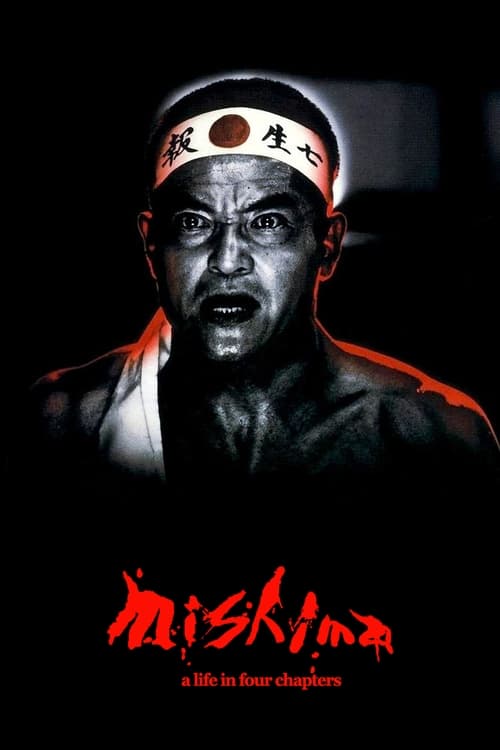
Mishima: A Life in Four Chapters
Θρυλικό, ατμοσφαιρικό δράμα
Μια μυθοπλαστική απεικόνιση της ζωής του Ιάπωνα συγγραφέα Γιούκιο Μισίμα, η οποία συνδυάζει δραματοποιήσεις τριών μυθιστορημάτων του με τα γεγονότα της 25ης Νοεμβρίου 1970.
Δεν υπάρχουν προβολές της «Μισίμα: Μια ζωή σε τέσσερα κεφάλαια» στο Άμστερνταμ σήμερα.
Προβολές για Μισίμα: Μια ζωή σε τέσσερα κεφάλαια, ενημερωμένες κάθε πρωί
Διάλεξε σινεμά και πάρε υπενθύμιση πριν κατέβει.


Killing yourself to own the libs.

"A man's desire to become beautiful is also a desire for death."Harmonizes actual events of Mishima's life, his nationalism, his persona as an artist, his fiction, and his own self-image, ultimately fully empathizing with his will to power and violent transcendence.

The Harmony of the Pen and the Sword, or "turn your life into a line of poetry written with a splash of blood."At first glance, a biopic about a celebrated and controversial Japanese author might not seem like an obvious move for Paul Schrader but I think once you realize the kind of troubled, lonely, self-destructive outsider minds he’s attracted to and obsessed with (ones frequently looking to transcend their earthly punishments and express their ideas in writing/their rage in cathartic, cleansing, redemptive violence that they train and prepare for) it becomes quite clear what brought him to make a film about Yukio Mishima... And how lucky we are that the very stylized work of the man himself and the contradictory life he led defied any sort of film resembling the conventional dramatic approach of the greatest hits biopic. I am in complete awe at how Schrader manages to structure this around ostensibly fractured parts, ones that turn his strange, subjective idiosyncrasies (his meticulous view of beauty/aesthetics, his self-destructive obsession with it and the male body, his complex relationship to his sexuality, and eventual violent right-wing extremism), that seem to defy logic or understanding into this fluid dream of expression that coheres them like a formal jigsaw puzzle...Placing together 1) The early formative years as a sickly child, to his brief time in the army, to his rise as a figure of Japanese art/intellectualism told in intimate black & white autobiographical memories (that resemble the deliberate and disciplined classical film styles of the Japanese eras they take place in from the 30-50s, some looking like Ozu, Kurosawa, Mizoguchi, etc) that show us how he came to possess his feelings of isolation, queerness, and a few of the disturbing political/military ideas he would accumulate… 2) A series of surreal, imaginative and decadent adaptations of his actual fiction in which he sometimes more cogently rehearsed many of those ideas alongside the more tormented, taboo feelings he felt he couldn’t express in real life. And 3) A naturalistic, present-day, and fatalistic view of Nov. 25th, 1970: his last day alive, when he tried to pull off his notorious and gruesome coup, a final bloody display of all his ideas coming to synchronized fruition in ritual suicide captured in handheld chaotic, confusing realism of a European political/historical procedural-thriller. All of this beautifully rendered in the gorgeous stylized photography of John Bailey, the boldly expressionistically theatrical sets by Eiko Ishioka (splashes of saturated colors, expressionist shapes, bizarre play-within-a-play dreaminess), and of course Phillip Glass' all-timer operatic symphony of a score, filled with dramatic romanticism and a harrowing bombastic energy that's both fearful and excited by what's unfolding in front of us. By all usual definitions, this should be an incredibly disorienting or inelegant work but Schrader’s ultimate achievement is that it’s the complete opposite. It flows and builds and collapses in such a controlled, visionary montage it's overwhelming in its clarity. Taking a man whose suicide shocked and confused the world and showing us through pure cinema how all we had to do was read between the lines to see it was all there the entire time. His ideology of art, craft, and beauty (and the shaping/transforming of the world through words); his extension of that ideology to the fragile, inherently impermanent human form (which becomes destructive when they don't cleanly align: "even the most beautiful body is destroyed by age—you must preserve it, commit suicide at the height of your beauty”); his obsession with Japanese tradition and military, and how violent political action could be the ultimate canvas ("I want to explode like a rocket for the emperor, light the sky for an instant and disappear”) ... An outsider who felt he had no place in the world and couldn't transform it to match his vision so he instead methodically built himself into and became a gruesome masterpiece ("the body precedes language"... "art is a shadow, stage blood is not enough.”) This movie so vividly and empathetically captures that drive to create and destroy that I find it immensely moving. It would've been so easy to go for the horrible, pathetic shock the final stretch sets up but instead, Schrader opts for grace and transcendence, even if it's only in his head.Not just one of the greatest ever filmed biopics, but one of the greatest works of any medium about an artist.Full discussion on ep 284 of my podcast SLEAZOIDS.
Η ταινία συνδέει τα βιογραφικά γεγονότα από την τελευταία ημέρα της ζωής ενός διακεκριμένου Ιάπωνα συγγραφέα με στιλιζαρισμένες δραματοποιήσεις τριών μυθιστορημάτων του.
Ο Paul Schrader σκηνοθέτησε αυτό το βιογραφικό δράμα του 1985, το οποίο περιλαμβάνει μια ξεχωριστή μουσική επένδυση από τον Philip Glass.
Η ταινία έκανε πρεμιέρα στο Φεστιβάλ Καννών το 1985, όπου κέρδισε το βραβεία Καλύτερης Καλλιτεχνικής Συνεισφοράς.