





The most beautiful film about a foot fetish.
Σκηνοθεσία Kamal Amrohi
Pakeezah
Ατμοσφαιρική μουσική ταινία με διθυραμβικές κριτικές
Μια όμορφη εταίρα δεν μπορεί να ξεφύγει από τον κύκλο της πορνείας μέχρι που ένας δασοφύλακας την ερωτεύεται. Δυστυχώς, οι πλούσιοι γονείς του αντιτίθενται στην ένωση.
Η «Πακιζά» παίζεται σε 1 σινεμά στο Λονδίνο - επόμενη προβολή Κυριακή 18 Οκτωβρίου στις 10:45 στο BFI IMAX.
Επόμενες προβολές: Κυριακή 18 Οκτωβρίου.
Πλήρες πρόγραμμα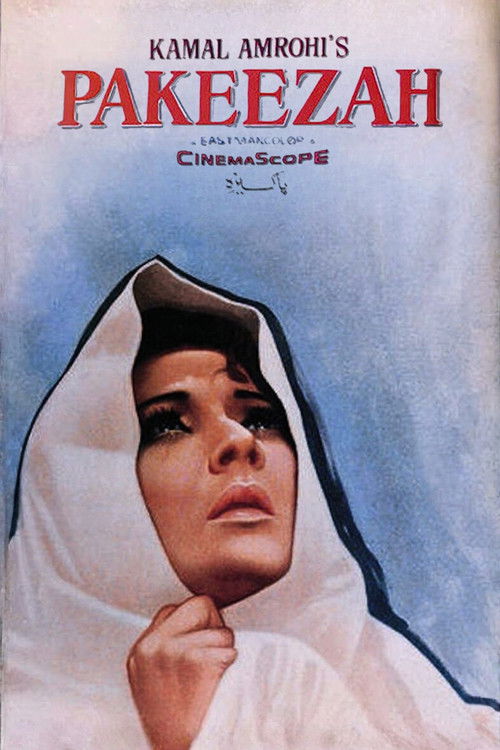
Προβολές για Πακιζά, ενημερωμένες κάθε πρωί
Διάλεξε σινεμά και πάρε υπενθύμιση πριν κατέβει.
The most beautiful film about a foot fetish.

quintessentially a '50s film that feels like it belongs somewhere right in the middle of what could be categorized as bollywood's two divides of post-partition (1947 onwards) and post-liberation (1971 onwards) eras. the films within these periods present their heroines pretty differently from each other—and it took a while but these characterizations eventually started to follow a more liberating pattern. women could be seen playing a multitude of dramatic roles and filling in the shoes of masala primadonnas; sridevi and shabana made it onto the scene, taking charge of an era in which the body was a much more essential part of a heroine's success. the stylistic transition from one era to the other might have been sudden and drastic but the post-partition era's eponymous female performers' (nargis, madhubala and obviously meena) pioneering acts track as the catalysts which inflected the shift of public consciousness into the post-liberation era's femme renaissance: these women embodied beauty and symbolized the purity of their lands, their delicacy and seraphic physicality spoke of innocence and chastity but they were also afforded empathetic ambiguity which eventually led them to freedom from the patriarchal trap of existing to represent a set of values. between the threads of amrohi's masterly tapestry of denial and redemption, the heroine suffers in silence—society is ruled by the post-partition era's older generation and lucknow exists as an aristocratic breeding ground of muslim imagination: with its sprawling luxurious roads; on which grossly affluent nawabs and their paramours pass by in sequined palanquins, even their languages are extravagant and the people are all strikingly beautiful, the song and dance is magnificent but the imams and toxic aunties are always there to preserve the culture. at this point, the distancing of muslim culture and community from the mainstream of indian society reflected the anxieties of a film industry that was attempting to renegotiate and redefine the representation of the indian muslim in the context of a post-partition india and what's interesting to me about all this is that a film which can be labelled so conveniently and shelved away as a transitional cultural artifact may very well be the most beautiful, spectacularly horny cinematic work in south asian film history!!! sahibjaan's incredible first encounter with salim illustrates indian cinema's representation of sexuality through alternate modes of expression—often confusingly limited by certain audiences to the musical elements—those disguised moments of sexual excitement which establish that the veiled female form is much more enticing than a woman in the nude. as he sits down to wrap a handkerchief around a cut on his ankle, his gaze becomes transfixed on her feet. he picks up the book that she's reading and turns to the page marked by the feather; reciting the moody self deprecative poetry she had fallen asleep to, before he decides to leave her a note detailing just how much he loves her feet without looking away from them for even a second and it's.... 😳 i don't even know wtf i'm writing anymore bro just watch the damn movie!!!

when you are desired endlessly but loved conditionally, admired by everyone except as a person.
Παρακολουθεί μια εταίρα ονόματι Sahibjaan η οποία παραμένει εγκλωβισμένη στη ζωή της πορνείας έως ότου ένας δασοφύλακας την ερωτευτεί παρά τις οικογενειακές αντιδράσεις.
Σκηνοθετήθηκε από τον Kamal Amrohi και κυκλοφόρησε το 1972 έπειτα από μια φημισμένη, μακροχρόνια περίοδο παραγωγής.
Ώρες προβολών στο Mood.







