


Just a moment...Enable JavaScript and cookies to continue
Χρησιμοποιούμε cookies για να προσαρμόζουμε την εμπειρία σου και να μετράμε την επισκεψιμότητα. Μπορείς να εξαιρεθείς όποτε θέλεις.
Ο Ντιουκ Μπερν, ένας πρώην μεγαλοεγκληματίας που μετρά τρεις καταδικαστικές αποφάσεις, φοβάται να επιστρέψει στην παρανομία επειδή μια τέταρτη καταδίκη θα σημαίνει ισόβια κάθειρξη. Τελικά, στοιχειωμένος από το παρελθόν του και πιεζμένος από τους συνεργούς του, συμμετέχει στον σχεδιασμό μιας ληστείας θωρακισμένου αυτοκινήτου.
Δεν υπάρχουν προβολές της «Ο Μεγάλος Παίκτης» στην Αθήνα σήμερα.

Προβολές για Ο Μεγάλος Παίκτης, ενημερωμένες κάθε πρωί
Διάλεξε σινεμά και πάρε υπενθύμιση πριν κατέβει.


Just a moment...Enable JavaScript and cookies to continue

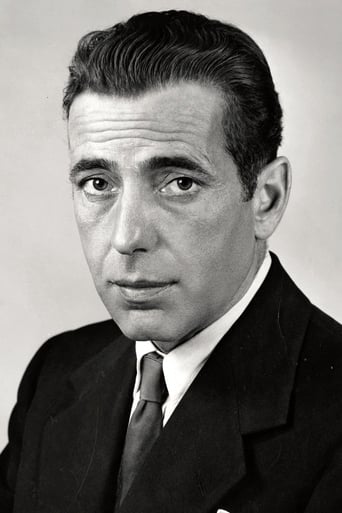
The films Humphrey Bogart made between The Maltese Falcon and Casablanca are a mixed bag. Following the successes of High Sierra and Falcon, Warner Bros knew they had a rising star on their hands, but they weren’t sure what to do with him. The Big Shot is a case in point. It has promising noir elements: Bogart plays a three-time loser who can’t get a job due to his criminal past. He becomes the prime suspect in a case of armed robbery, which he knew about but didn’t participate in. When shyster lawyer Stanley Ridges learns Bogart was with Ridges’ wife (Irene Manning) at the time of the holdup, he arranges for Bogart to take the fall anyway. Bogart is sentenced to life in prison, but he breaks out. The noir elements fade away in the middle third, as the behind-prison-bars conventions take over. Then, the final third rehashes High Sierra.Part of the problem, of course, is that noir itself was only beginning to coalesce as a coherent movement. Cinematographer Sid Hickox throws in some wonderful visual flourishes, such as a shadowy shot of Manning keeping Bogart from taking part in the robbery at gunpoint. But Manning is no femme fatale, and Bogart’s story is essentially a morality tale. As in 1940’s Stranger On The Third Floor, the most stylized sequence is an expressionistic montage that emphasizes Bogart’s psychological state when it’s clear he's going to prison for a crime he didn’t commit. Film noir really wouldn’t take the shape we all know and love for another two years. Filmmakers were still stumbling toward it in 1942.But the more fundamental problem is that neither Bogart nor the WB had quite settled on his on-screen persona yet. He’s world-weary, and he displays many of the gestures we recognize from the great films that were just on the horizon. But he’s given too much dialogue and frankly overacts at times. Near the end, there’s a scene where he and Manning are hiding out and Bogart reminisces about his character’s mother as he sits in a rocking chair and mixes pancake batter. It’s the sort of scene the WB’s screenwriters were used to writing for George Raft in order to make him more sympathetic. Bogart, however, benefited from minimalism, allowing viewers to read his regret, apprehension, and other emotions on his face and in his eyes. This role just doesn’t play to those strengths, and the choppiness of the story doesn’t help.Ultimately, it’s a footnote to the career of one of the great screen icons.

A notorious gangster, who already has three convictions on his record, pulls out of an armed robbery he planned fearing a fourth one that will send him to prison for life. Due to a series of unfortunate circumstances he is framed and found guilty again. But this time he starts plotting his escape.Humphrey Bogart's follow up to his star-making turn in "The Maltese Falcon" is a mediocre, cookie cutter, crime drama that was made with care and professionalism, but undermined by the over-reliance of its script on coincidence and contrivance, and some incredibly cheesy dramatic moments. There is some social commentary at the beginning about the difficulties former felons face when they try to reintegrate into society. But the film quickly abandons this route and becomes just another typical prison/gangster flick.Bogie is the biggest (and probably only) selling point of this obscure feature, and he delivers another solid performance. I was struck when I first saw Irene Manning. What a stunningly beautiful woman. Not a great actress, but competent enough. And there are also a handful of character actors who buoy the movie with their presence (Chick Chandler, Howard Da Silva, Stanley Ridges).It's no coincidence that despite being headlined by the biggest Hollywood star ever at the height of his fame, "The Big Shot" is totally unknown. Besides some historical interest, there is little here that would compel the average moviegoer to track it down and watch it.
Ένας πρώην εγκληματίας που προσπαθεί να ζήσει τίμια παρασύρεται απρόθυμα πίσω στον σχεδιασμό μιας επικίνδυνης ένοπλης ληστείας αυτοκινήτου.
Το πλήρες πρόγραμμα στο Mood.