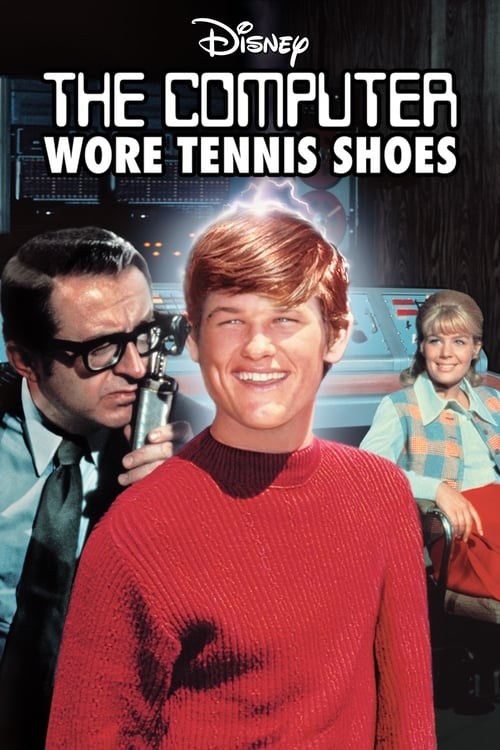
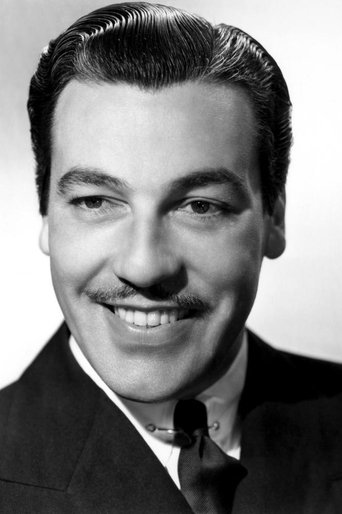
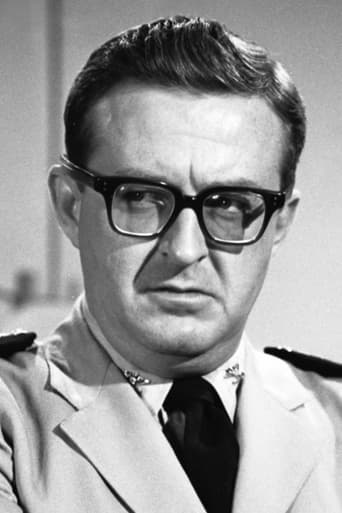
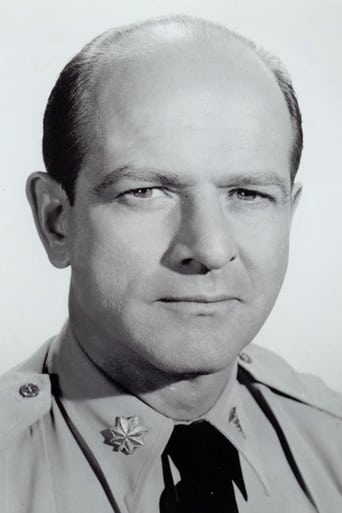
“I tell you, the trials and tribulations of administration weigh heavily on one today.”Goofy lil Disney flick! It’s not really necessary for anyone apart from weird theme song enthusiasts or Kurt Russell career completists, appreciating seeing the then 18-year-old still growing into a star as he continued working under contract to the studio, but still has fun moments as Kurt’s Dexter Riley - who gains the mind of a computer after an electrical accident in a Medfield College science lab - is torn between the competing interests of the Medfield Dean, the state college Dean and a crooked businessman, all of whom want to exploit the kid’s brain for profit. Kurt does fine, but this is actually a better showcase for character actors Cesar Romero, Joe Flynn, William Schallert, Alan Hewitt and Fritz Feld, along with Frank Webb (who tragically died in a car crash only five years later) and Michael McGreevey as two of Dexter’s buddies. As a bonus, uncredited baby Ed Begley Jr. shows up as another student in the championship round of a trivia competition at the end of the film.Let’s pretend that Disney does not condone performing for an audience while suffering from a potential traumatic brain injury, like Dexter does in his final showdown, but hey, the hospital can wait when there’s a fortune on the line.“You know, it’s a great idea doing something for the school, but next time let’s do something easy, like hijacking a Cuban airline.”
This fun sci-fi comedy was an early lead role for Kurt Russell: even fairly early on in his career Russell showed that he had the ability to hold a film together, playing an average student who gains all the knowledge of a computer—and becomes a genius—after getting struck by lightning. There’s a real charm to these live action 60s/ 70s Disney comedies, a lot of that coming from investing in the silliness of their premises. This one has fun taking its big high concept idea and running with it, Dexter’s abilities getting him into trouble with a local gangster (Caesar Romero in an entertainingly energetic villainous turn). It’s a great little snapshot of college life at the time, and I think that’s where the film shines, as once Dexter actually gets these powers this story doesn’t quite know where to go. Even with a sci-fi twist, it’s all a little too slow to capitalise on what’s set up here: I guess the problem is that making Dexter such a genius means the character isn’t the most interesting (and even a little unlikeable) so a lot of the conflict has to happen around him, but it’s still quite a cute film. There’s a good-naturedness to the story that helps to carry it along, and—even when the energy isn’t always the strongest—it manages to even out into a fun romp with its own spin on the story told here.
CW: middle/high school, white supremacy, bullying, dysphoria, body image, self-esteem, trans stuffIn school, starting in middle school, I was on what we called the scholars bowl team. You probably called it quiz bowl, if you were at any other American school. Anyway, it (along with math team--yes, I was and am a nerd, I am sure you've been aware of this from the start) was what I was good at. It was central to my acquiring confidence in the midst of my hellacious first puberty and adolescence. I felt assaulted on all sides by bullies (like that kid who called me a Mexican [your guess is as good as mine], told me he had joined the Klan, and tried to run me over once). I was fighting dysphoria (oh god PE was a misery the idea that anyone would see my body was just agony). I was afraid of myself (I had this great hoodie that some kid asked me if it was girl's clothing, and I never wore it but the once because of that). I was coming off a bad period that started around third grade (when I just basically stopped doing homework and couldn't really function for reasons that are still unclear--but still acing every test) that ended around fifth grade, and, of course, the usual anxieties of preteen and early teenage years were surfacing. Self-confidence had an uphill battle with me. My older brother had joined the math team. I had no idea what that even was until he joined it, but it established a pattern, a path, something I could try for. I had no idea if I was good at math--I had good grades, but. I took the test and made it in, though. Then, scholars bowl came along. I can't recall how I heard about it, but even more than the math team--which I enjoyed and found a few close friends in--scholars bowl was something that I thrived at. I never really studied for it. I pursued my own interests and paid attention in class and generally just knew things, and this weird mixture of trivia and academic accomplishment became something I kinda lived for. I was able to show myself to be worthy, to prove, calculably, that I was intelligent and better than others. I was good at it; I was able to compete. It became an end unto itself.Once I got to college, it didn't even occur to me there was a college version of it until it was far too late to try out my freshman year. I had gotten into other things instead. It wasn't some idea of starting over, though. It was just that like everything else about my high school and middle school years, scholars bowl served a purpose I no longer needed once I got away from Cullman. I wouldn't realize until much later that my desire to leave there had as much to do with my need to actualize my gender as it did the repressive atmosphere of smalltown Alabama. Scholars bowl just fell by the wayside, forgotten in the turmoil of college. I'm not that great at trivia games anymore, I don't think; I've forgotten too much. (And no, I never go to fucking bar trivia--gross.)Regardless, it played a huge role in my life for about six years, and I have a soft spot for it and all the proximate competitions portrayed in media (including panel shows and Jeopardy!, which I also used to be very good at). Seeing this absurd portrayal, therefore, was much more fun for me than I think for others with different experiences. Half of the things they bring up, I don't remember or never knew enough to fact check, though I am sure that half of it's probably either wrong or outdated. It's still fun; it still has flashed of that old feeling of competition and knowledge that made me briefly happy in the fog of confusion. The biggest complaint I have is that there wasn't more of it. It doesn't matter how ridiculous the rest of it is--actually, much of that absurdity just makes it more fun--nor how pointless or dull some of the in-between moments get. It's a complete narrative mess with very rare moments of visual worth (there's a part where Kurt Russell charges through the blue-haze of rain down an alley that is actually a great shot, though), but it's got these pieces of trivia and contest that just make me happy regardless.Also, what does "cosmothropic" mean?