




All those cinema studies professors who told me the 80s were a low point for film had clearly never seen The Legend of Billie Jean
Σκηνοθεσία Matthew Robbins
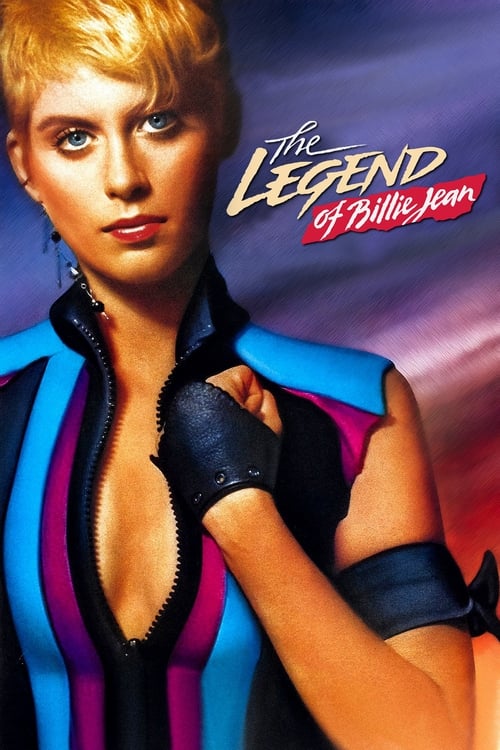
The Legend of Billie Jean
Μια μέση έφηβη από το Τέξας, η Μπίλι Τζιν Ντέιβι, μπλέκει σε μια παράξενη περιπέτεια αναζητώντας δικαιοσύνη. Όταν το σκούτερ του αδερφού της καταστρέφεται από ντόπιους εφήβους, ο αγώνας της για το δίκαιο την οδηγεί σε μια διαδρομή σε όλη την πολιτεία, μετατρέποντάς την σε μια απρόσμενη ηρωίδα.
Η «Ο Μύθος της Μπίλι Τζιν» δεν παίζεται σε κινηματογράφους αυτή τη στιγμή.
Ακολούθησε την ταινία στην εφαρμογή για ειδοποίηση όταν προστεθούν προβολές.
Προβολές για Ο Μύθος της Μπίλι Τζιν, ενημερωμένες κάθε πρωί
Διάλεξε σινεμά και πάρε υπενθύμιση πριν κατέβει.
All those cinema studies professors who told me the 80s were a low point for film had clearly never seen The Legend of Billie Jean

the most feminist film of the century imo

Heavy handed, over-the-top, fantastical, absurd, and unbelievable, sure, of course, fine. I'll cop to that. But if I had seen this 20, 25 years ago, it would have been... no, it would not have been a favorite of mine. I would have been scared by it, terrified of the potent imagery of a powerful woman. It's the sort of film I'd want to see but never would, had I known it existed, because of what liking it would have said about me back when I didn't even know what transsexual meant. This film is geared toward teenagers in general, but Joan of Arc at the heart of this is clearly meant to be an ideal for rebellious teenage girls (to say nothing of Pat Benatar, whom I have read [on this site somewhere] is keeping this from being properly released--boo hiss). As absurd as the whole film is, the most unrealistic thing about it is that there's a police man who isn't the fucking devil. Thankfully, I am not demanding realism. I've read a lot of books with dragons and wizards in them; a good guy policeman is a fantasy we've accepted for a long time. I'll roll with it because the ideas being represented here are worth a damn. This film is very much rooted in the generation gap politics, the idea of teenagers as people; this is a well trod idea because, of course, it makes money. But it works as a symbol of the downtrodden, and the film takes pains to show that our protagonist is dirt poor. We're not forced entirely to feel bad for rich folks (there's just one, and he's a kid, and his dad's a jerk, even if he is played by Dean Stockwell). It also takes pains to show capitalism as one of the biggest sources of pain here. This is a feminist anti-capitalist film (featuring music from Billy Idol, Pat Benatar, and a few rare non-masturbatory tracks from the Divinyls--soundtrack available on vinyl, cassette, CD, and iTunes for the low low low price of $86.95, payable in six easy installments); it'd only be better if it also had an anti-racist streak and a few LGBT heroes. We'll make do.There's more to it than just a little bit of empowering speech and that transformative haircut moment (as good as both of those things are). The real moment of power in this is the ending, a pair of moments that are neatly built up to throughout the entire film. What's impressive is how neatly the film ties the patriarchy to capitalism, how it combines these systems in one villain (a poor man's Powers Boothe in the form of Richard Bradford). The film is frowned upon by some for its treatment of the attempted sexual assault moment early on; it feels too dark for a film this ridiculous. But history (and currency) tells us that it plays out more or less exactly how it tends to play out--with the victim not speaking out. Instead, the initial injustice takes center stage for most of the film: the $608 dollars. Hello, capitalism, sure, and our heroine is buying into it. She's calling for justice ("fair is fair") in a manner that roots it in an economic dispute--this is a standard moderate (we're gonna call this the Bernie Sanders special) canard suggesting that if we just make everyone equal monetarily we'd all be equal all the time (what's race? what's sex? what's sexuality? just throw money at it). Mr. Pyatt can't even allow that much; like the patriarchy does, he smears her name and bluffs and blusters and tries to have it his way. Throughout the film, it feels like the sexual assault story line is just being tucked away, hidden, ignored. It bothered me; that crime was vastly more egregious than the bike--hell, even a comment on the physical assault Binx suffered would have helped. But it all focused on the bike. Despite this, repeatedly, through character interaction, through plot, the film drives home the idea that this is actually Not The Case, that the money isn't really what it's all about. It's jarring, as the momentum seems to surround the money, but the characterization goes deeper. Radio DJs blather incessantly, kids buy swag, and Mr. Pyatt keeps refusing to pay for anything (the police meanwhile try to bribe Billie Jean back into the open). And it almost works, sure, and certainly Binx is in it for his bike--he doesn't, after all, know about the attempted sexual assault, and the blood price he paid for the bike is part of the game to children caught in old fashioned patriarchal cycles of dominance. But it still goes deeper. The film goes out of its way to make this about coming-of-age (hence Putter's first period, hence the transformative haircut, hence Lloyd's brief leave-and-return); it wants to show maturity as something that rejects this idea of economic justice. So, when the sexual assault gets brought back up, it's a ferocious moment of justice because it literally ends in the burning of capital. It's a whole rejection of the idea of economic justice being the core tenet of justice. (Of course, it woulda been better if maybe some cuffs had slapped Mr. Pyatt's hands, but this is still 1985 Texas and this film's fantasy only runs so deep.) (This is all to say nothing of the surrogate mother motif that pops up, gloriously driving home the coming-of-age plot in the most blunt way; you could call this as something about equating female maturity with motherhood, but I prefer to read it as simply a general "we need to take care of each other" kind of idea, but I cede that yes, this film's feminism is probably deeply flawed at best. The assumptions about the intended audience's intelligence are likely unfair, too.) Aesthetically, the film has moments as well. There's no getting around how cheezy this all is, but it's an aesthetic that works for me. I love what I think of as the Neon Decade (look at that poster; also, see also Pat Benatar on the soundtrack). Every corny set piece is just precisely what I want out of a film right now; the reveal of the Haircut Moment (that pool reflection) is a highlight of the film's direct, cheezeball look. The kids marching along the streets with Billie Jean (or better yet, peaking in the windows as she confronts the abusive parent) in a Joan of Arc sort of thing--and all the references to St. Joan, from the clips from the film to the statue burning--are the kind of obvious, heavy handed imagery that should turn me off but instead delight me. There's audacity in it, and that's a big part of why it works, but there's also just the fact that it's a reference I just happen to like. Some of you are going to get on your arthouse high horse and How Dare They this to death if you watch it, and fine, whatever. And some of you are just going to roll your eyes in general, and hey, your loss, buster. I loved it. I love the memetic arm flexing, the horror movie fan's dream room, the surprisingly tense chase scene, the awkward acting, the carnival setting for the end, that obnoxious radio DJ (did I mention how great that was--it nailed own the setting to 15,000 watts), Christian Slater's pre-Nicholsonian era, and god yes that vest, too. Also, for a brief moment, the opening is as sweltering Texas bayou country as possible, right down to pointless alligator references, and I love that, too. So sure, it's heavy handed. Sure, it's ridiculous that this snowball plot turns out a happy ending. Sure, it's got a cheap veneer in places of something that probably should have gone direct to video. Sure, it's Problematic. But it's all of that in such a way that just makes it more endearing, nailing the teen flick wheelhouse with all the gusto of the 1980s and Supergirl's brief moment in the spotlight.
Μια μέση έφηβη από το Τέξας, η Μπίλι Τζιν Ντέιβι, μπλέκει σε μια παράξενη περιπέτεια αναζητώντας δικαιοσύνη. Όταν το σκούτερ του αδερφού της καταστρέφεται από ντόπιους εφήβους, ο αγώνας της για το δίκαιο την οδηγεί σε μια διαδρομή σε όλη την πολιτεία, μετατρέποντάς την σε μια απρόσμενη ηρωίδα.
Η «Ο Μύθος της Μπίλι Τζιν» είναι σε σκηνοθεσία Matthew Robbins.
Στην «Ο Μύθος της Μπίλι Τζιν» πρωταγωνιστούν Helen Slater, Keith Gordon, Christian Slater, Richard Bradford, Martha Gehman.
Η «Ο Μύθος της Μπίλι Τζιν» έχει βαθμολογία 3.5 στα 5, βάσει 13.129 αξιολογήσεων στο Letterboxd.