
it’s like watching da vinci paint the mona lisa
Geregisseerd door Eleanor Coppola
Een realistische, sfeervolle documentaire.
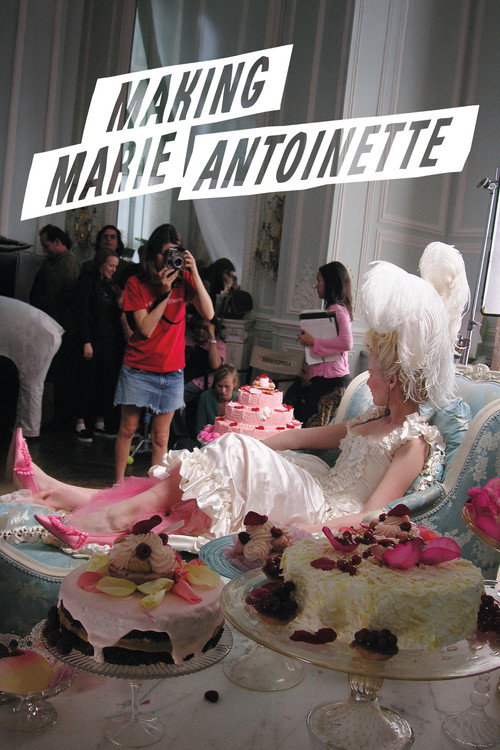
Eleanor Coppola's behind-the-scenes documentation of her daughter Sofia Coppola directing the 2006 film Marie Antoinette, capturing the craftsmanship and challenges of being a young female director.
Making Marie Antoinette draait in 1 bioscoop in Los Angeles - eerstvolgende voorstelling vrijdag 23 oktober om 13:10 in Laemmle NoHo 7.
Volgende voorstellingen: vrijdag 23 oktober.
Alle 7 dagen & tijdenPast deze dag niet?
Alle 7 dagen & tijdenJe ziet Los Angeles. Wissel hierboven van stad voor voorstellingen elders.
Speeltijden van Making Marie Antoinette, elke ochtend ververst
Kies je bioscoop en krijg een seintje voordat de film van het doek verdwijnt.
it’s like watching da vinci paint the mona lisa

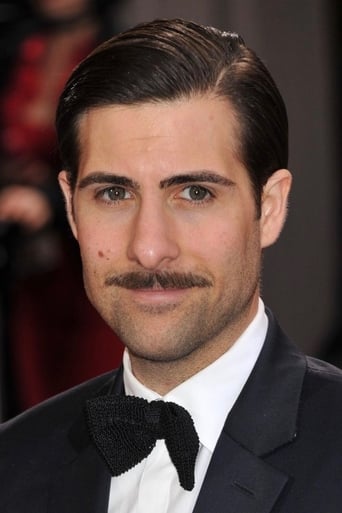
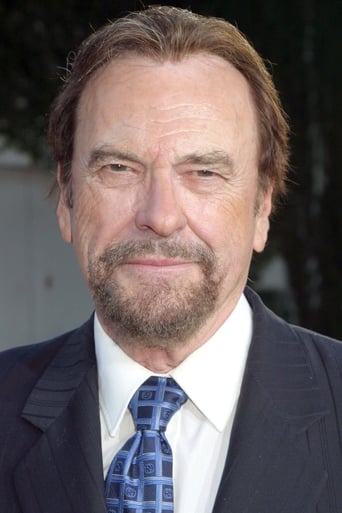
The term “nepo baby” had yet to be coined by the time that Sofia Coppola — prematurely defined by her punchline of a performance in daddy Francis’ “The Godfather Part III” — re-emerged in her late 20s as one of the most gifted filmmakers of her generation, but few celebrities in her position, before or since, have ever been so acutely responsive to how they’re seen in the public eye. Drawing from lived experience in a way that allowed her to interpolate the biases she’d faced as both a Hollywood scion and a young woman in the arts, Coppola’s first two features directly confronted the sort of privilege and presumption that had shadowed her since childhood. Each in their own ways, “The Virgin Suicides” and “Lost in Translation” vividly traced the interior lives of girls who weren’t permitted to have them, and they did so with a hyper-real sensitivity that allowed the movies to resonate with anyone who’s ever felt observed but unseen, as if just out of frame in every picture that had ever been taken of them. Of course, success can — and often should — breed a special kind of resentment for nepo babies who dare to make a name for themselves, and so it was no surprise that people only sharpened their knives from “dinner” to “butcher” after Coppola won the Oscar for Best Original Screenplay in 2004. By the same token, it was, perhaps, even less of a surprise that Coppola’s response to such bitterness was to make a movie humanizing Marie Antoinette, the one-time Queen of France and eternal figurehead of unearned entitlement (“I know I will be able to express how a girl experiences the grandeur of a palace,” Coppola wrote to Antoinette biographer Antonia Fraser, whose book she hoped to use as source material). Least surprising of all? That a sizable percentage of critics and audiences were rather ungenerous towards the finished product, a $40 million costume drama more interested in the rhythms, customs, and furnishings of Antoinette’s gilded cage than it is in the anger her reign helped to foment beyond the palace walls. Never mind that Antoinette was a brilliantly natural subject for a filmmaker so compelled by the negative space between women and the worlds they inhabit, or that the movie’s panopticon-like vision of Versailles allowed Coppola to explore the relationship between power and personhood with peerless clarity, or that her gauzy direction invited the movie to love Marie Antoinette without ever letting her off the hook — or out of the guillotine, as it were (talk about having your cake and eating it too). Never mind that Coppola shrewdly offset her production’s unprecedented access to the actual palace grounds with a variety of inspired anachronisms (chief among them the single greatest soundtrack of the 21st century), and as a result created a sharply modern look at the unbearable lightness of being famous. Never mind!! Not that I was mad about that. Please don’t put in the newspaper that I got mad. Time has been kind to people who share my view that “Marie Antoinette” is a semi-understood masterpiece, and not only because critics like me have been increasingly emboldened to argue that case. (In 2022, I included it on my Sight & Sound ballot of the 10 greatest films ever made). Following years of murmured reconsideration, the film will be formally canonized into The Criterion Collection this November. And before that, MUBI will release — first in theaters, and then on its streaming platform — a feature-length documentary about the making of “Marie Antoinette” that is called, if you can imagine, “Making Marie Antoinette.” Despite what the 600-word preamble you just read might have led you to believe, that documentary is the true subject of this article. Sorry. But we all went on that long walk together for two reasons: 1.) I am physically and spiritually incapable of passing up any chance to get on my soapbox about the films of Sofia Coppola, whose formative impact on me would be impossible to overstate, and 2.) Because anyone reading this review of “Making Marie Antoinette” should know that I clicked my screener link for this movie like I was opening the fucking Ark of the Covenant. Footage of Rip Torn loosening up before a banquet scene, or of Jason Schwartzman trying to make Kirsten Dunst laugh before they get in the royal bed together… To some people, this might be the routine stuff of a vintage EPK, but to me it’s like watching DV video of Michelangelo painting the Sistine Chapel. ~this review continues on IndieWire~

infinitely inspired by sofia! what a gift it must be for her to see herself through her mother’s lens, to be the subject of her journal entries and a source of inspiration. this was beautiful and so fun! i’ve always loved seeing the behind the scenes photos of this shoot and now having so much footage of it is truly a blessing.
Het volgt de documentatie achter de schermen van de creatie van een historisch drama uit 2006 vanuit een persoonlijk moeder-dochterperspectief.
Het werd in 2026 geregisseerd door Eleanor Coppola als een intiem begeleidend stuk bij het filmwerk van haar familie.
Het ging in première met sterke kritische bijval op grote internationale filmfestivals.