Do you know where I'm going to take you after this is over?Gaza?NoDamascus?NoBeirut?I'm taking you to the cinema i wish i could just go somewhere and scream and scream until i can't anymore. beautiful film, phenomenal acting, but my heart is broken. i wish they got the chance to go to the cinema, i wish the occupation would end and i miss my jedo and his poems and his stubbornness very much it overwhelms me most days.
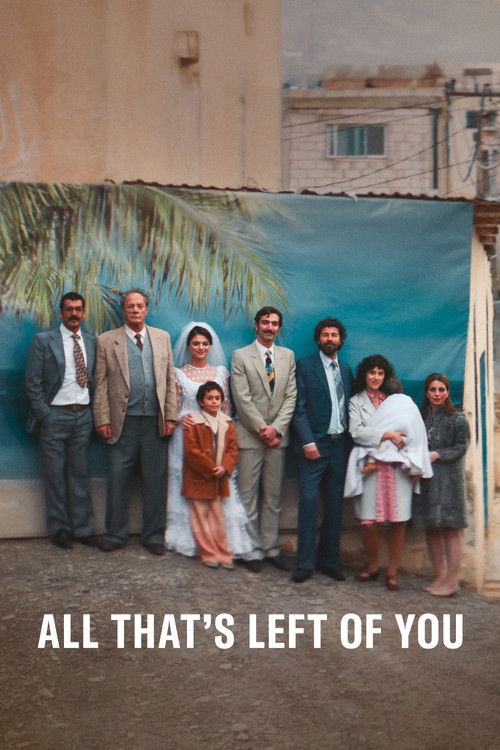
Some films make you think, others make you feel, this one does both, and it doesn’t let you go. Watching it now, with everything that’s still happening in Palestine, it feels less like a period piece and more like a mirror. The displacement, the humiliation, the protests, the longing for home, it’s not just history on screen, it’s still reality outside the cinema.Cherien Dabis takes on decades of pain and somehow distills them into moments so intimate they undo you. A son crushed by the weight of his father’s expectations. A mother trying to hold her family together even as history tears them apart. Generations haunted by memories they never chose but can’t escape. I cried through so much of it, not just because the film is tragic, but because it’s tender. Because it refuses to flatten Palestinians into symbols or headlines, it shows them as families, as parents and children, as people who love fiercely even when everything else is taken away.Yes, the story spans decades and leaps through time, but that structure only makes it hurt more. You feel how trauma skips across generations, how love persists in fragments, how exile never really ends. Every cut forward in time is another reminder that the struggle didn’t stop, and hasn’t stopped.By the end, you’re left carrying their grief, and their love, with you. And when you step outside, you realize it’s not just their story. It’s still unfolding, right now. That’s what makes this film devastating, and essential. And in watching it, all you can hope is that one day these stories won’t have to be lived again, only remembered, with the peace and dignity they always deserved. Free Palestine 🇵🇸
This is a film made for a western white audience proving the humanity of Palestinians. It’s okay to do that. But if the film would have been made (also) for Palestinians from Palestine, it would have had the chance to be so so much better than this actual woodsy formulaic story.Also - two years into the ongoing genocide - doesn’t it really need this narrative? Does that still need to be proven? The films first half is more or less a chronological history lesson: The Nakba and life under Israeli occupation and how trauma travels through the generations. Palestinians know all this - it’s their daily life. And the film weirdly even sugarcoats it and keeps it opaque. During the Nakba scene Deir Yassin is only briefly mentioned. We hear bombs and see flashes - but don’t see anything - no Israeli army/gangs doing their violet business. Strange. Only until finally a small group of soldiers appears on screen - who look like Greek actors (and prob were) - and simply arrest the main character. Imagine a holocaust film in which no one is actually killed and the Nazis look italian, and you get what I mean. It’s great to see the Nakba and Palestinian trauma in a film - but it’s not handled well and too much is simply asserted instead of cleverly shown my cinematic means. There is no additional idea of story apart from just ticking through the broad historic moments - that’s just too thin and doesn’t do the subject justice. And therefore the film probably only works for an unknowing white audience, who are surprised: oh wow, this really happened?!For a film, too much is mentioned in too much explainatory dialogue instead of visuals, which gets really tedious. I saw the film with a Palestinian from Palestine. She felt the dialogue was clearly written in English and then translated to Arabic as many lines don’t sound like people from Palestine would speak (he is strong, he is strong). And even in the subtitles you feel the clunky American writing very much. The film only gets interesting when the organ donation subject comes in - which is then used to claim that - oh, how human the Palestinian is. The huge potential to use this idea more interesting, and even conflicting, was totally missed. And even revisiting of the childhood home scene in the end: the home is conveniently abandoned instead of having a conflict with a settler family that stole the home, insisting it’s theirs - which is much more the reality (watch Salt of this Sea for a much better version of this scene).If all these things were done to reach out a hand to Israeli society or as to not ask too much of a white audience - who knows.Maybe it’s more recommended to read Kanafanis “Return to Haifa” from which the filmmaker admitted to have been “inspired” from, as she answered an audience members question at Hamburg Filmfest who spotted the similarities. But Kanafani handles it more masterful of course than the film does. This picture could have been so much better for all the important subjects it handles - but sadly it isn’t.