





white people love to say candyman five times and then get mad when they die like damn what’d you expect? a gummy worm? fuck off
We use cookies to personalize your experience and analyze traffic. You can opt out at any time.

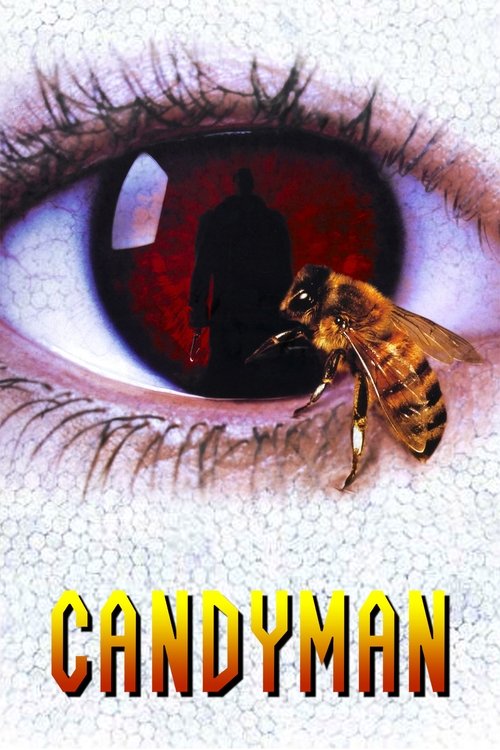
Helen Lyle ist eine Studentin in Chicago, die an einer Arbeit über urbane Legenden sitzt und bei ihren Nachforschungen auf die Geschichte vom Candyman stößt. Er war ein Afroamerikaner, der wegen seiner verbotenen Liebe zu einem weißen Mädchen von einer Gang auf brutale Weise hingerichtet wurde. Die Schergen sägten ihm eine Hand ab und übergossen ihn mit Honig, sodass hunderte Bienen ihn zu Tode stachen. Die Legende besagt, dass der Candyman zurückkehrt, wenn sein Name fünf Mal genannt wird. Helen glaubt der Geschichte kein Wort, bis sie selbst den Namen fünfmal ausgesprochen hat. Daraufhin beginnt eine Serie grausamer Morde. Jetzt muss sich die aufgeklärte Studentin dem Dämonen stellen, der in ihrem Umfeld auf brutale Weise sein Werk verrichtet. Dabei kann sie kaum auf Hilfe hoffen, denn niemand glaubt ihr die Geschichte vom Candyman.
Heute keine Spielzeiten für Candyman in Los Angeles.
Spielzeiten zu Candyman, jeden Morgen aktualisiert
Wähle dein Kino und bekomm einen Hinweis, bevor der Film aus dem Programm fällt.


white people love to say candyman five times and then get mad when they die like damn what’d you expect? a gummy worm? fuck off

Tony Todd's voice is the 8th Wonder of the World

Uses gentrification and academia in Chicago as an access point to the trauma of slavery being painted over in reconstruction, before jumping off into a moody urban folklore dream where historical pain is mythologized and martyred in the form of Tony Todd's Candyman whose incredible physical presence, reverberating voice and vicious acts of violence serve to draw (and heighten) his feelings of longing and rage into something tangible and fleshy. Between the excellent location work and Don't Look Now's cinematographer Anthony B. Richmond there's a lot of gorgeously grimy detail and texture to the images which amplifies Clive Barker's nasty writing (which shares a lot of Hellraiser's beautifully grotesque/perverse pain & pleasure elements) and Phillip Glass's beautifully dreamy score. Not quite sure how to read the ending which I think some argue is an allegory for appropriation but feels more like it just lets commercial genre sensibilities overtake its ideas, but up until that point this is incredibly well-realized and, it's clear by all the creepy overhead shots of skyscrapers, expressive graffiti murals, and expensive condo surfaces at war with the dirty, crumbling bricks they're covering up that Rose didn't pass up a single opportunity to visually express the underseen horror of living in the shadow of white real estate development.Full discussion on ep 187 of my podcast SLEAZOIDS.
A skeptical graduate student researching local folklore accidentally summons a vengeful soul with a hook for a hand into reality.
Candyman was directed by Bernard Rose in 1992, adapting a short story by Clive Barker.
Yes, the film is based on Clive Barker's short story The Forbidden.