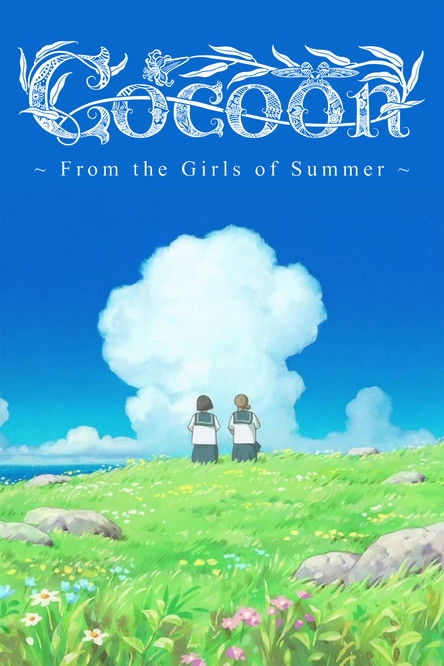



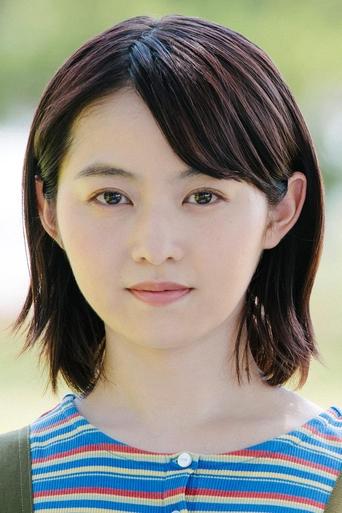


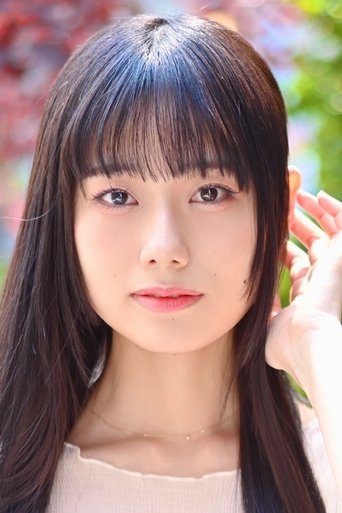


Cocoon - One Summer of Girlhood (cocoon ~ある夏の少女たちより~) is a great one with a humbling, sweet film created by former Ghibli staff. Its beautifully short animated film was benefit from a devastating tragedy and a hope of survive in riverting, emotional gut-punch of the story and succeds it."It's so peaceful here, it's like you're completely wrapped up inside a cocoon... wrapped in a cocoon, as white as the snowy sky." - San (Marika Itō)I'm very enthuastic about this one because I did appear that it looks like they made Studio Ghibli and it looks to me, it made one pretty well-done to their debut studio and it created by a former Studio Ghibli staff.I am really satisfied yet stunned through the viewing prespective for the main two characters. It possibly, a great, devastating tragic animated film.Cocoon - One Summer of Girlhood (cocoon ~ある夏の少女たちより~)Cocoon - One Summer of Girlhood (cocoon ~ある夏の少女たちより~) is short, sweet, and heartbreaking animated film in their profound gifted of life and tragedy. It is a devastating war film in the look, and it is a tragedy withhold of the grieving, emotional compact of the two main characters and it is a well-emulated precisely in the cohesive way. It was saddening and glad that I watched this one because it culprit the stronger-wise of how shows you about this short, beautiful film and it does a really great job from a new, debut studio of Studio SASAYURI (this is his feature debut film), that founded by a former Studio Ghibli ink-and-paint director Hitomi Tateno. It is a really sweet, promising, and a tragic historical story. This sweet animated film was directed by Yukimitsu Ina and she done a great job for maintain the film of being as a wartime drama based on Machiko Kyo's manga. I didn't heard of the manga (later I will look forward to the manga after seeing it), but I did know for the art style 😌. It looks Ghibli-esque for the background art style and aesthetics for the character designs and the animation, which is beautifully emulates very well on the detailed settings and every aspect of the animation is gorgeous.The runtime is 85min (1hr with 25min), it is actually a shorter runtime for the animated film. In speaking for shorter time, its original broadcast version on Japanese television ran for about 60 minutes (which is an hour). It works well-enough for me because it is a tragic story of between the relationship with two main protagonists and it was quite lean and fast-paced that it doesn't waste a single frame or second of screen time, delivering a quick but lasting punch.The premise is about two all-girls students and closest best friends: San (Marika Itō) and Mayu (Hiraki Mitsushima) are attend a peaceful boarding school on a tropical Japanese island, learning about nature and the life cycles of silkworms. It believing government lies that they would be safe, the students are suddenly drafted to work as assistant frontline nurses in a military hospital hidden inside a dangerous sea cave during the brutal Battle of Okinawa in 1945, closing months of World War II (which is the Pacific War). As it forces to advance and conditions deteriorate into starvation and heavy bombing, the girls must face horrific wartime realities and fight to survive as they escape only to face the harsh environment of a tropical paradise that has become a hellish battlefield.It is something truly amazing of how impactful it is because it starts as a peaceful, coming-of-age "sleepaway camp" style story, introducing to the characters and they're well-knowing to each another and then pulls sliding past into a harrowing nightmare. They had a self-contained story that tells a complete story in which revolve around the tragic loss of youth, the brutal realities of total war, and the sustaining power of deep friendship.This is very impressive in acknowledge for contrasts the bright, natural beauty of youth with the sudden horrors of combat and the title uses a cocoon as a fragile symbol of safety and childhood. The stark artistic choice of women bleeding flowers instead of red blood highlights their pure innocence and unfair victimization. It is likely, an aura of disposable youth.Main characters like San and Mayu hold onto each other to survive the nightmare in a grueling warfare and the film becomes a stronger anchor than life itself in a hopeless world. I honestly liked the chemistry in focusing on their relationship as a part of the emotional anchor to the film is showing futility of war, in shows children were forced to fight and it questions on the cruelty and senseless lives for political causes.The core theme of the film centers on the brutal shattering of adolescent innocence, the psychological mechanisms used to survive systemic trauma, and a devastating critique of wartime nationalism through the tragic metaphor of the silkworm. It sets as a pupae stage on the silkworm that eventually, spins a protective cocoon during its adolescent stage to shield itself, mirroring the schoolgirls transition into adulthood. Just as silkworms are historically boiled alive inside their cocoons to harvest silk, the young girls are exploited and sacrificed by the imperial military machine for a war they did not choose. It serves as a metaphor for their harvest of youth and a frightened link that are those a few silkworms began survive to adulthood emerge as flightless moths, representing the stunted, permanently grounded futures of the surviving girls whose worlds have been destroyed and because of the film adapts heavier strong themes (inspired by the real-life Himeyuri students in Okinawa), it handles very-well in the graphic trauma through San’s coping mechanisms with instead of blood spatter, they brilliantly substitute a bursts of weightless flower petals when the violence strikes. The film serve as a pyschological escapism and survival mechanism on the narrative. It does work for the imaginary cocoon as well, to endure the horrors of nursing wounded soldiers in airless cave hospitals, the protagonist San develops an intense obsession with the life cycle of silkworms, while Mayu actively supports this delusion, helping to construct a shared psychological "cocoon" to block out the violence, starvation, and trauma surrounding them.This subversion of a deliberate tone went initially mimics a peaceful, lighthearted Ghibli-esque aesthetics and military propaganda. This intentional "rug pull" softens defenses, mirroring how the girls were falsely promised safety and victory by their government before the brutal reality of war sets in. This shatter on their illusion on the narrative barrier with the military stuff going on or what's going to happen in closing minutes of the war.The main characters are driven by a mix of innocent patriotism, peer loyalty, and a fierce, late realization of the will to survive. His motives were loyalty and nicely well done characteristics to the characters with San as a gentle girl and Mayu who is a close friend and she supports San through fear and pain. The pacing is well-fitted on a whiplash-inducing structural shift. Because the film packs a massive emotional arc into a 85-minute runtime (broadcast version is 60-minute runtime), its pacing relies on extreme narrative contrast rather than a gradual build. The first half of the film, the idyllic slowness began movement like a relaxed summer breeze, spending lingering moments on the tranquil shores of Okinawa, the everyday school life of San and Mayu, and the methodical cycle of cultivating silkworms. It leans into Ghibli-esque atmosphere and "slice-of-life" restraint to make the world feel safe and permanent. For the second half of the film, it acts as a sharp, jarring turn. The girls are abruptly thrust into dark sea caves to serve as front-line nurse aides. From this point on, the narrative speed accelerates into a breathless, unrelenting march through hell, mirroring the chaotic speed with which the characters childhood is completely obliterated. Their pacing style relies on the hyper-concentrated emotional payload that in the ending, I felt stunned and a quite devastation with isolated on griefness of pain and hurtful for that reason, it is impacted by a "gut-punch" driving in the emotions. So, it did hit me in the precise moment.The emotional depth to the film achieves a long, stretched, devastating exploration of trauma, propaganda, and coping mechanism. They acted a psychological disassocitation with the cocoon in believing that the core emotional anchor of the film is how the protagonist, San, and her friend Mayu cope with the horrific trauma of being forced onto the front lines as student nurses during the closing days of World War II. To survive the nightmare of a cave hospital filling up with mutilated bodies, starvation, and assault, the girls retreat into a "cocoon" of their own imagination. They put a lot of effort in giving a profound heartbreaking wrench of visual horror (for flowers instead of gore) and a isolated youth of sadness.It looks the story is a strong factor of tremendous emotional growth of the relationship, converted into flowers, and it shapes to be a poignant and stunning ending that reaches to the whole meaning of the connection of two protagonists is very thoughtful. It is emotional-driven story with strong elements of military and trauma.The voice-acting is a delightful one because of the raw, moving chemistry between the two main characters (San and Mayu). Marika Itō and Hikari Mitsushima are perfect for capturing the transition from innocent schoolgirls to traumatized wartime nurses and anchoring the film’s immense tragedy with profound humanity.I really liked the animation style with background design because it looks beautiful in crafted hand-painted natural vistas on the serene meadows, bright coastal horizons, and vibrant flora that emphasize the peaceful innocence of youth before the island is consumed by conflict. It reminds me of the Ghibli art style that functions the production in blending young contemporary animators with legendary Ghibli-affiliated veteran talents like character/animation contributors Akihiko Yamashita and Shinji Otsuka, lending the film a classic, painterly aesthetic reminiscent of historical Ghibli masterworks. The score for the soundtrack composed by Kensuke Ushio, who did known for his work on Chainsaw Man, did a stellar job for a haunting minimalist style centered around sparse, dull piano notes that functions as a hollow thunder to amplify the film's tragic wartime mood. It is deliberately restrained and somber on the foundation of sparse, haunting piano arrangements, in serving the sound as an emotional counterweight to the devastating anti-war narrative rather than overpowering the scenes. The music is a highlight for me as a massive strength that anchors the film's deep emotional weight and did an exceptional stellar score.Cocoon - One Summer of Girlhood (cocoon ~ある夏の少女たちより~) makes this as a sweet yet a tragic animated film from a new studio, and it proves imaginable way for giving this as a riverting, fear and survival during the closing moments of World War II. That stunning background art designs and the animation are really worth of time for their look in this one and I'm glad that I watched this one and exited a profound, tough sadness and stunned (in a good way).My score that I'll go as far that I could it is a great film. It looks great on the storywise as a stronger path of one summer of girlhood into a beautiful yet a tragic meaning of hope and trauma.This is a thumbs up for me 🦊👍.Recommended: You need to check it out.Score Grade: Great (🦊👍)That's the review for Cocoon - One Summer of Girlhood (cocoon ~ある夏の少女たちより~). Stay tuned for the reviews and thank you for reading.This is FoxHoodie, peace 🦊✌️.The End.