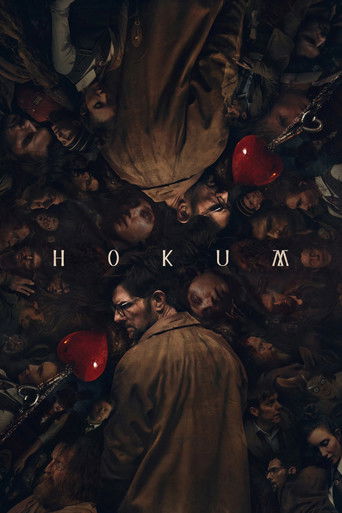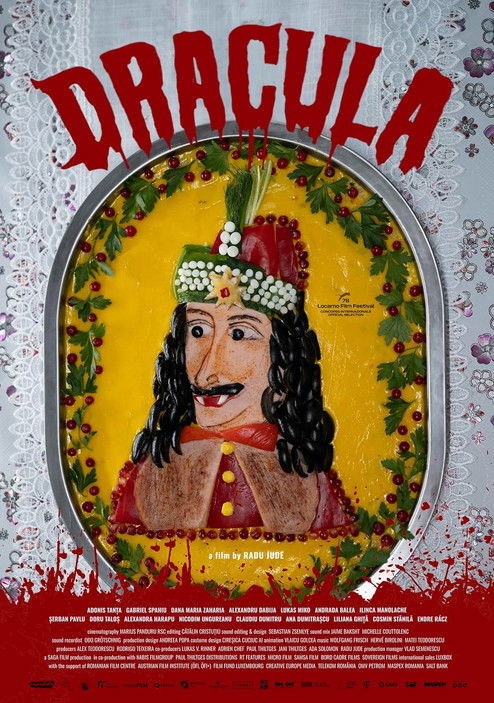


It’s fitting that the first good movie to meaningfully incorporate AI into its aesthetic should be about an undead bloodsucker that feeds on humanity in order to seem alive. And yet, for a three-hour film that opens with a chorus of computer-generated Vlad the Impalers staring into camera and demanding that we suck their cocks, Radu Jude’s gleefully stupid “Dracula” proves much too expansive — and much too invested in the centuries of barbarism that paved the way toward Silicon Valley — to be misunderstood as a simple rebuke against the grotesqueries of algorithmic image-making. Jude is an erudite man of the people whose hyper-literate intellectualism is only matched by his Chaucer-like vulgarity, and his work has long reveled in an impish fascination with the relationship between art, labor, and technology. In that light, it shouldn’t come as much of a surprise that the guy behind the likes of “Do Not Expect Too Much from the End of the World” and “Bad Luck Banging or Loony Porn” has a certain degree of affection for a tool that threatens to upend everything the arts hold sacred. A quasi-picaresque anthology about an unnamed director (“Kontinental ’25” standout Adonis Tanța) who relies on a Transylvanian bot to salvage his new vampire movie after it only earns an 80 percent approval score from its latest test audience, “Dracula” provides Jude a perfectly dumb excuse to unleash AI on the cinema, literature, and history of a civilization that had already been feeding on its own neck for a century or longer before ChatGPT first came online. Here is a film that feasts on AI image-making in its ugliest and most nascent form in order to argue that it really isn’t anything new — that its cannibalistic appetite and taste for exploitation are precisely what make this technology such an honest expression of the culture that created it. As a bald man once said: The world is a vampire (sent to drain). With “Dracula,” Jude makes a fun and wildly freewheeling case that it sucks now in much the same way that it’s sucked for the last several hundred years, and in doing so he suggests that AI might be more interesting for what it reveals about the way things haven’t changed than it is for what it threatens to change about them. Having said all that, it would be a mistake to overstate the role that AI plays in Jude’s anarchic hodgepodge. The technology is central to this project, as well as the ostensible author of the film’s 14 segments, wraparound story, and framing device, but “Dracula” mostly relies on algorithmic kinks and chimeras to lubricate more analog examples of the past eating itself — to use images of, and stories about, Vlad the Impaler to illustrate how easily history is stripped of its meaning. ~this review continues on IndieWire~