

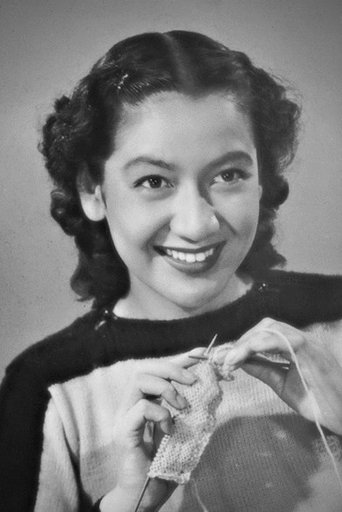

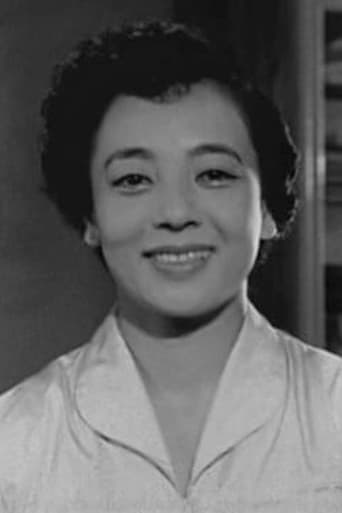


Asif Khan's #4 Film Selection for EdgarConquering Ozu's seasons-related English international titlesIt's official. I'm in love with Setsuko Hara. I want to travel back in time to the post-war Japan times and marry her to live happily ever after. Every time she smiles, I smile. Every time she cries, I cannot hold the emotions in my eyes.Jesus Christ, what a stunning piece of cinematic poetry. Ozu's worlds are full of magic without having to resort to fantasy. He creates the most powerful catharsis in the viewers with the simplest situations imaginable, and yet with the most complexly created family concerned with the daughter's unmarried state, ranging from stubborn little kids to impositive men to caring and loving parents to funny acquaintances, polite job peers and concerned brothers and sisters. Can I live in a world where I can have a family?We're introduced to an alternate hypothetical take on the character of Noriko, played by one of the most talented actresses in the world who is now the owner of my heart. Ozu's moral and emotional predicaments and the subtextuality of his scenarios seem to take their characters to an extreme where they keep their emotions subdued, repressed, constrained, until events of an uncontrollable emotional magnitude greater than themselves force them to let their true feelings and moral positions rise to the surface. However, it is not a cynical world. It is a world where people voluntarily give in to polite social conventionalisms that reflect an internally peaceful state of mind when it is not necessarily so. When a conflict or a debate emerges, the dramatic impact in the audience by definition is stronger, and two things happen simultaneously: evolution for the characters and a catharsis in the audience, if not empathy (or both).Studying Ozu's body language is also an art. Notice how, when characters agree on an idea, their movements are harmonic, like coordinated, and are placed in one side of the frame. When they disagree, they are not. Examples? There are plenty, and gorgeous to list:1) When the family knows about Noriko's final decision and she reaffirms it in front of the whole family, everybody, with an impeccable coordination, lean their heads down at the same time with a concerned expression, except for Noriko, who remains thoughtful and challenged.2) The two little rascals behave in the same way. If one kicks the bread on the floor, the other one does it too. If one runs, the other does too. If one flees the house, the other one follows him. Both walk by the ocean identically. If one takes his cap off, the other one proceeds as such and viceversa. It's the universal law of the younger brother following the example of the older one. The latter is the most relatable example to follow for the younger one psychologically.3) There's a lovely, touching scene where the adults hide their cake from the young boy under the table in what is a harmless and, ironically, childish manner. 4) The old couple agree on everything, move in the same way and share the same feelings when they reflect on the present and the past. They're always in the same state of mind.The conclusion once again must be taken as a collective decision in what they think is goung to favor Noriko instead of an individual decision taken by Noriko. She's pressured by the miai custom but Ozu is not forgetting about individuality. Instead, he addresses the powerful influence that family and social relationships can exert over an individual in order to have a socially acceptable and "normal" status. In my eyes, this trilogy is still formed by tragedies, tragedies beautifully contrasted by the imagery Ozu masterfully showcases, especially in both the introduction and the ending sequences.98/100