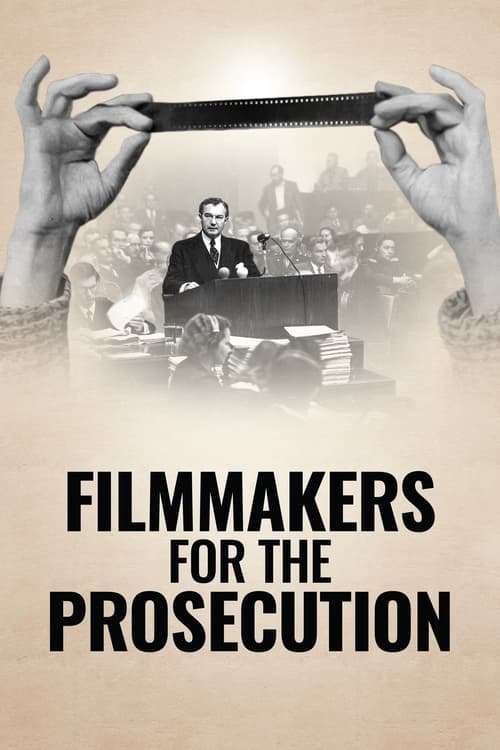





The Evidence of the Film“Filmmakers for the Prosecution” is an accompanying modern documentary to the restoration of the primary-source propaganda documentary “Nuremberg: Its Lesson for Today” (1948), both of which have been released through KinoLorber on home video. Something of a making-of doc in the way “Night Will Fall” (2014) added context to the belated completion of another original record, “German Concentration Camps Factual Survey” (filmed in 1945 by Allied forces, but unfinished/unseen until 2014). The latter are the more haunting cinema in the relentless coverage of genocide carried out by the Nazis. Although there’s some of that in these two motion pictures, as well, their uniqueness is in the footage of the Nuremberg Trials.Unlike “Factual Survey,” the “Nuremberg” film was completed in time for release to the German public as part of denazification, but apparently it was almost entirely destroyed after its release to the American public was canceled, which it was because foreign policy goals had shifted to the Cold War and the Marshall Plan. The thinking being, I suppose, that demonstrating to and reminding Americans how their new ally Germany had recently been a warmonger state responsible for crimes against humanity wasn’t a good strategy to build morale against Stalinism. The survival of “Nuremberg,” then, came down to the daughter of one of the filmmakers, Stuart Schulberg, discovering his 16mm copy of it in storage many years later.In a way, “Filmmakers for the Prosecution” is a more interesting documentary than the documentary it’s about, which by contrast is an intermittently dry and horrific chronicle intended as propaganda. This, on the other hand, is more concerned with the history of the filming of the Nazi atrocities and of the Nuremberg Trials than with the atrocities and the trials themselves. There are also the two films shown at the trials, so that this becomes a film about the films that went into another film, and that’s in addition to the inherent theatricality of the courtroom and political events. Three, if not four, layers of reflexive filmmaking. The two Nuremberg Trial films being “Nazi Concentration Camps” (1945), as overseen by George Stevens, and “The Nazi Plan” (1945), as compiled by the Schulberg brothers and others, and with both films being made at the directive of John Ford. I reviewed the former a while back as part of my research for “Factual Survey,” the two using some of the same footage, but I haven’t seen the three-hours-plus “Nazi Plan.” In short, though, the difference between the two is that Stevens’s crew shot footage themselves, or the Russians did, of the extermination factories, whereas the Schulbergs’ crew collected footage of atrocities and the plans and propaganda thereof filmed by the Nazis.Although much of their work was a dead end due to the Nazis burning their footage along with other evidence, they did make some damning finds, including footage of an experimental gassing of Poles, in addition to newsreels. None other than Leni Riefenstahl, director of the notorious Nazi propaganda film “Triumph of the Will” (1935), was recruited to identify the films and their participants. There are also some good interviews here, including one from the son of Hans Frank, head of Nazi-occupied Poland and who was sentenced to death by hanging for war crimes and crimes against humanity. And, just from a technical history position, it’s interesting to see how the cameras and audio were set up, back when motion pictures weren’t as ubiquitous in the courtroom and everywhere else as they are today and when cinema literally displaced the judges, moved to the jury box as spectators. Perhaps nobody better demonstrated how media technology enabled the rise of Hitler and Nazism than did Charlie Chaplin with his fiction film “The Great Dictator” (1940), and here we see how the same media technology could be turned against the same and document their criminality.