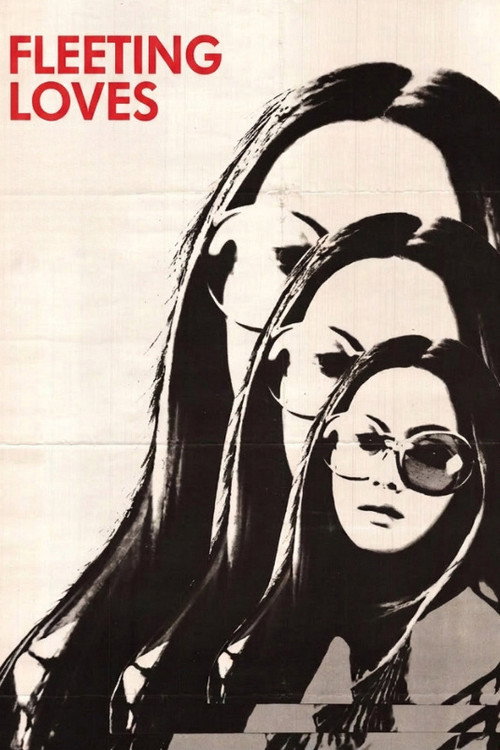


Written and directed by Malvina Urșianu, whose directorial debut was delayed a dozen years due to a suspension and then a ban from filmmaking (for "ideological sabotage"), the latter of which landed her briefly in jail, Fleeting Loves is meandering and murky, focused on a the kind of self-obsessed elites who populate the films of Walter Hugo Khouri.Set in a changing Bucharest and the equally evolving countryside around it, the film could be seen as critical of a system that pushes such aimless, graceless people to the top of its professions (the film's four main characters are all architects and/or builders). Watched through non-Romanian eyes, however, it often feels as if it could be set nearly anywhere, among people with lives so comfortable all of their spare time is spent thinking about themselves.The main character of Fleeting Loves is Andrei (George Motoi). He has been working in Germany for the past five years where he married and found success. Unbeknownst to anyone in his life, he has been diagnosed with terminal lung cancer, something which has created in him a powerful urge to go home. Going home, however, means not only the Romanian cigarettes he craves, but also old friends, including the ex (Silvia Popovici as Lena) who married his best friend, Costea (Cornel Coman), as well as the arch judgment of contemporaries who stayed home to help bring Romania into the future.Much is made of the malaise experienced by Andrei, his wife Hanna (Gina Patrichi), Costea, and Lena. Neither marriage is working, at least not in a conventional sense, and each men is drawn to the other's wife: Andrei out of a sense of nostalgia, and Costea out of boredom, and a vague hope for something new. The women, when they are together, speak only of the men in their lives, while the men ride trains and drive around staring expressionlessly at city lights, or the ocean as it flashes by.These characters are the kind of people who get in rooms together, hold drinks, and talk about what they would change about their lives, if they could go back in time. Seemingly untouched by the challenges faced by many of their countrymen, they stew in their dissatisfaction, ending marriages and reunions and relationships alike with hollow clever commentary, concerned to the end about appearances rather than sincerity.Perhaps the film's point is that Andrei's illness has forced him into sincerity: an acknowledgement of his lasting attachment to Lena; of his desire to be home; of the disappointment of his marriage. But that sincerity too, is fiendishly selfish, and he is unable to drop his need to wax profound, even in what are presumably his most nakedly emotional elements.There is a lot of Antonioni here, in the cold characters and their remove from one another and themselves. They are, however, almost entirely unsympathetic, which makes the film feel like as much of a chore as the lives its characters are leading.Thanks to Richmond Hill for pointing me toward this one!⏩ 52 Films by ♀: 2025 | 2024 | 2023 | 2022 | watchlist