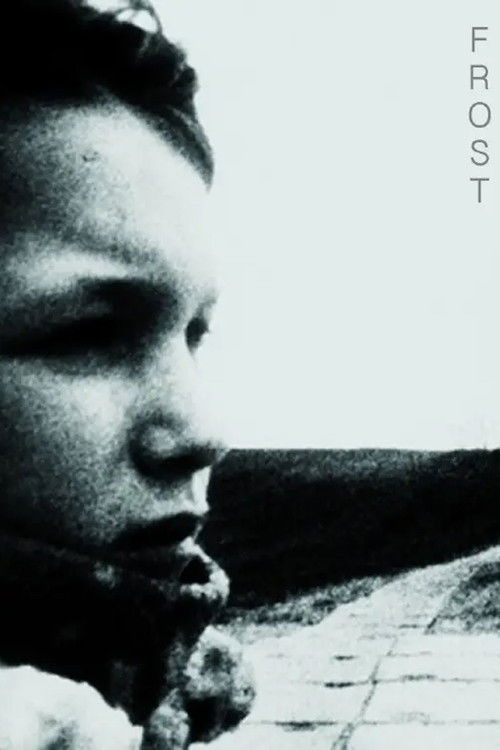
If I take the wind with me, will you be able to sleep?As most would have you believe (perhaps not so much anymore or maybe it was never the case) that IMAX visuals, because of its obviously massive screen, is the major advantage it has over all other viewing options. But my first impression and the one that has remained on my mind from every IMAX film I’ve seen (including Nolan’s The Dark Knight Rises which had issues rendering Bane’s voice) is the palpable and immersive sound. When I worked at my local theater this is what I preached, and instead of a high-octane action-thriller, something more akin to Jaques Rivette’s Duelle or Fred Kelemen’s Frost would be the ideal picture to view in this manner—or at the very least, benefit the most from the magnification of sound.As another viewer has observed, Kelemen’s praised visuals is not the best quality in his 1997 feature—it’s the diegetic sound combined with a bonkers needle drop or two. The soundtrack ranges from Western pop culture holiday hits to European house music that somehow fits the dreary tone and pushes the narrative forward; rhythmically moving with a gracious ebb and flow that really does mesmerize even through its natural tendencies toward slow cinema.Frost is a terrifying cry for help to be saved from the evils that are born from humans more broadly, coddled by holiday spirit. It is generally this aforementioned pessimistic view filmmakers like Belá Tarr and Fred Keleman are grounded with. The existential outlook paints a picture of our leading characters as lost, desperate, broken, and isolated souls constantly stumbling from one bad scenario to the next. Some moments are truly heartbreaking. On the contrary to this dark tone, the lone child in the film is constantly lighting things on fire. He is a pyromaniac to an extent—which sounds consistent to Kelemen’s dreary outlook but is really a metaphor for the innocence found in life perhaps, or more accurately noted, children are the bearers of light and purity. At the end we are left contemplating if this is true, but more on that later.My personal enjoyment of this film is one of the most complex breakdowns I’ve experienced thus far in my movie-watching journey, because “enjoyment” is a strong way of putting it. Part of this is due to the niche of film that is “slow” cinema. These are long, drawn out pictures that profoundly observe life and ruminate in their images and (usually) themes of existential dread, but I’ve come to realize that it isn’t the pacing, nor is it the fact that slow cinema takes up lengthy parcels of time, nor that these films cover pessimistic messages—It is rather the unrealistic lack of human reactions occurring between characters. This in a nutshell was my major qualm with Belá Tarr’s Sátántangó. That film attempts to be gratuitously thoughtful in its character analysis but (IMO) does not succeed in its execution when the characters are excessive caricatures of their real-life counterparts. However, while Frost may suffer from this also, Kelemen manages to construct more severe and real moments of cathartic sadness that brings a balance to his characters. A worthy example (that has convinced me Kelemen is a true madlad at heart) is a scene where the leading lady (after having had a few bad run-ins already) is frustrated of the strangers she’s come into contact with. Suddenly, a moment that seems to be heading one way careens into a maddening dance of utter apeshit insanity.Frost is also hard to enjoy because of how Kelemen exposes the toxicity that leads to the catharsis. In particular, the entrenched domestic abuse at large and the unhealthy relationship between the man and woman that unfolds is utterly nauseating. There are multiple sequences of crafty camera work along with excellent moments of storytelling that highlight the horror of their relationship. Kelemen brilliantly decides to focus on the actions of the child and not the couple in distress—as you can imagine, this technique works wonders. Since the film takes place during Christmas and then the days leading to the New Year, there is a nostalgic factor that creeps in; old colorful lights in windows, small hole-in-the-wall bars, TV sets whirring static, and the many shots of endless frosted fields. Altogether, these are moments I greatly appreciated and can say I definitely enjoyed taking in. Kelemen captures a haunting beauty found within the bucolic landscape, especially when the wind is blowing and mother and child are left wandering in the dark cold.Leave it to the ever-optimist though to decipher some light from the dark corners of harrowing human interaction. Frost in nature is the beginning stages of a deeper cold, slowing the movement of molecules—so the mother and child trying to escape the man in their life to only end up in further awful scenarios is no less different than the white fields they walk on. If the child is truly the symbol of innocence and the ultimate bearer of light, than it is his flame alone that can melt away this ornery Frost. The film’s ending is perhaps stating that even when there is no hope in sight, it is better to be active against the things you hate. But if the parents are forever trapped in their stagnant relationship and cannot see what emotional turmoil their actions cause then maybe there really is no hope for the one aspect of their life that deserves every ounce of their love... or at least, no hope as long as they are left in the picture. It's a new year and a new you.With that, I wish you all a wonderful holiday season, a Merry Christmas, a joyous Hannakuh, a happy Kwanzaa, or just a good day… but no matter which, stay by those you love and cherish them. A huge thank you to two folks: Klop_Gob for this recommendation in slow cinema and mighty louferrigno for helping me get my hands on this. Follow these two wonderful cinephiles ASAP.
"The storm puts its mouth to the houseand blows to produce a note.I sleep uneasily, turn, with shut eyesread the storm’s text.But the child’s eyes are large in the darkand for the child the storm howls.Both are fond of lamps that swing.Both are halfway towards speech.The storm has childish hands and wings.The Caravan bolts towards Lapland.And the house feels its own constellation of nailsholding the walls together.The night is calm over our floor(where all expired footstepsrest like sunk leaves in a pond)but outside the night is wild.Over the world goes a graver storm.It sets its mouth to our soul.And blows to produce a note. We dreadthat the storm will blow us empty."Tomas Tranströmer, "A Winter Night"
Thrilled to attend this event, even though the film didn't particularly do it for me. It was organised by the London-based A Nos Amours "collective" (director Joanna Hogg and dance filmmaker Adam Roberts) whose objective is to screen rare/obscure art films from original prints. Overhearing a conversation in the auditorium, simply obtaining a copy of Frost was a feat in itself: Kelemen apparently owns the only two existing 16mm copies of the film, one a work print which he personally takes to festivals, the other the subtitled version that we were given. To screen the film at the ICA, all parties had to be insured to the eye teeth lest the print catch fire in the projector. The projectionist had to supervise a test screening during which he had to document any and all glitches on the print. He then had to run each problem past the insurers and Kelemen – Kelemen would then advise on which issues he wants fixed and which issues he wanted left alone (apparently he specifically asked that a burnt-out frame be kept in the film).The ICA also had to re-commission their 16mm projector which, apparently, had been removed from the projection booth to make way for the DCP machine. The film itself is so dark, the projector needed to be moved closer to the screen, so it sat at the back of the theatre. The audience were advised to sit under the light pool, as the low lights from the fire exist/steps would make the on-screen blacks appear less rich. There was something kinda magical/Lumière-esque about having the projector in the room, particularly the purr of the reels spinning. Anyone know if this is an exceptional circumstance or is the protocol for every time a print is screened over a DCP?On to the film. Famously a Tarr acolyte and collaborator (he shot The Turin Horse and The Man From London), Kelemen claims that the sole abiding interest shared between the two men is depicting time. Though Kelemen is prone to the mesmeric longeur, Frost feels more of a piece with '80s Angelopoulos, particularly Landscape In The Mist (though without the political edge). There's also hints of the Cinéma du look in the heavy, tableux-like stylisation of certain shots and the use of synthetic coloured lights. A young, near-catatonic, Bressionian boy who appears entirely numbed to any emotional stimuli is spirited away by mother when she's drunkenly assaulted by the boy's father. They hit the road with no destination in mind, the mother having to do what she can to keep the pair alive. There's suffering a-plenty, as they trudge across harsh (yet handily picturesque) landscapes, somehow shifting from vast ice planes to shimmering cornfields between shots.My problem with the film is that Keleman nearly always favours the cacophonous, hypnotic dirge over the humane truth: the characters are loping rag-dolls trapped inside the frame. There's never the sense that we're witnessing a natural epiphany that Keleman just happened to be photographing. I had the same problem with The Man From London – the ridiculous opening take felt like the characters had to wait (patiently!) until they were in shot before they could execute their foul deeds. Human reactions are muted for the purposes of cinema. The mother and son are lost in the fog, but their lacklustre cries to one other are such that they have lost a primal survival instinct. That's not so say that there aren't certain shots and movements that are worthwhile in and of themselves, but most of these set pieces would have been good if placed in any film.Kelemen's dim view of humanity verges on the parodic, and even occasionally offensive. In the world of Frost, mothers and children are virtuous, saintly, kicking against the pricks. Men and lesbians are evil, wanting nothing more than instant, single-minded satiation for their ravenous sexual appetites. The boy is also constantly linked to the image of fire – he's asked to light cigarettes and candles and even harbours a few pyromaniac tendencies. He keeps matches in the coat of his omnipresent teddy bear. This notion of youth as the keeper of the pure flame, the only source of light in a society that's lurching into darkness, never takes on a particularly sophisticated or profound dimension. It feeds back to Kelemen's straight-jacketed visual mode, where the frame is so minutely orchestrated as to seem unnatural. Here, the metaphor is forced.Ironically for a guy known for his visuals, it's the sound design that impresses the most here. Kelemen's music selections are straight-up batshit. The best scene (and it is kinda incredible, like a cross between Lavant at the end of Beau Travail and the Adjani wig-out in Possession) sees the mother doing her best hi-NRG banshee routine to some early '90s Euro house. Great use of ECM-style classical, especially on a merry-go-round scene that becomes as heady and intoxicating as the one in Epstein’s Cœur fidèle. Diegetic music also used to stirring effect, like when you can hear neighbours listening to oom-pah music or the chronic, crooned lounge covers of American pop hits that play in bars and clubs. It's a very fuggy film, and the muffled music coming from behind walls or though defective speakers connects to the way Kelemen has the drama play out though sheets of fog and dust.Beyond "life is tough, people are bad", I got no real impression that Frost was about anything. In his intro to the film, Jonathan Romney analysed contemporary notions of "slow cinema", suggesting that the term is perhaps moribund. It's not about pace, it's about duration, about time passing. These films are not slow (in the pejorative sense), it's more that they place their focus on more superficial actions and events, they offer time for rumination. Frost spends a lot of time zapping banal moments with the transcendental hard-stare, and while it often locates a piercing beauty in the quotidian horrors of rural German, it more seldom locates a beautiful truth.