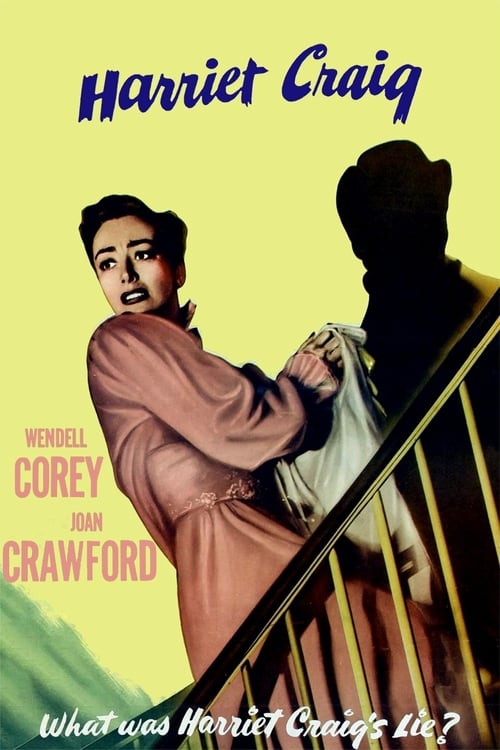
Femininity as both prison and salvation; the claiming of an identity so fiercely it becomes a compulsion. Harriet Craig doesn't want kids, and she sees sex as nothing more than a means of control over her husband. She doesn't aspire to motherhood, despite being told it is and will be her greatest joy, and she doesn't want her husband to touch her, if it can be avoided. She is, by most of the measures of her era, a failure as a woman — if, indeed, she is a woman at all.But Harriet is beautiful, and can keep a perfect home, and so she throws herself into those two things with a breathtaking intensity. Her beauty is both her means of keeping her husband (she thinks) and her husband's reason, to the outside world, for marrying her. It makes her a woman, and makes up for her lack of sexual desire: being able to compel her husband's interest, and to be looked at appreciatively by the men around him confirms her precarious femininity.And the house is her refuge. Not because it is a source of comfort, but rather because it is the place over which she has domain, as is expected of her gender. Harriet might not have children (how sad, she tells everyone, that her husband doesn't want them), but she has a home over which she has complete control. Within it, nothing is out of place and the servants obey her without question, so complete is her mastery of this feminine sphere. All of this could easily be traced to Harriet's aberrant sexuality. Whether she is a asexual, or a lesbian, or something else entirely, her inability to properly perform this most primary of feminine roles put her on edge from the moment she recognized her own inclinations (from the moment she realized she didn't share the desires of her peers). Lost and terrified of failure, Harriet turned to the fantasy of a home as the place through which she could forge a definition. In the home, there is no one else to please (no other bodies to touch; no desires to satisfy). Instead, it is a place over which she is granted the control she is denied over her body and her sexuality; in which no one else needs to be considered. She is a failure in the nursery and the bedroom but, here, in the wider domestic world, she defiantly, ferociously shines.Harriet Craig treats its lead character as a monster, someone who victimizes those around her and, in the end, is made to pay for her failure, both as a woman and a wife. In reality, however, the film is a tragedy, the story of a woman whose constant battle for domain over her home and those within it is an outward reflection of her battle for sanity. Constantly told by society that she is unacceptable because of what she doesn't want, every inch Harriet is forced to give (every time Walter disobeys her; every sign of independence from Mrs. Harold; every mistake by Lottie) brings her closer to falling apart. Her hold on herself is only as firm as her hold over her domestic space; when the latter slips, the former does, too.
Mr. Craig: How many ways can you lie, Harriet? You lie when you cry, you lie when you smile, you lie when you talk. Do you also lie when you have sex? Do you fake your orgasms, Harriet? DO YOU?!?*Will H. Hays crashing onto the set*: CUT!!!! CUUUT!!!!1!
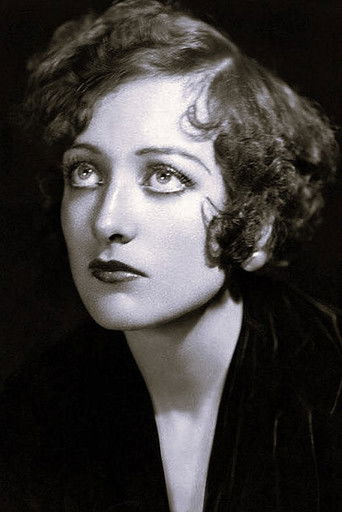
Don't put your shoes on the furniture. Don't sit on the armrest of the sofa. Don't move the couch pillows. Don't get too comfortable and remember to breath - that is, if your airway isn't constricted by Joan Crawford's varnished claws.Welcome to the residence of Harriet Craig, a neurotic tyrant with serious abandonment issues who runs a mercilessly tight ship. The maids scamper around like frightened mice, tending to the house with hospital-grade efficiency. Her easy-going husband can't sit down without upsetting her regimented system of orderliness. Her cousin who boards with them has been reduced to a personal assistant forbidden from having a life of her own. Based on the Pulitzer-Prize winning play Craig's Wife by George Kelly, Harriet Craig is the second of three consecutive collaborations between Joan Crawford and director Vincent Sherman (they were also lovers for a brief period). Filmed in two previous versions in 1928 (as a silent film) and 1936, HC is impeccably written and beautiful scored with a knock-out central performance from a screen icon. With a severe boyish haircut and sharp-lined silhouettes, Crawford embodies this monstrous matriarch who's foregone warmth in favour of clean surfaces. There is something authentically horrifying about Harriet. Because the play never spills over and becomes ludicrous, her dictatorship and steady manipulations are gravely convincing. She spoils her cousin's potential courtship and husband's career opportunity with a series of deftly-ladled lies to keep both under her command. Neither her husband nor cousin are painted as fools for not suspecting how disingenuous she is. By the time the cracks start to show, the ensuing fireworks are devilishly gratifying. We can't wait for her to be unmasked and abandoned once again. And just as things start to turn around, we're reminded of why Harriet is the way she is - and suddenly we feel sorry for her. Sherman is terribly good at keeping the audience on the other side of the argument; he doesn't let us off easily. By the time Harriet gets her just desserts, we pity her - a tremendous effort considering how despicable she is. Cinematographer Joseph Walker does a good job of breaking the movie out of its stage-play origins - and not by constantly pushing the characters out of the home environment unnecessarily like so many inferior stage-to-screen productions. His film is well-framed and edited with a clean maturity that make it effortlessly watchable. But the reason to see Harriet Craig is Joan Crawford. The New York Herald Tribune wrote at the time, 'In every mannerism of speech and gesture, Miss Crawford suggests that she is a queen in the country of cinema, playing a dominant woman whose unkindly rule of her home has psychotic origins.' As an interesting sidebar, much has since been made of Crawford's real-life affinity with the titular role. Even director Vincent Sherman remarked, 'She had the same obsessive attitude toward her home. She distrusted men, whom she tried to manipulate... I tried to capture these characteristics in the film - but I was afraid Joan would object. I was afraid she might recognise herself. She didn't - although she certainly could have taken it personally.' He expanded on this, telling biographer Charlotte Chandler, 'Everything went smoothly on the production, and the producers were satisfied with the results. She was so good in the film that sometimes I wonder if I didn't get Joan and Harriet Craig mixed up in my mind.' Harriet Craig received favourable reviews from critics and fared well at the box office. It's largely forgotten now, having been released the same year as stand-outs like Sunset Boulevard and All About Eve. It's a shame the movie has been overlooked for so long; it deserves a retrospective appreciation, which is why I felt inspired to write this piece. If you've not seen the film I suggest you take a look. TCM have released a crisp transfer which is available as a stand-alone DVD and as part of a Crawford box-set. Check out the below link for details: www.amazon.com/Crawford-Harriet-Autumn-Leaves-Costello/dp/B00A9ZMNE2PS: Thanks mum for another fabulous Crawford shared experience. We both knew this was an upscale Joan movie when it took twenty minutes before one of the characters referred to her as exceptionally beautiful... Do you suppose it was written into her contract?