
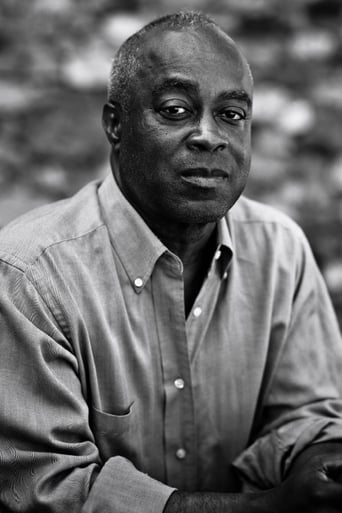

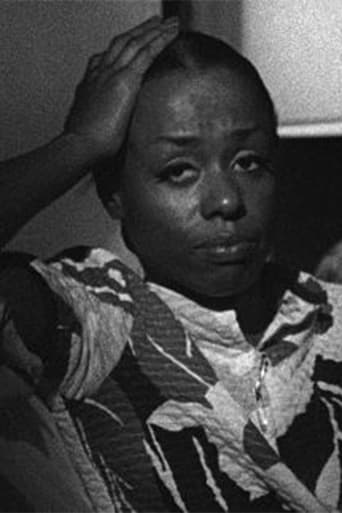

I grew up in a South Central L.A. ghetto neighborhood — on the corner of 59th Street and Slauson Avenue, to be specific. Every day seemed as trivial as the last. I was never aware of the constant danger surrounding me. I didn't even have an inkling of my family's own poverty, though I had my suspicions that, crammed as we were, three to a room (in a cold apartment that only had two bedrooms and one bathroom for 6 people), we were not exactly middle-class. Even though my parents could tell I was going ... somewhere (and even though they fought to get me where I am today), it was all behind-the-scenes for ten-year-old me. As far as I was concerned, I lived life on the humdrum, eating sugary Frosted Flakes in the morning, dutifully going to school, never wondering where all my friends would be ten years from now, returning home to listen to old pop classics (the Beatles and Motown were mainstays in my home), and going to bed without knowing whether I'd eat the next day. I don't mean this last phrase to sound throbbingly melodramatic. I genuinely didn't know where I'd eat the next day because I thought, "Well, of course I'm going to eat. I mean, everyone around me does, right? That's why everyone's so healthy-looking."It's this appreciation of the single day's doldrums that captivated my attention during Charles Burnett's underappreciated Killer of Sheep, a movie whose poetry is so understated it could pass as cinematic haiku. Burnett understands what it's like to be all age groups and all genders in the inner city. For Killer of Sheep, he focuses on Watts during the late 70s and a black family led by the stoic, slaughterhouse-worker-patriarch Stan (Henry G. Sanders), his unemployed wife (Kaycee Moore), and their two children, a quiet girl and a playful boy. The memory of Watts ’65 hangs over each inexplicably sad scene; in this world, the smoke may have dissipated but the pain, anger, and melancholy has not. Burnett’s neighborhoods haven't changed much in spirit between 1978 and the moment I’m writing these words. The other day, I paid a visit to my old stomping-grounds in South Central, and was surprised to feel the same mixed tension and battered beauty hanging in the air. Burnett’s precocious children are dead ringers for the boys I encountered in childhood. Like me, they think imaginatively to survive their daily Sisyphean struggle with whatever roiled them. Stan’s son and his friends imagine a railroad track as the gateway to the Pearly Gates of Play Time, when in reality it’s the opening to Rodin’s Gates of Hell. It's the jarring disjunct between the kids’ make-believe world and the harsh, murderous reality of living — being consigned by U.S. capital, really — in Watts that moved me immensely. Revelation after revelation dawned on me while Killer of Sheep glided through its lean 80 minutes. Never before has the quiet resignation of the worker parent been so cogently realized. Never before has the innocent childhood act of playing with some mechanical doohickey (i.e., a railroad car, a block of wood) appeared so tragic in its harsh, contingent danger. (The kid could get decapitated, but as with the knives in Linklater's Boyhood, it never turns to that.) Never before has the smashing of a stolen engine felt so soul-crushing. That stolen engine means money, means food on the table, means staving off hunger for the next day. When it’s demolished, a piece of us is, too.What Burnett does with Killer of Sheep is nothing short of brilliant artistic genius, and beyond. He takes normal elements in our day-to-day lives that we take for granted and, with his unmoving and patient camera, turns it into poetry. Every cut in Killer of Sheep is a new truth being staked out for the first time. When he cuts from a bevy of same-looking sheep being led to slaughter, to a shot of same-looking black kids playing in their yard, it sends chills down your spine. When he takes time out of his movie to focus on two men moving a heavy engine down to their car engine, it's with the unfocused and yet highly interested eye of a painter-poet who finds their inspiration as life continues before them. When he interposed the yakking of a black man whose tire has blown out over the instrumental breaks in Louis Armstrong's "West End Blues", he demonstrates his firm belief in spirituality of a mysterious source; there's poetry in every black soul, Burnett says, even beyond circumstances that are half-fate, half-systematic slaughter. We speak, live, breathe jazz; we've just never been reminded to this degree. He doesn't stop the camera for anything that can be considered boring. Every shot in Killer of Sheep adds to our understanding of a way of life, a way of life that the white-washed Hollywood has proven they don't care about, a way of life that doesn't make $400 million dollars on opening weekend or is featured on the covers of Variety and TIME or is nominated for Academy Awards. This is the sort of truth that doesn't seek audiences, but rather chooses to enlighten those who care about real art, and not some crass, commercialized projection of what reality is and what art — the horizons of a better day — can be.Burnett is an important voice in black independent cinema. In a regrettably white-washed film history, where the names of the greats are almost invariably white men, Burnett paves the way for future auteurs to fully realize their craft without fears of racist suppression. He makes way for people like John Singleton, Spike Lee, and Kasi Lemmons. At the same time, Burnett's films, so grounded in the "unheralded ripples of physical experience" as well as the great Leftist tradition of Latin American and Third World cinemas (Nelson Pereira Dos Santos's Vidas Secas, Solanas and Getino's The Hour of the Furnaces, Sembene), transcend color barriers. Just as the great humanists of cinema transcend the societal and political specifics of their eras (Cassavetes, Renoir, Satyajit Ray, Hawks, to name just a few), so, too, does Burnett forge a new way of thinking about our fellow man that doesn't resort to cheap cliché or blasé idiocy. What we find instead in Killer of Sheep is a radical respect for the continuing human experience. It's a movie that's made out of feelings rather than abstract projections of what people should be — something that certain directors of today have trouble figuring out for themselves.It’s a seemingly inconsequential detail, but the moment where Stan’s son pours heaps and heaps of cane-sugar on his Corn Flakes hit me with such emotional force that I had no choice but to quietly recede into my childhood memories in a stream of tears. Killer of Sheep’s lackadaisical flow and dedication to every single quotidian aspect of a hard day’s work makes it a masterpiece of underhanded emotional devastation. It’s a movie concerned with feelings of people who exist and continue to exist. These aren’t cheap projections of what people should be like; these people are. They do. They feel. They hope. They fade into memory and are forgotten. They are anonymous like the sheep who get led to their deaths in Stan’s slaughterhouse. Burnett is similarly obsessed with fidelity to an anonymous family’s daily grind, and this imbues his project with a breathtaking honesty that stirs the soul.