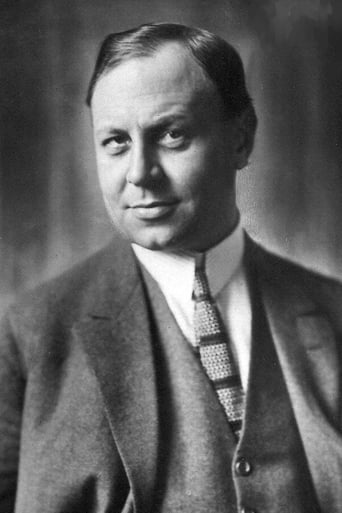
Cinematic Time Capsule1920 Marathon - Film #5”Find a man for Liesel, and Gretel will be yours.”Xaver falls in love with the younger of two sisters, but her father declares that his rough and tumble older daughter must marry first. Thus, Xaver needs figure out how to find a husband for a woman that no one wants to marry… and his solution is incredibly silly. In fact, this is probably the silliest Lubitsch movie I’ve seen so far.Henny Porten is absolutely hilarious as the gruff older sister, and truth be told, she was so great, that it took me a while to figure out that she’s actually playing both sisters. I looked her up and it turns out that she became one of Germany's first major film stars and a producer who appeared in more than 170 films between 1906 and 1955.Her costar, Emil Jannings, whom I enjoyed so much in Anna Boleyn, puts in another solid turn as well. A few years later he followed Lubitsch to America, where he ended up winning the first Lead Actor Oscar ever in 1929.”You’re a clever guy.”“And you, my friend are a complete idiot.”Cinematic Time Capsule - 1920 Ranked
This film takes "The Taming of the Shrew" as its inspiration. Henny Porten is incredible in the dual role of Gretel and Liesel, with Liesel being the "shrew" of the story. The contrast between how Henny Porten portrays each sister is so great that I had a difficult time disbelieving my eyes - they just look and act so differently. Seen at the 2025 San Francisco Silent Film Festival, with live musical accompaniment by Stephen Horne and Frank Bockius. 52 Years in 52 Weeks: 2025
In Kohlhiesel's Daughters, Lubitsch hews very closely to Shakespeare's Taming of the Shrew, but in a way that devotes specific emphasis on gender inversion and the subterfuge that Lubitsch has banked his entire career around. Call it Shakespearean subterfuge, cause I like alliteration.The Kohlhiesel family own an inn and a farmhouse, and are no strangers to raucous gatherings in their halls of drunken patrons. Mr Kohlhiesel (Jakob Tiedke) relies upon his two daughters Gretel and Liesel to tend the bar, and the difference in response to their presence by male patrons is as clear as night and day.Gretel and Liesel are twin siblings (both played by Henny Porten), where one is more feminine who is desired by the men, the other is more masculine and who shuns all the men. Porten's dual performances are excellent and feel like a natural extension on Lubitsch's blurring of gender lines in "I Don't Wanna Be a Man" and the associated stereotypes that come with them.The two main men of the picture, Xaver and Seppl, are polar opposites: Xaver is an overtly masculine podge that prides himself on his bravado, whereas Seppl is a more sensitive lad that is introspective and less defined by his masculinity. Thus Lubitsch has four sides of the square to complete his holistic conception of gender and stereotypes. The film feels fuller by the addition of differing concepts of male stereotypes, and the defining contrast between men and women works better as a result.The story follows the Taming of the Shrew's set up of Xaver trying to be in a relationship with the youngest daughter Gretel, but is told he cannot marry her until the eldest daughter Liesel is married first, as per tradition. Liesel is the "shrew" of the piece, but Lubitsch characterises her with his familiar gender inversion of a woman with more masculine traits and way of dressing, as the reason behind her apparent undesirability which is very much in alignment with Lubitsch's traditional topsy-turvy world.Seppl comes up with the idea that Xaver should marry Liesel so when she tires of him and divorces him, the floor will be open for him to marry Gretel afterwards. Which is a very strange plan, and requires Xaver and Gretel to pretend to break up, then Xaver announces to Kohlhiesel his intentions to marry Liesel instead.Liesel's father then says "I take no responsibility for any medical expenses caused by my precious Liesel." As Liesel sets forth her boundaries to Xaver and outlines her more physical and exuberant way of living, much of the humour in the story is derived from the comparison and overlap between male masculinity and female masculinity, and male femininity and female femininity.The story contrasting Liesel and Xaver's masculinism with Seppl and Gretel's more feminine leanings, reminds me of "I Don't Wanna Be a Man" through Ossi Oswalda's exaggerated posturing as a man around other men, but is done here through a less allegorical take on the gender construct and the compatibility of personality/stereotypes of each supposed gender. As such it adds a refreshing touch of modernity to Shakespeare's story (despite one strange moment that feels very much like Petruchio's treatment of Katherine), and defines Lubitsch's ability to funnel humour into his very prescient awareness of the illusory boundary of gender stereotypes.The visual stylings of Lubitsch's camera work are less frenetic than in "The Oyster Princess", but are no less clever. There are great character moments of Liesel's "can do" attitude rolling her sleeves up to throw a rowdy drunk out, a few solid match cuts to humorous destruction of property (à la Austerprinzessin) and interesting subtle reaction moments between Xaver and Gretel as they play up their break up for Mr Kohlhiesel's benefit, plus one moment where Lubitsch changes the aspect ratio entirely for one shot of Xaver and Liesel ascending a staircase.In "Kohlhiesel's Daughters", Lubitsch's efforts here elicit a more complete articulation of his aspirations around gender inversion, one that feels more truthful to the characterisation of masculine women and vice versa, and as such is able to wring more genuine considerations of humour from the story. Up next: Romeo and Juliet in the Snow (1920)