



halloween 2025
Jason, Sohn von König Aison, ist auf der Suche nach dem Goldenen Vlies, mit dessen Kraft er seinen Onkel Pelias vom unrechtmäßig erworbenen Thron stoßen will. In Kolchis trifft er auf Medea, die sich sofort in ihn verliebt und ihm hilft, das Vlies zu bekommen. Zurück in Jasons Heimat heiraten die beiden. Medea schenkt ihrem Mann zwei Kinder, doch das Glück währt nicht lange. Aus Ehrgeiz verlässt Jason seine Familie, um Glauke, die junge Tochter des Königs von Korinth, zu heiraten. Medea ist blind vor Eifersucht und nimmt grausame Rache...
Medea läuft in 1 Kino in New York City - nächste Vorstellung Mittwoch, 21. Oktober um 21:30 im Metrograph.
Nächste Vorstellungen: Mittwoch, 21. Oktober.
Vollständiger Spielplan
Spielzeiten zu Medea, jeden Morgen aktualisiert
Wähle dein Kino und bekomm einen Hinweis, bevor der Film aus dem Programm fällt.
halloween 2025

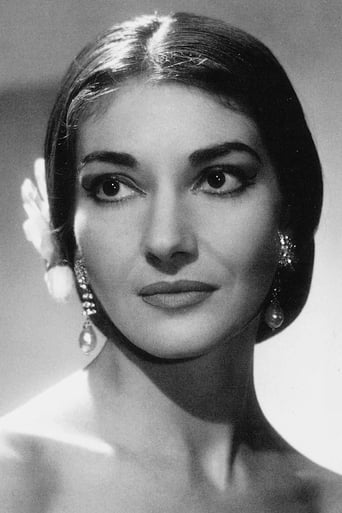
This continues to be one of the most inaccessible films I have ever seen. Pasolini takes the Greek tragedy of Medea, which I know best through Euripides' interpretation, and creates one of the most artistically incomprehensible adaptations ever. Pasolini subverts all narrative and technical expectations in this film, providing extended dream-sequences and jump-cuts as a means of developing a ritualistic and disorienting atmosphere.Perhaps the most important thing about Pasolini's Medea is that Medea does not appear in the film until after the first half hour. Pasolini spends the first section of the film characterizing Jason and establishing the differences between Corinth and Colchis. The most important element in the tragedy of Medea is that she is an outsider in Greece, and the first third of Pasolini's film does a great job at emphasizing the eccentricities of her home country of Colchis. The first introduction to Colchis is through a violent ritual sacrifice, which is compared with the quiet and ordered civility of Greek life; the country where Jason is raised is the light of civilization next to the dark and barbarous Colchis. Pasolini utilizes the film's soundtrack as a means of showing Colchis' primitivism, as the film plays African tribal music while the rituals are taking place.After Medea helps Jason steal the golden fleece, she marries him and is forced to give up her native ritual clothing. She is then forced to wear typical Greek clothing, but the Nurse in her home tells her that the people of Corinth still view her as an outsider and a dangerous evil. Maria Callas performance of Medea is incredibly humanistic and inspires a great deal of empathy, her incredible facial expressions were likely a result of her history in opera. When Jason finally leaves her to be with a younger princess (who is a more socially acceptable wife than Medea), Callas looks absolutely heartbreaking as she realizes what her future holds.At this point Pasolini subverts the traditional Greek narrative and shows Medea murdering the the princess and king through an extended dream-sequence, in which he gives very few hints that it is in fact imaginary. The film's atmosphere is very eschewed during the dream-sequence, with lots of repeated imagery and superimposed dissolves that disorient the viewer. The sequence is very strange, and when the film cuts back to show that Medea (or perhaps the King) was dreaming of the horrific revenge, the viewer will be relieved after suffering through such a confusing and abstract narrative departure. I say that this is such a strange scene mostly because Pasolini hasn't particularly set-up that Jason has left Medea yet, so for someone that does not have experience with the play it would be very confusing.Pasolini then shows the events much closer to how they are presented in Euripides' original tragedy, however he grounds the revenge in realism, doing away with having the princess burst into flames, and instead giving her a death that could have either been caused by guilt of Medea's powers. I love that Pasolini adds this unexplained element, as it works towards making the princess a much more sympathetic character, while in the original tragedy she is a complete bitch that deserved to die. In this film, Medea also dies along with her sons, which is a much more interesting ending than the original tragedy.My favorite part of this film is how hot it looks. The colour in the film is very yellow and brown and red, and this colour choice makes every scene feel very hot. I feel uncomfortable watching the film because of this, and the length that each scene lasts adds to sweltering nature of the film. One can be absolutely drained by the way the film looks, with Pasolini's cutting between deep landscape shots and close-ups. I feel like the technical aspects of this film add to the disorientation that Medea is experiencing after leaving her home, and by distancing the viewer Pasolini is forcing them to empathize with how Medea feels. Pasolini also presents his characteristic symmetry throughout the film, as well as a lot of interior framing that makes for complicated and abstract shot composition. I absolutely adore the way that this film looks.I feel that in this review I've barely said anything important or interesting, but this is one of the most inaccessible films I've seen. It was really hard for me to watch this film even though I loved it, and it's even harder for me to review it now without sounding like an idiot. This film is like the first 3 hours of OUT1, it's incredibly ritualistic and spiritual and attempts to distance its audience, but for some reason it's incredibly captivating. This film is one of the best examples of why I challenge myself to do better and learn more about film, and one day I will look back at this review and laugh at my naivety. One day I'll get it, and when that day comes, my review will be spectacular -- just like this film.

has easily the funniest tagline of any movie on this website
Der Film folgt einer barbarischen Priesterin, deren Position in der altgriechischen Welt bedroht wird, was sie zu brutaler Rache an ihrem untreuen Ehemann führt.
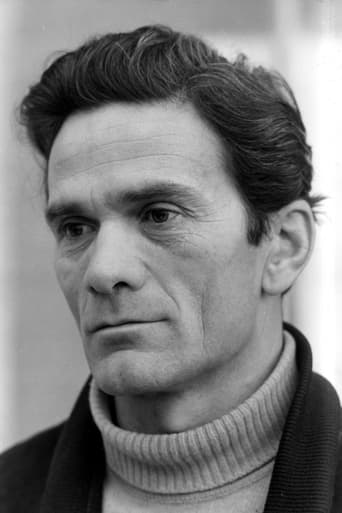
Der Film wurde 1969 von Pier Paolo Pasolini inszeniert, mit der Opernlegende Maria Callas in der Hauptrolle.
Ja, der italienischsprachige Film wird in der Regel mit englischen Untertiteln vorgeführt.
Streamen Sie Medea auf Mood.