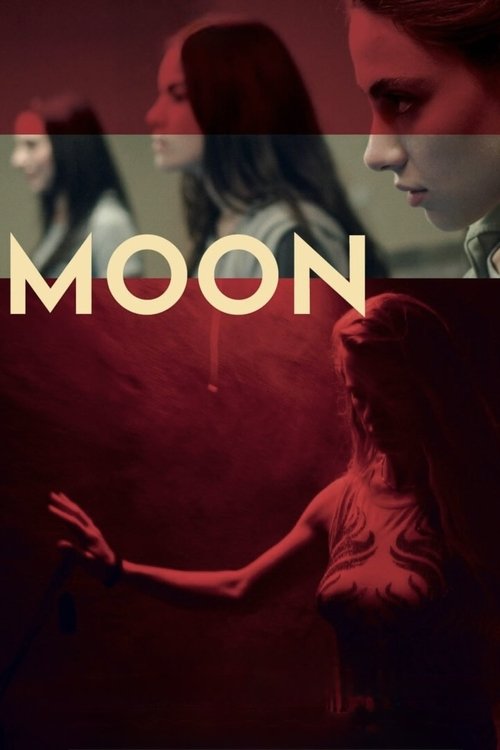
Scrolling through reviews, it seems to me that many people totally misunderstand this movie. It's so clearly not trying to deconstruct any kind of ideas of identity, finding yourself or even criticising problematic structures in certain Islamic countries. "Moon" is all about the feeling of powerlessness. Throughout the entire runtime, we are restricted to the narrow point of view of the protagonist, Sarah. We only see and hear what she sees, we never get the feel picture, like she realistically wouldn't get. In keeping with the realistic approach, the conflict and mystery never find a satisfying end - which is frustrating, for sure, but it's such a clever and authentic subversion of how you would expect a story like this to go. Sarah is ultimately just an outsider, who understands little, and cannot change anything. What makes it even more clever is how her character is written: she's a martial artist who has trained herself for decades to be bold, not to back down and who has become insensitive to other people's emotions. It's brilliant to place a character like that in a situation where any wrong decision may cost her life and that challenges her to help people, to be sensitive towards their struggle. Admittedly, she is insufferable at times, yet she is the perfect character for this story - and the actress absolutely nailed her role!Many people seem to be put off by "Moon"'s lack of coherence or resolution, seeking something that the movie just does not want to offer. It's a shame because it conveys something so much fresher and so much more unique than another deep-dive into all the details of an abusive patriarchal household.
“…anything that you see, anything that you hear, you know, in the house, stays within the walls of the house.”the film begins with a losing battle — Sarah (Florentina Holzinger), a professional kickboxer, 20 years into her career, decides to retire her gloves after losing her final MMA fight and becomes a personal trainer. she then receives a job offer that sounds too good to be true: getting hired as a personal trainer for 3 wealthy and young sisters who currently live in Jordan — an area far away from her Austrian landscape. upon arriving, Sarah meets the sisters: Fatima (Celina Antwan), Nour (Andria Tayeh), & Schaima (Nagham Abu Baker) and their older brother, Abdul (Omar Al Majali), who seems to be in charge of the household — though, the sisters aren’t interested in fighting and she had been expected to sign an NDA: no social media, no pictures, & every session must be kept private. as she gets to know the sisters, there, her suspicions were raised: the girls are homeschooled, have no friends, must have a bodyguard chaperoning them at all times whenever they leave the house, with their rooms under lock & key, (e.g. Sarah is prohibited from going into their rooms despite being invited by Fatima), and are not allowed to have phones with them; not to mention, they don’t have access to the wi-fi — so no outside contact, unless an arrangement has been made. “what, do you think they are mafioso?”as an outsider, Sarah could’ve easily stayed away and brushed aside these concerns — however, she’s a fighter who, i can assume, doesn’t give up and doesn’t want to lose. speaking to the bartenders at a bar that she frequents, she begins to learn more about her employers — there, things start to take a turn. as i’m watching this, i often find myself drawn to the empty spaces and lack of closeness — it is when i realised these girls live in a cage where their wealth wouldn’t even save nor protect them from such brutality and violence. there are eyes everywhere in that household, controlled structures in those walls, saving them would take a miracle… but, sometimes life is unfair and miracles don’t seem to exist. “there are a lot of things i want to explain to you.”and just like how the film begins, the ending wraps around, coming into a full circle — with Sarah feeling defeated yet again, after losing the battle. this time, she's destroyed beyond healing, becoming a victim of this patriarchal system that many women have endured. in the end, Kurdwin Ayub’s sophomore feature Mond (Moon) blatantly states the obvious: that feeling of powerlessness and fear — when you try to do the right thing and stand up to injustice, but are at a disadvantage of risking your life and the livelihood of others in the process. “will you be happy if we’re caught?”