
Losey's best film and one of the most horrifying movies I have ever seen, the greatest film about fascism.
We use cookies to personalize your experience and analyze traffic. You can opt out at any time.

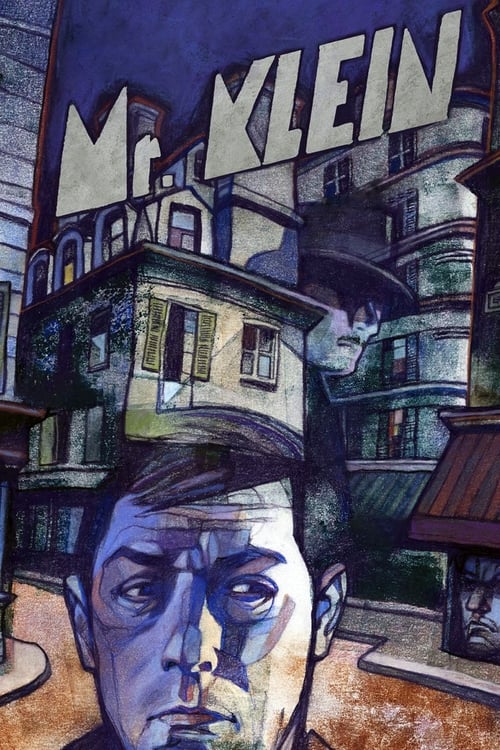
Paris im Jahre 1942. Der egoistische, abgebrühte Kunst- und Antiquitätenhändler Robert Klein ist ein eiskalter Geschäftsmann. Da die französische Hauptstadt von den deutschen Truppen besetzt ist, nutzt er die Gunst der Stunde und beutet die verunsicherte, übrig gebliebene jüdische Bevölkerung aus, wo es nur geht. Die in finanzielle Not geratenen Unterdrückten wenden sich an ihn, um ihr Hab und Gut noch für ein bisschen Geld zu versetzen, welches sie so dringend zum Überleben brauchen. Profitgierig kauft Klein den Juden das Eigentum zu einem Spottpreis ab, um selbst damit zu verdienen. Als sein Name eines Tages in der Abonnentenliste einer jüdischen Zeitung erscheint, gerät der Händler in den Fokus der Nazischergen. Ab diesem Zeitpunkt bekommt Klein die ganze grausame Macht des totalitären Regimes zu spüren.
Heute keine Spielzeiten für Mr. Klein in Athen.
Spielzeiten zu Mr. Klein, jeden Morgen aktualisiert
Wähle dein Kino und bekomm einen Hinweis, bevor der Film aus dem Programm fällt.


Losey's best film and one of the most horrifying movies I have ever seen, the greatest film about fascism.

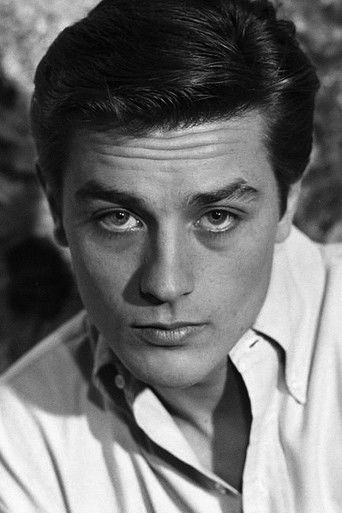
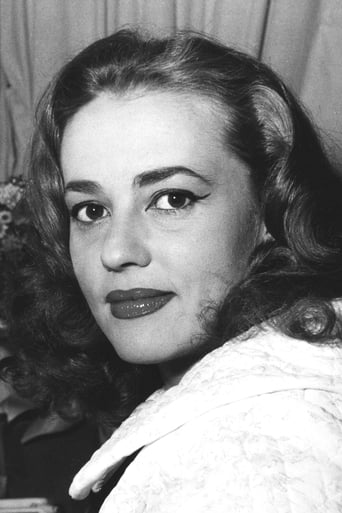
"Tell me, the Kleins—are they French-French, or are there Jews in your family?"Without question the oblique thriller Mr. Klein (Monsieur Klein) is the most compelling of the three Joseph Losey films I've now managed to see—the others being the Harold Pinter collaborations Accident and The Go-Between. In fact I'll grab the lowest-hanging fruit around and concur with the chorus who have deemed it potently Kafkaesque.Set in 1942 Nazi-occupied Vichy France, Franco Solinas' screenplay revolves around Robert Klein (Alain Delon), a disreputable Parisian art dealer who buys paintings at pennies on the dollar from Jewish collectors desperately seeking their escape. Turnabout ensues when Klein finds himself the addressed recipient of a local Jewish newspaper, though he initially assumes the occurrence to be a simple clerical error stemming from the existence of a second Robert Klein. Whether through happenstance or—as he becomes increasingly convinced—a reprisal of some sort, Klein is subjected to ever-intensifying police scrutiny when he cannot satisfactorily establish his non-Semitic provenance. Despite the solicitous intervention of his friend Pierre (Michael Lonsdale), Klein becomes destructively obsessed with locating his doppelgänger rather than trying to flee like his defrauded clients.I can't help but appreciate the perverse brand of temerity it requires to make a victim of an exploitative cur like Klein, even more so when played with conspicuous anti-charisma by real-life miscreant Delon. My only noteworthy complaint is that it's false advertising to give Jeanne Moreau second billing when she appears in one scene for ten minutes. Stay away if you're opposed to loose ends and/or slow descents into madness.Points deducted for underusing Juliet Berto.Some stray notes:-YOU THINK WE ARE A SUBJECT FOR JOKES?-THIS CANNOT INTEREST THE POLICE-WHO'S THIS SKELETON IN YOUR HOUSE?-A HIBERNATING SNAKE WAITING FOR A BETTER SEASON-AND THOSE TERRIBLE OVERALLS-A MAN COMES FORWARD, THE BETTER TO HIDE

In occupied Paris in 1942, a refined art dealer of Alsatian birth and Catholic religion takes advantage of the racial laws to do golden business with Jews, forced to sell off their property to escape from France. Robert Klein is a selfish man, cynical and disinterested in everything that happens around him, until he discovers the existence of his namesake of Jewish origin, finding himself embroiled in a disturbing exchange of identities. Aided by a splendid screenplay with Kafkaesque implications, written by Franco Solinas, Joseph Losey masterfully combines the themes of double, otherness and anti-Semitic persecution. Mr. Klein is a film as tense as a thriller, of great visual suggestion and strong allegorical value, aimed at transcending the historical contingency to privilege a dimension of existential drama. The heart of the story is the self-destructive drift of a man who gradually loses his security of "vulture", on the one hand prey to the gears of an oppressive judiciary apparatus that believes him to be a Jew, on the other hand shaken by a new awareness of outside world, a world very distant from the comfortable reality in which he had guiltily always lived. Klein is persecuted by the elusive figure of his double, whose moral superiority he senses. He chases him everywhere, he tries in every way to get to know him, he's so obsessed with him that he loses himself in a morbid search that he will eventually carry out not so much to rehabilitate his own name, but rather to give a face to what he wants to become. Through this protagonist's descent into hell, the director reflects on the ambiguity of the human condition. A condition that according to Losey - American filmmaker victim of McCarthyism and therefore forced to self-exile to Britain - is marked by a chilling indifference towards others. Magnificent Alain Delon in one of the best interpretations of his career.Qui la recensione in italiano.
Set in Nazi-occupied Paris in 1942, a cynical art dealer discovers that another man shares his exact name, leading him on a tense, Kafkaesque quest for identity.
Mr. Klein was directed by American filmmaker Joseph Losey in 1976, winning three César Awards including Best Film.
Yes, the film won three César Awards in France, including Best Film, Best Director, and Best Production Design.