What unites all of Sara Gomez's sadly short body of work is this notion that there's stll so much to do, so it makes sense that the idea is dealed head on in her only fictional feature. De Cierta Manera is pretty much about the idea that things don't magically work out the day after the revolution, that there's plenty of work both in the personal and public spheres to come. The movie moves very freely between fiction, historical reconstrucution and documentary. There's a pleasure in how the camera just goes around the daily life on the neigborhood that by itself justify the film. It often operates in a more radical version of the tension that animates her shorts between her feel for the cubans she is filming and the mission statement of the film. The people's resiliance ans power is what one takes most, but there is this future to come, the still large distance the film lefts open.
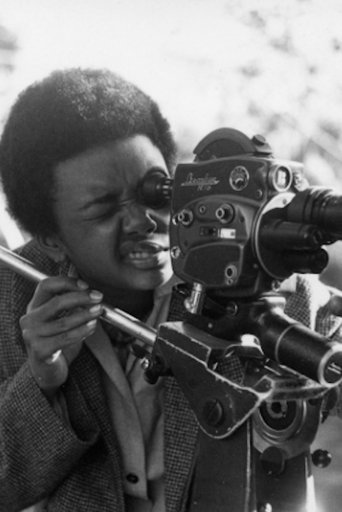
Directed by 31-year-old Sara Gomez just before she died from one of her frequent asthma attacks, One Way or Another was the first feature film ever made by a Cuban woman, and was enormously radical in its experimental style, its focus on the Afro-Cuban community, and its powerful politics. It also made its director a posthumous giant in revolutionary Latin American cinema at the time, and influenced her fellow thinkers and filmmakers far and wide — A Dream is What You Wake Up From, the style of which is heavily influenced by this film, is dedicated to Gomez.But, let's put its immense importance and influence aside for a second and look at the film itself: One Way or Another is fantastic. It absolutely sings with energy, passion, and creativity, and speaks loudly of the towering talent that was lost when Gomez passed away, leaving over a dozen shorts behind, but just this single feature.Made in a style that is a mix of fiction and documentary, the film takes on: race and class in post-revolutionary Cuba, cultural sexism, the education system, the shortcomings of the government's efforts to change the lives of those at the margins of society and, oh yeah, also weaves a fictional love story into its politics. And Gomez almost never stumbles, audaciously combining polemic, frustrated revolutionaries, romantic walks, and footage of the destruction of favelas into what, impossibly, becomes a coherent whole. It's jaw-dropping, from start to finish.In many ways, the love story — the one part of the film we can be reasonably sure is fictional, though both characters do share the names of the non-professionals who play them — is the punctuation mark on all of the issues the film explores. The mixed-race Yolanda (Yolanda Cuellar) is an idealistic teacher who comes from a privileged background, and is determined to change the lives of the students in the new favela school in which she works. She passionately harangues parents, insisting that they push their kids to go to school (to do homework, to study), utterly unable to understand that a single working mother with 10 children is already using all of her time and energy to keep food on the table, and clothes on the backs of her children.Mario (Mario Balmaseda, who is awfully good), meanwhile, is an Afro-Cuban manual laborer, born and raised in profound poverty and without any formal education. He's a traditional "macho," someone who is challenged both by Yolanda and her good natured but unwavering insistence on her own independence, and by his friends, who mock his attachment to "the teacher," and respond with anger when he dares to step off of the path they have walked together since childhood; when he starts to posture less and ask more questions of himself.Gomez traces the development of Mario's and Yolanda's relationship beautifully, taking them from flirtation into something like an engaged curiosity, and then, finally, into a period of loving conflict, all of it punctuated by (and commenting upon) footage of the two of them in their own environments, educational content about the development of Cuba's culture of machismo and, always, wrecking balls hitting favela walls.As Mario begins to see his world — and the nation as a whole — with a new perspective, it challenges everything he is. Not because Yolanda demands he change, but because all of the simple certainty in which he'd spend his whole life — of his own power and importance; of loyalty to friends superseding everything else; of physical toughness and sexual prowess being the keys to a man's value — is being stripped away, leaving him naked and, as he quietly confesses to Yolanda, afraid. And it leaves him angry, lashing out at her and anyone else who dares suggest his new path is a positive one. But Mario doesn't let himself walk away. He argues, sometimes vociferously, but he keeps talking.The film ends with a crane shot of Mario and Yolanda walking through one of the new housing complexes that are replacing favelas, arguing furiously. Everything we see is incomplete and needs a lot of work, but there is hope for it all, as long as people don't give in, and continue to fight for what they believe is right: Mario and Yolanda, marginalized people, the revolution, and even Cuba herself.⏩ 52 Films by Women: watchlist | seen