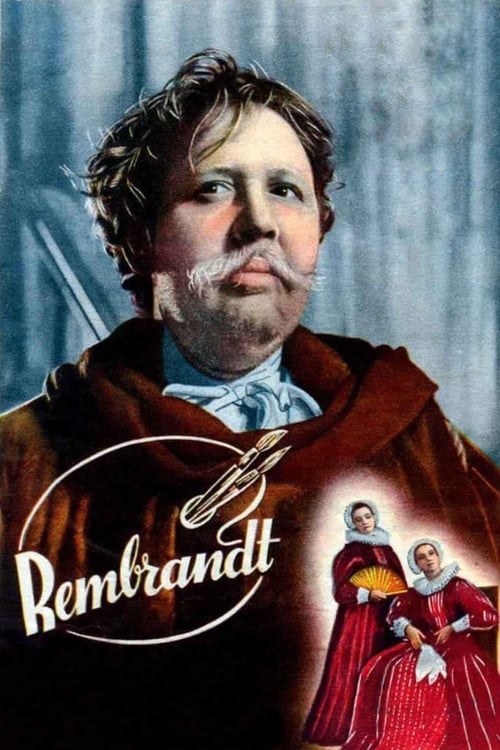


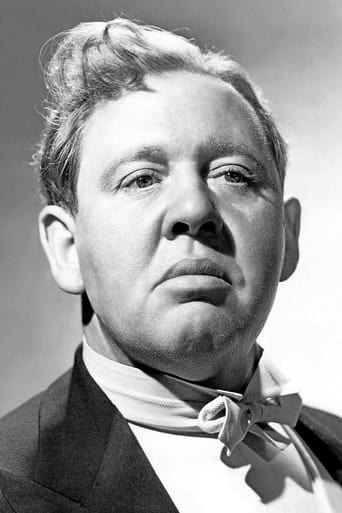
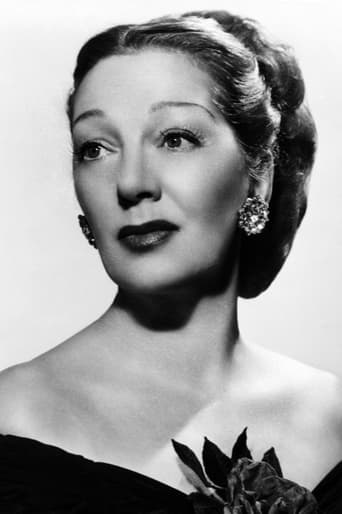
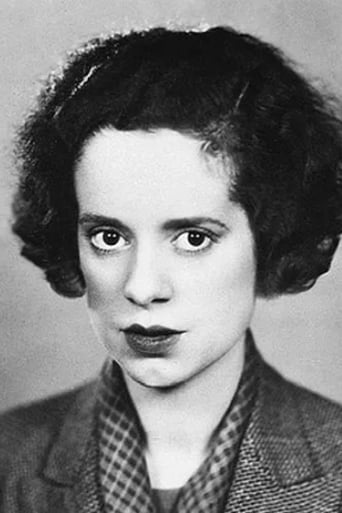
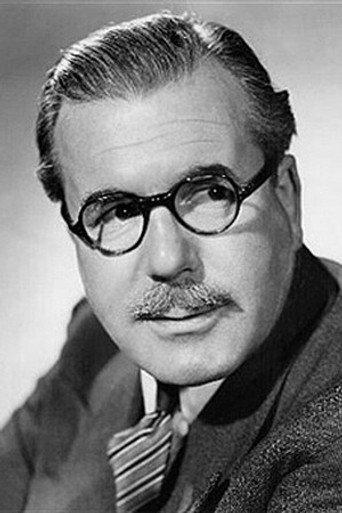
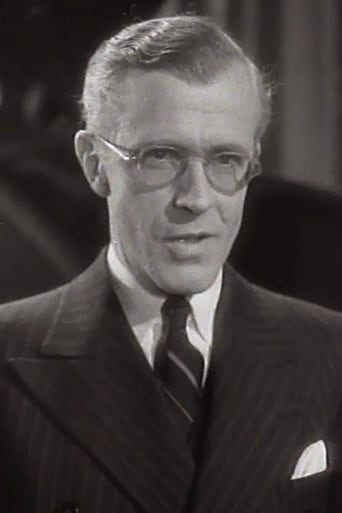

“I can see nothing but shadows, darkness, and confusion.”Rembrandt is a typical film biography of an artist, emphasizing his private life (family, finances) over his art. Except for the public rejection of The Night Watch, there isn’t much directly about the artist. Alexander Korda’s film highlights crucial events in the life of Rembrandt (Charles Laughton), but if you didn’t already know that he was one of the greatest painters ever, I’m not sure you would gather that from what we see here. Of course, there’s an opening script making sure we know his paintings are worth millions and that therefore we should pay attention.But the film has many virtues. Vincent Korda’s sets are spectacular. The cinematography by Georges Perinal (The Life and Death of Colonel Blimp, The Fallen Idol), with Robert Krasker as camera operator, is lovely, though those who claim it approximates Rembrandt’s use of shadows may be stretching a point. The most striking shots are the brightly lit exteriors. John Armstrong’s detailed but not showy costumes also contribute to the film’s visual style.“When one woman gives herself to you, you possess all women.”Best of all is Laughton’s subtle performance, capturing the artist’s ego and passion while raising his voice only once or twice. Much of the film involves Korda and Perinal shoving the camera into Charlie’s very expressive face to show what Rembrandt is thinking. As Hendrickje, the kitchen maid Rembrandt takes as his last wife, Elsa Lanchester also eschews her usual quirks to give a charmingly quiet performance: “All you need is a warm coat, some soup, and maybe me.” Lanchester stands out in the scene in which Hendrickje comes up with a scheme to save the family’s finances. An unrecognizable Roger Livesey is excellent as a shabby beggar who poses for Rembrandt. The only weak performance comes from Gertrude Lawrence, as the housekeeper the painter takes up with after the death of his first wife. An acclaimed stage performer, Lawrence doesn’t know how to act for the camera and overdoes most of her scenes.The film has a lovely ending, with the elderly, poor Rembrandt forsaking food to buy paint. Art is more important than life. In this case, Laughton’s art helps the film overcome its weaknesses.Otis Ferguson: “The vote for best screen citizen must certainly go at times to Charles Laughton; without him there is no knowing what would have happened in Alexander Korda’s new version of Rembrandt. For Rembrandt as a picture is massive rather than neat on its feet, being heavy of motion and Old Testament in accent. But with Laughton standing up under it in the make-up of his several ages, dominant in his constant mobility and command of lines, filling in the written part with his own character and conception of character, there is no doubt that the picture is good, at times pretty grand.”Simon Callow, in his Laughton bio: “It is that rare thing in Laughton’s output, a naturalistic performance. Of course, it is supra-naturalistic as well: magnified, intensified, crystalized. But for once . . . he doesn’t isolate elements of his experience to create a concentrated model of a soul gone wrong; instead, he simply exists—a man, complicated, many faceted, living and breathing. Unlike other Laughton characters, he seems to have a life off-screen. . . . But [the film is] poorly shaped, the rhythms are dull, and there is a flatness about the whole thing. All this must be laid at Korda’s door.”Grahame Greene: “Reverence and a good cameraman are not good enough. Mr. Alexander Korda in his latest film has chosen the most difficult of all subjects, the life of an artist, and though he is indubitably on the side of Art with a capital A . . . he has not himself produced a film which one can treat as a work of art. . . . the film is ruined by lack of story and continuity: it has no drive. . . . it is a series of unrelated tableaux.”Pauline Kael: “At times the visual style seems more Vermeer than Rembrandt, but that’s closer than most movies about painters get.”Random thoughts:Several weeks before shooting began, Lanchester went on a road trip with Armstrong, a family friend, and his wife while Laughton was performing in Paris. When their car collided with a truck, Lanchester sustained a gash on her forehead but wouldn’t let the local York doctors stitch her for fear of leaving a scar. She had a plastic surgeon she knew summoned to London from his golfing holiday on the Isle of Wight to attend to her. As a result, there was only a tiny scar, with the wound healing before the start of the filming.According to Lanchester biographer Victoria Worsley, Elsa and Korda hated each other. Korda, who never recognized her talent, had her under contract only because she was Laughton’s wife and kept promising her roles which never transpired. Evelyn Ankers, Marius Goring, Wilfrid Hyde-White, and Alexander Knox all have small roles in Rembrandt. I didn’t recognize any of them.Rembrandt quotes biblical passages several times. In the 50s, Laughton gave dramatic readings of the scriptures on TV variety shows several times.Peter Greenaway’s Nightwatching is interesting, though Martin Freeman is far from an ideal Rembrandt.For an undergraduate art history course, your humble correspondent wrote a term paper about The Night Watch, an example of art noir.Watched on the Criterion Channel.