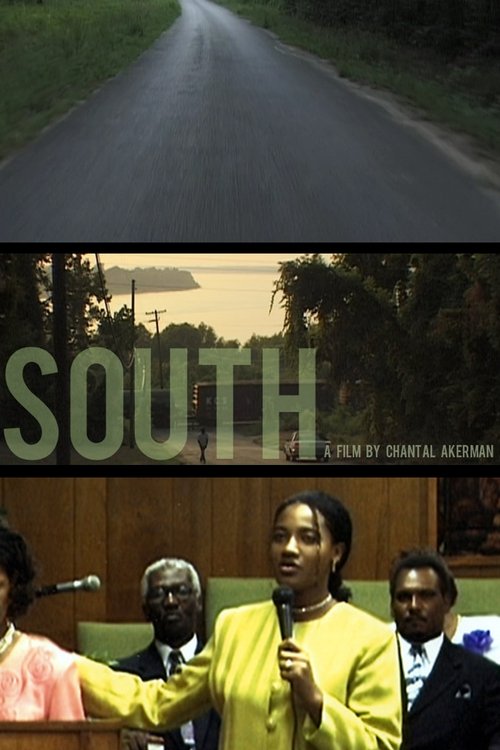


"We do have a few problems here in Jasper as far as, uh, racial."As an admirer of William Faulkner, Chantal Akerman was already planning to make a film regarding the American South at the time of James Byrd Jr.'s tragic lynching (by dragging) at the hands of three subhuman racists in Jasper, Texas. While Akerman seems to have taken footage from various Southern states, she makes the city of Jasper the film's nominal focus. In due course viewers hear from jaded journalists, beleaguered residents, an affable if soft-pedaling sheriff, and a number of Byrd's friends and family members. Ultimately more suggestive than informative, these talking head sequences (along with a fair amount of footage from Byrd's memorial) are intriguing nonetheless, but they are woven in somewhat awkwardly with classic Akerman endurance shots of increasingly redolent, static environs. The scariest part of Akerman's grim survey of American racial progress comes when a social scientist describes the inculcation of "leaderless resistance" principles among the perpetrators of racially motivated violence, as well as a growing trend of white supremacists taking over churches in order to proselytize to potential converts. Some stray notes:-THEY TOOK CONTROL OF US BECAUSE WE LIVED IN THEY HOUSES-SHIRTLESS DUDE JAMMING ON PORCH WITH STRATOCASTER