





hail mary, full of shit. rotten is the fruit of your womb. infuriating. isabelle huppert really is the best actress in the world
Regie Claude Chabrol
Une affaire de femmes
Ein von der Kritik gefeiertes, bedrückendes Drama.
Während des Zweiten Weltkrieges wohnt Marie Latour mit ihren beiden kleinen Kindern in einer Provinzstadt im besetzten Frankreich und verdient sich ihren Lebensunterhalt durch Strickarbeiten, die sie jedoch kaum über die Runden bringen. Aus Mitgefühl hilft sie einer Nachbarin bei einer Abtreibung. Als ihr Mann nach der Kapitulation der französischen Truppen heimkehrt, wird ihr die Mittelmäßigkeit ihres Daseins noch stärker bewusst. Er erkennt hingegen seine unabhängig und selbstbewusst gewordene Frau kaum wieder. Marie nimmt weiter Abtreibungen vor und mietet dafür ein Zimmer bei ihrer Freundin Lulu, einer Prostituierten. Dadurch kann sie sich ein großzügigeres Leben, besseres Essen und eine neue Wohnung leisten. Doch ihr Mann Paul verliert seinen neuen Arbeitsplatz bald wieder und wird immer verbitterter. Schließlich lässt sich Marie auf eine Affäre ein. Als Paul seine Frau eines Tages mit einem jungen Kollaborateur überrascht, denunziert er sie. ...
Story of Women läuft in 1 Kino in Berlin - nächste Vorstellung Dienstag, 20. Oktober um 20:00 im Bali Kino Berlin.
Nächste Vorstellungen: Dienstag, 20. Oktober.
Vollständiger Spielplan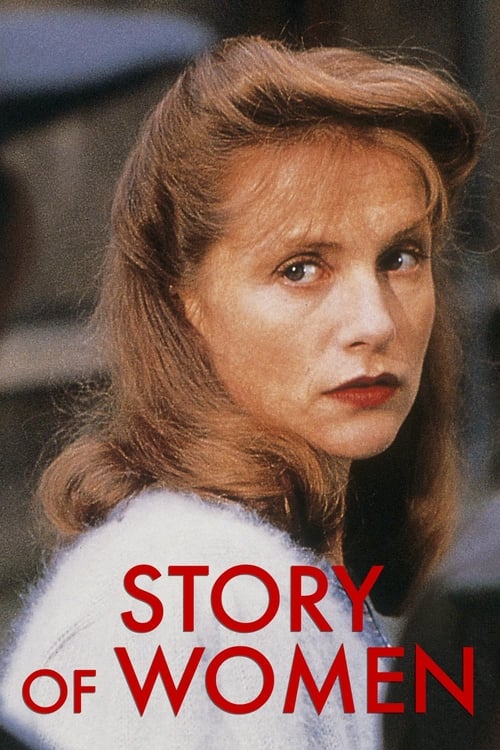
Spielzeiten zu Story of Women, jeden Morgen aktualisiert
Wähle dein Kino und bekomm einen Hinweis, bevor der Film aus dem Programm fällt.
hail mary, full of shit. rotten is the fruit of your womb. infuriating. isabelle huppert really is the best actress in the world

let isabelle huppert's character be gay you cowards

With a documentarian’s dedication, director Claude Chabrol sets out to tell in less than two hours the entire “Story of Women,” through the experience of a single one of their sex. That one, though — is played by Isabelle Huppert. Of course, Chabrol is not necessarily as ambitious as his title portends, in this historic fiction work about a French woman who becomes an underground abortionist during the Nazi occupation of France. It is, rather, the strife of this woman in this time that more widely reflects upon them as a whole. There is much dabbling in the line between sacrifice and self-service in “Story of Women.” Huppert’s character begins her work as an abortionist in good faith, as a favour to a friend. This transforms, though, into a goodness that is rendered with benefits, as she makes a tidy profit from her black market occupation. While Huppert is reviled and persecuted for what is deemed a form of murder, there is little of the same judgement passed for her countrymen, who gorge themselves in passivity as the Nazis settle into the womb of their nation. Chabrol’s has not a tint of rosy romance towards the revolutionaries, nor does he pursue an all too easy-demonisation of the fascists in the film. This refusal to fall so simply into a division of morality delineates him from his colleague Truffaut in their creation of Second World War films. Chabrol plots the vast narrative and emotions of “Story of Women” with the same straight face as he did his cinematic murders and failed marriages. In all cases, the deeds are laid plain and clear. It is left to the viewer to decide if, and who, has actually committed a crime. Or is it only a a sin?
Im deutsch besetzten Frankreich während des Zweiten Weltkriegs beginnt eine kämpfende zweifache Mutter, illegale Abtreibungen durchzuführen, um ihre Familie zu ernähren.
Claude Chabrol führte Regie bei dem historischen Dramafilm aus dem Jahr 1988.
Isabelle Huppert gewann für ihre Rolle die Coppa Volpi als beste Hauptdarstellerin bei den Filmfestspielen von Venedig.