
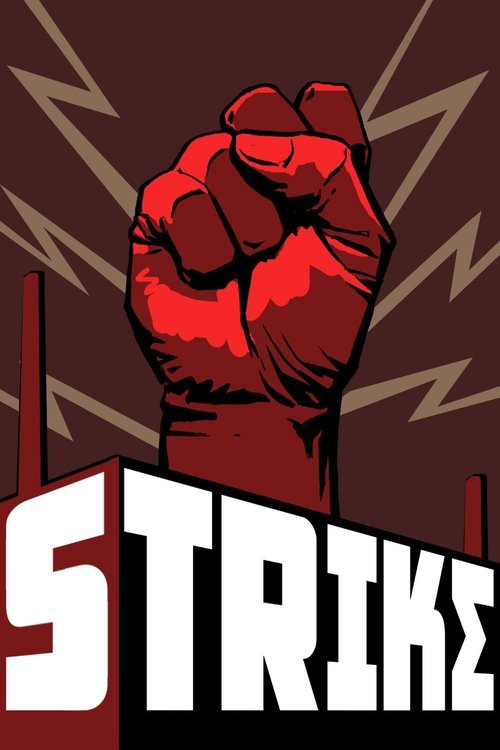



More modern than any film I saw in 2018: it's not enough to show the abuses of the systematic, or merely depict that it exists - you have to see its intricacies and functions. Because then otherwise you're just fighting against thin-air. Notwithstanding that one has to be almost supernaturally talented for a film this brilliant to be their first (at this point I'd argue that Eisenstein is the only genius that cinema produced, but that's for another write-up), you can't show these functions with the traditional western protagonist system - the canon itself is part of the oppression. Not that the maneuver is reactionary: by ditching the protagonist, or characters, or "story", we can get a direct and immediate gateway into how a system or program works - no need for the other nonsense. Character "moments" are only a means to an end - the couple fighting for instance, which depicts not just a couple fighting, but how the breakdown of labour within a capitalistic system still severs your basic relationships - OK, so the workers are on strike at last. But now there's no money coming in, and your family is starting to starve.Strike deserves its own essay - each sequence is an application of a new technique to divulge more on each conceit. Eisenstein has no time even for jumps in time and space here, or placing modernity into history like in October - everything is pure materialism. Not to say the film is completely dry: it's often times quite funny, and the sequence of the eventual strike, with its workers running down the factory, is among the most beautiful things Eisenstein ever filmed. But beyond its stunning images and rhythms, or its ideas, Strike is in a way groundbreaking, not necessarily just for its politics, but that Eisenstein is the rare filmmaker whose understanding of politics and philosophy is as rich as their understanding of cinematic technique. With most filmmakers, its the last of the three. It's difficult to write here - to sum up the film quickly is a complete disservice given the breathe of ideas and moments: perhaps with the greatest filmmakers, you can't put them back into words, and if you can, that speaks of the weakness of the film itself. With these first three films, Eisenstein devoted himself to making great art on releasing oneself from slavery - and it's telling however that Eisenstein would never revisit the sort of defeatism we see at the end here. The point, (or A point) finally, is that the traditional position of the workers and bosses is no different than the relationship between humans and cattle. Later, we see that freedom is possible, but this ending is still incredibly powerful. No silly Christian martyrdom here: your suffering is meaningless, so get with the program, and get with modernity. And of course work is not romanticized: to romanticize it wouldn't be romanticizing the workers but the functions in which they serve the bourgeois. You'd be romanticizing the way they serve <you>, not showing any respect to them. That's why its miserable, and that's why they revolt.









