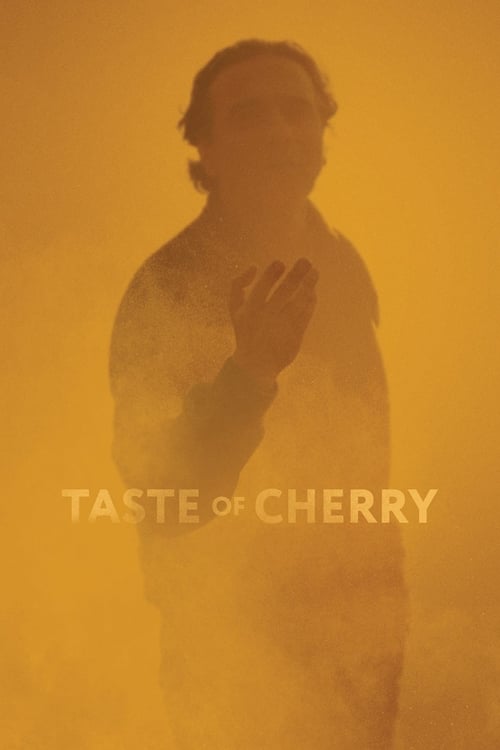
That shot of Mr. Badii's shadow enveloped by the infinite golden-brown hue of the falling earth? Yeah, pure genius.The true definition of a suspenseful film, but with a stronger emotional payoff than your typical keep-you-guessing movie.Deserving of its Palme.
Remember that Kiarostami is a humanist. He is concerned more with the human condition than with the motives of the characters, although he sometimes puts a lot of emphasis on the latter as well. Having said this, if any person has been put to the extreme of deciding to commit suicide, that situation is so tragically empathetic that the motives shouldn't matter. Kiarostami knew this: What would be the difference between a breakup, the assassination of somebody, the loss of a relative, the loss of a job or perhaps another extremely personal and unimaginable tragic event in the person's life? Why should it make a difference, given that the man is determined to take away his own life already? And yet, he still seeks help in this world to assist him in his death venture. This dependency towards the world is ironic, but more predominantly tragic. We are just given pieces of his emotional puzzle. Kiarostami intentionally avoided to give any explanation of his motives, because our moral would step in immediately. However, the issue is that the film is not about judging his cause, but feeling his cause. This statement is spoken with astonishing imagery and his iconic, pervasive, meaningful in-car conversations that he began to master since Life, and Nothing More.Kiarostami's conclusion to the film has been compared constantly to Jodorowsky's destruction of the line between fiction and reality. It is perfectly understandable why it may put people off, as such drastic measure taken by Kiarostami may not work for many, but for me, I always like the line between fantasy and fiction, and reality and fiction, to be broken. At the end, it might not only be a "it's only a movie" message, but an attempt to bring such a realistic and humane story to a much more tangible level of "hyperreality" to the viewer. We are as human as the protagonist, and as any other character portrayed inside the film and in the rest of his filmography.Having watched many of Kiarostami's films, I can personally confirm that, despite the drastic ending, the main intention in his entire filmography remains the same: "Follow your characters". He always follows them. It is not the first time, however, that he breaks the line of film and reality, because "Life, and Nothing More" and "Through the Olive Trees" are connected with "Where's the Friend's Home?" as fake documentaries, treating each past film as a film, and the new one as a reality, until the reality of the new film breaks the past one, posing as fake documentaries. A brilliant thing to do, as in Symbiopsychotaxiplasm, but more humanist, and done with an entire trilogy of films.96/100
we are not alone. time takes us through a journey of pain and regret and moments where it feels like nothing can bring us salvation. and yet, we can look at the sunrise, remember the times where the wind blew through our loved ones’ hair, the way ocean water feels against our skin, how our favourite foods taste. we can remember all the beautiful things that have happened to us, and if we keep going long enough, fighting to survive, to live, we get to make more, things we could never have dreamed of. life is short and long. maybe you’ll feel ready to die when it’s your time, maybe you’ll beg for more life, maybe you won’t make it until the universe decides for you. regardless of how you go and when, it is so beautiful that you have lived at all, had the opportunity to love and be loved and to see the stars shine in the night sky as everything around you seems to stop. we can find reasons to live in the strangest places, the little grace notes of existence. find yours, and embrace it for as long as you can until we fade away.