

Ich dachte einer der erfolgreichsten deutschen Filme aller Zeiten müsste zumindest irgendwas charmantes haben...Nääh. Sogar das Schwäbisch ist fast durchweg zum Fremdschämen. Also sogar noch viel mehr als echtes Schwäbisch.
Der junge Maler Hans ist es leid, dass seine Freundin, immer wieder mit anderen Männern flirtet. Bei einem Maskenball eskaliert die Situation. Er entschließt sich, sie zu verlassen und reist am nächsten Tag in den Schwarzwald, wo er die Sekretärin Bärbel trifft, die für kurze Zeit ihre Tante als Haushälterin bei Domkapellmeister Römer vertritt. Hans wird von seinem Freund Richard begleitet, der ihn mit Malwine versöhnen will. Doch Hans lässt sich nicht umstimmen. Malwine tröstet sich schnell und findet schließlich mit ihrem langjährigen Gesangspartner Richard zusammen, der nun keine Bedenken mehr haben muss, seinem Freund die Frau wegzuschnappen. Hans hat dagegen nicht sofort Erfolg bei Bärbel. Er fühlt sich zunächst von ihr zurückgesetzt, zumal sie mit dem nicht mehr ganz jungen Domkapellmeister, der sie verehrt, den Tanz beim Cäcilienfest eröffnet. Doch als es zu einer Aussprache kommt, steht ihrem gemeinsamen Glück nichts mehr im Weg.
The Black Forest Girl läuft in 1 Kino in Berlin - nächste Vorstellung Mittwoch, 28. Oktober um 15:45 im Eva Lichtspiele.
Nächste Vorstellungen: Mittwoch, 28. Oktober.
Vollständiger Spielplan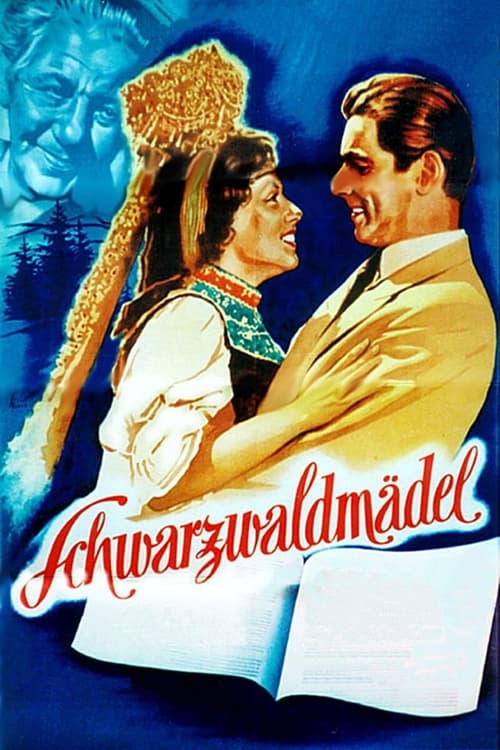
Spielzeiten zu The Black Forest Girl, jeden Morgen aktualisiert
Wähle dein Kino und bekomm einen Hinweis, bevor der Film aus dem Programm fällt.
Ich dachte einer der erfolgreichsten deutschen Filme aller Zeiten müsste zumindest irgendwas charmantes haben...Nääh. Sogar das Schwäbisch ist fast durchweg zum Fremdschämen. Also sogar noch viel mehr als echtes Schwäbisch.

Germany Year One. It might be unfair to bring up Rossellini's masterpiece on top of the review of this harmless (and virtually unknown outside its native country) studio film: poor Schwarzwaldmädel doesn't stand much chance! Yet this huge success at the 1950 West German box office paved the way out of Trümmerfilm (the "rubble film" genre, out of which Germany Year Zero was the strongest example: the most honest, brutal, unforgiving one) for the years to follow.Schwarzwaldmädel is an official jewel of the then burgeoning post-war Heimatfilm ("die Heimatfilm-Legende von 1950" the dvd tagline reads), a genre now not only long fallen out of fashion, but often dismissed as a guilty form of escapism, away from the realities of the recent past and the burning topics of the reconstruction era. And sure enough, one could argue that post-war cinema ought to be more political than the Nazi film industry of yesteryear, not less, and to stick closer to the world, not stand further removed.Adapted from a successful operetta, the story of Schwarzwaldmädel has a crowd of townspeople travel to a typisch Black Forest village around the time of its yearly festival, only to find themselves caught in love triangles and other such troubles. Needless to say, we're multiverses apart from Rossellini's apocalyptic realism. It's also lightyears away from the hallucinatory love triangle found in Veit Harlan's Opfergang, the feverish and morbid masterpiece of nazi melodrama released in 1944.Is Schwarzwaldmädel strictly apolitical, then, as in political by default only: a sugary cover-up for the contradictions of the day? Well, sugary it is, to a fault - complete with ravishing Bollenhuts - and its apolitical spirit is indeed all what's political about it, maybe just in another and slightly better sense. As the film culminates in the parades and dances of the festival, one can feel the grasp, or wishful intent at least, such scenes do have on the world. The manifestations of communal bonding - free from Partei banners, regimented marches and so on that pervaded public demonstrations 'til five years prior - do ring like community life reclaimed by the people after its more than a decade long privatization by the nazi state; it's folk culture freed from völkisch ideology, with the help of cinema. The lack of examination of such intricacies and changes, though - what's a community gathering in 1950 Germany vs 1940 Germany; who was and still is there, who ain't etc. - means this film provides merely a picture, albeit a much needed one at the time, and not yet an image, that is to say, not a thought.

idfk es geht so. die Kostüme sind toll… ja 👍ich habe der Film ohne englische Untertitel angesehen wowwww ich bin so mutig
Ein Maler verliebt sich unsterblich in eine Einheimische und reist in ihr Dorf im deutschen Grünen, wo sie eine gegenseitige Romanze entdecken.
Hans Deppe führte 1950 Regie bei der Musicalkomödie, die im Nachkriegsdeutschland ein Kassenschlager wurde.
Der Film erhielt nach seiner Veröffentlichung frühe Bambi-Auszeichnungen.
Die Verfügbarkeit englischer Untertitel variiert je nach Streaming-Plattform und Vorführungsformat.