I know I am not the first but the comparisons to "Who's Afraid of Virginia Woolf?" are totally on the table but moving that kitchen table aside and into the pantry we really have to talk about the situation in which this couple lives in with constant surveillance and worried of what they have and what they said all pensively ruminated over in every room of there house questioning over and over if they did right and if a loved one screwed them over with a wrong sentiment while dealing with people watching there house and turn them on each other to the wee hours of the morning. Honestly heartbreaking and adds an element beyond a drunken remark that went to far at a party. Really well acted with this give and go flashes of hate and love with such dry harsh dialogue and violence from this couple. So well done and time lined where you feel the wariness and tiresome of the early morning light. It also has a tragic beautiful payoff and all the while the child slept through the hole night. That is the kicker and strong sentiment. So glad I finally caught this but wished for a better quality but maybe that adds to the statement of this low budget political thriller that uses it's sets inventively. All in all I have to say I was pierced by this material cause it captured my ear;)
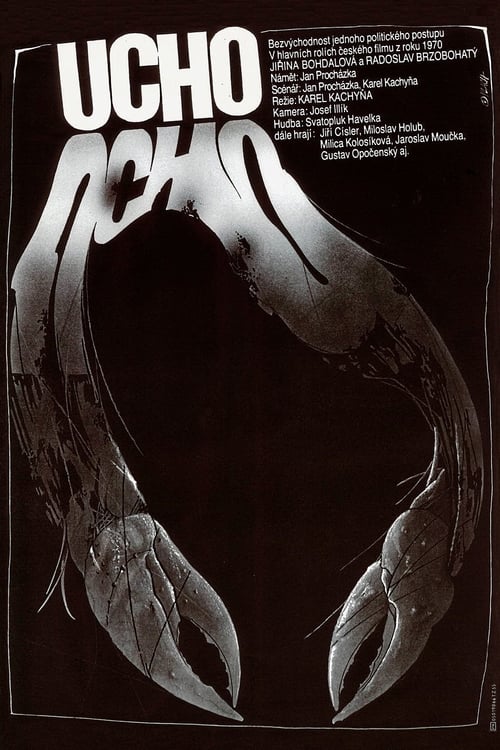
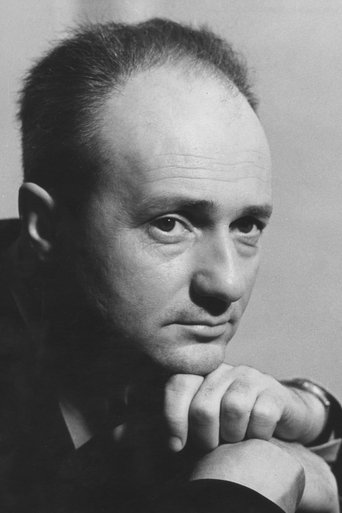
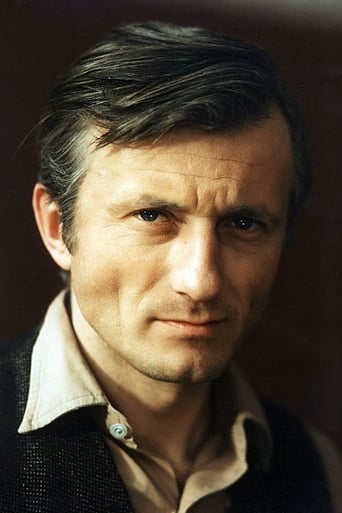
Opening with high-ranking Communist official Ludvík and his drunk wife Anna coming home from a party one night, Ludvík, played by Radoslav Brzobohatý, soon starts to speculate that their home has been put under surveillance by their government. He becomes progressively confident that he is the target for political removal and the direction from Karel Kachyna, which is perpetually visually innovative, exemplifies perspectives which underscore Ludvík's accumulating terror. The uncomfortable circumstances cause new difficulties in the already troubled relationship, and scenes of Anna (Jiřina Bohdalová) insulting him for his timidity and opportunism summon up thoughts of Mike Nichols directed Who's Afraid of Virginia Woolf? The couple's deterioration and the hurling disagreements in their home juxtaposed with Ludvík's subjectivity and clambering paranoia leads to some radical behaviour, and he continually roams feverishly throughout the house chasing after indications of his conversations being listened in on. Czechoslovakia's governing Communist party banned the film in 1970 after a very brief initial release, and the film was not widely seen until after the collapse of the communist regime when it went on to become nominated for the Palme d'Or at the 43rd Cannes Film Festival. Ucho delivers a unique look at existence under totalitarian rule.
Considering the political landscape of Czechoslovakia at the time of the release of the film, the issues The Ear addresses are painfully real, too real even. The fears and the apprehensions that it represents are not artistic license, but the reality of a society being constantly spied upon, suspicioned, and ruled dictatorially. The tale of a low-level civil servant who becomes paranoid his apartment is being tapped after eavesdropping on what appears to be an innocuous remark at a party directly accesses the fear of daily life behind the Iron Curtain.The Ear indeed seems so disturbing with how exactly realistic it is. The film doesn't depend on spectacle, but it confines us to the cramped, decaying realm of a couple's apartment and mind. There is a very strong voyeuristic element at the center of the film, not just because the characters are possibly being watched, but because we the audience are watching them fall apart before our eyes in real time. That tension between the political and the personal is what gives the film its horrifying power.Fundamentally, this is also a slow, agonizing analysis of a marriage. Ludvik and Anna are at one another's throats much of the film, their resentments simmering to the surface during one long, sleepless night. But underlying their bitterness is a painful truth: in a world so whimsical, cruel, and oppressive, they have one another. Their bitterness, their quarrels, even their gentleness, all appear heightened by the freezing knowledge that a mismeasured phrase, a raised eyebrow, or an ill-placed word can put them in prison or kill them.The film sensibly keeps its focus narrow, rarely breaking out of the claustrophobic domestic setting. Other than some flashbacks to the party, we're trapped in the house with Ludvik and Anna, trapped in their quarrels, their silences, and their terror. Those occasional glimpses of the outside world give just enough background to feed Ludvik's paranoia, but never enough so we (or he) can feel safe.The Ear is a political satire and an intensely human story. It's about espionage, of course, but also about fear as a state of being, how it insinuates itself into relationships, erodes trust, and turns the home into a prison. In its subtle, reserved way, it's one of the most searing accounts of life under authoritarian rule and a chilling reminder of how power enforces itself not just through violence, but through silence and doubt.