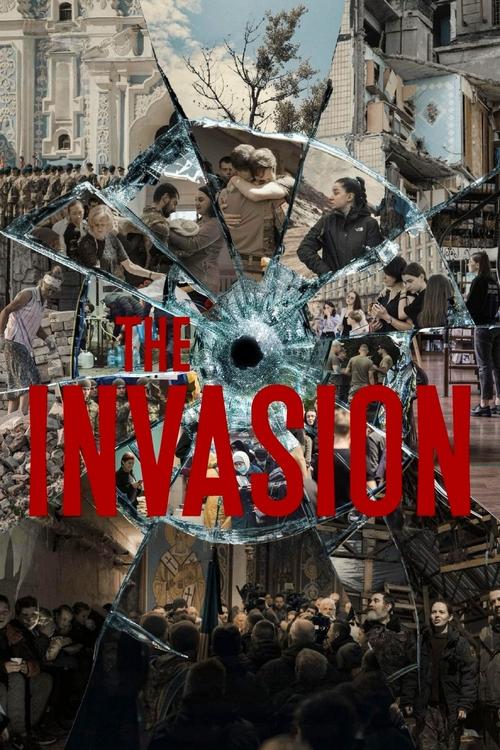
i really was excited for this film having loved 20 days in Mariupol and being so eager for documentation of this conflict. It definitely took too long to get into it, and in the end, did it even really get into anything? so many of these shots were left to linger on screen for far too long. dont get me wrong it Can work, but not for every single scene. no wonder i saw people drifting to sleep around me.For me it just lacked a focus, it lacked going deeper.i can u understand that could’ve been the approach, to be a so called fly on the wall, but this doesn’t work especially at the start and the wedding scene, each angle change felt very set up and not relevant for the amount of time it was on screen, especially with no deepened insight into their own lives.if you just want a surface level view of what is happening, you may love it! but it’s a shame as i feel there were so many missed opportunities to delve into the situations of these innocent people in the school or delivering rations.(it also would’ve been so insightful to see the years/ times everything was filmed. Tracking the progress of the war/ escalations.)but who am to say anything with my doc remaining an idea. slava ukraini 🇺🇦
i went in a bit blind and i was surprised at how much i enjoyed it and yet how unchanged my position on the whole ukraine thing remained. the film is composed of a series of vignettes that follow the life of ukrainians for about a year or so of the war. many, if not all of them, are essentially about the social reproduction of a country at war: schooling children from an air raid shelter, delivering rations to the frontline, rehabilitating soldiers who’ve lost limbs. there are also more straightforwardly wartime scenes: getting people from under the rubble, shooting practice, several soldiers’ funerals and moments of public mourning. in all of them, though, the nationalistic fervour of the ukrainian people is foregrounded—religious fervour, indoctrination, and patriotism abound, colouring every scene. there is a moment where ukrainians are shown casually dropping off their books at a second hand bookshop, which is uneventful at first, but soon it becomes clear that these are mountains of books that are being discarded (most, altho crucially not all, russian literature and history), destined for destruction. i find it hard to know with any level of certainty, in a film like this and not knowing really anything about him, what the director was thinking, and so i need to pass this thru my own preconceptions, but what i got was my own complete detachment from ordinary ukrainians that surprised me. i felt, at times, repulsed by their overt nationalism; and all the way through (with the exception of a few scenes of children or babies), completely separated from any feeling of sadness, pity, or rage at their predicament. and that i think is why i enjoyed the film: it would have been an easy thing to do to show the courage of ordinary ukrainians blah blah but it’s much more interesting to have such an ambivalent work.
Jelenetek a hátországból, kommentár nélkül. Esküvő, temetések, adományosztás, tanítás a fűtetlen óvóhelyen, hadirokkantak rehabilitációja. Jelenetről jelenetre közeledünk a fronthoz, jön a romok alól mentés, aknamentesítés, élet folyamatos lövésektől kísérve, a lerombolt híd két oldalán. Énekelnek benne a Tiszáról. Csak egy jelenetet éreztem keresettnek (téglapakolás naplementében, ágyúszóra), egyébként nincs benne semmi propaganda. Csak a szomorúság.