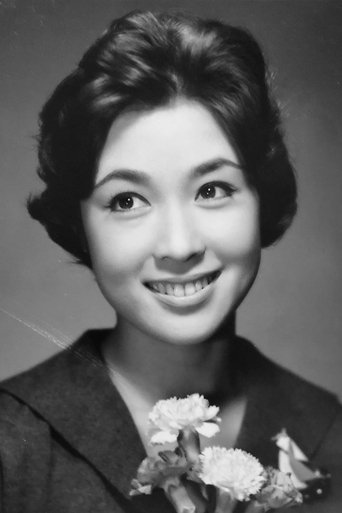
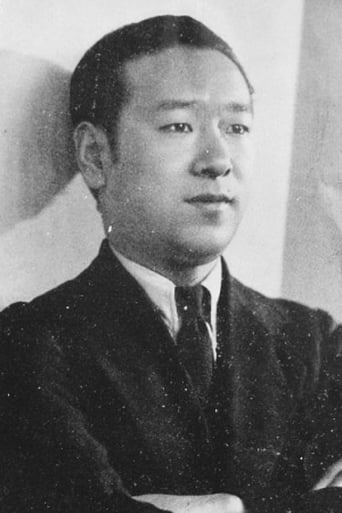
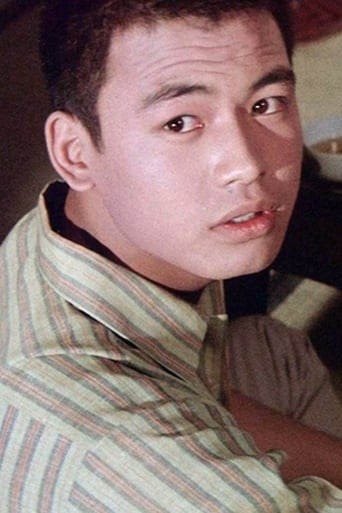
Watch Wakao Ayako’s face in the scenes where her character, Satoko, gives in to the lubricious advances of Jikai, the head priest at the Kohōan. The dissolute Jikai is played by Mishima Masao, an actor with the naturally flushed and shiny complexion of the intemperate drinker. In one sense, the story of Satoko’s life is like that of many other women from impoverished households eking out an existence in Kyōto’s Hachijō-dori, shaped by precarity and by her own awareness of how much her life hinges on pleasing men. Yet, even as she surrenders to the imperatives of survival when Jikai pushes himself onto her, we catch a glimpse of the vivid resistance that glimmers within. As limned by Wakao, the textbook metaphor of resignation is here an image of defiance shrouded in Kansai politesse, not opposed to personal choice. It helps that her director Kawashima has a gimlet eye for the unexpected detail. He frames her in tight close-ups, the camera alive to the smallest flares in the moving phenomenon that is the weather of her soul.Gan no tera (The Temple of the Wild Geese) was adapted by Kawashima and screenwriter Funahashi Kazuo from Mizukami Tsutomu’s novel of the same name. The novel braids the story of a young woman, Satoko, bequeathed, along with a painting of wild geese on a four-panel fusuma door, by an acclaimed artist of birds and wild life to the head priest of the Kohōan, a temple at the foot of Mt. Kinugasa, with Mizukami’s boyhood experiences as a shami, a Buddhist acolyte, to give the reader a vivid sense of life at a small Zen temple. Gan no tera is a fine example of Mizukami's social realist approach, where art exists to make a case for the value of lived, often unrecorded, reality of the very poor in rural Japan.Released in 1962, the year the novel won the Naoki Prize, Gan no tera is shaped as much by Mizukami’s view of life as by Kawashima’s aesthetics of space and how people interact with it. The use of deep focus occasionally places Satoko and Jinen (Takami Kuniichi), the young acolyte who is having a particularly unpleasant time of his Zen training under the corrupt Jikai, far in the background, their lone figures sitting quietly on the engawa, the traditional elevated wooden veranda, their small scale providing a poignant sense of proportion against the colossal sanctuary building, while their fate is being contemplated by men in the foreground. Most scenes take place in the temple interior, presented here through an exquisite interplay of deep shadows, natural textures, and a luminous, white light reflecting off the wide, rustic hardwood planks, darkened to a rich, deep charcoal-black through decades of meticulous hand-polishing and exposure to indoor hearth smoke. In a sly subversion of the so-called “one-corner” style, associated with the Japanese painters’ “thrifty brush” tradition of employing the least possible number of strokes to represent forms on silk or paper and meant to awaken in the mind of the beholder a sense of the vastness of the world and at the same time of peace and contentment (the Zen sense of the “alone”), characters often find themselves crowded out by objects, pushed to the margins of the CinemaScope frame, recessed behind urns and sliding doors and unvarnished, soot-blackened pillars, humanity out of harmony with the world. The tension between the characters seems to fill the space surrounding them with stillness.The camera will occasionally note the gabled rooflines, covered in the beautifully uniform, dark grey, overlapping kawara, of the main hall sweeping gracefully upward and outward and the intricate, unadorned bracketing system beneath the eaves, both pristine illustrations of the austere aesthetics of Zen material culture before cutting to a shot of the priests drinking or Jikai pestering Satoko for sex, effacing the profound sense of architectural grandeur and monastic quietude that has been evoked by the exterior. A composition centring Satoko, foregrounding her against a geometric wooden window grid in which a single, clear opening acts as a frame for shakkei, or borrowed scenery, revealing a stone lantern and the soft foliage of a creep myrtle against the distinct, overlapping curves of the kawara is a rare evocation of harmony.Time, as always in a Kawashima picture, is a subject that invites much ambiguity in its definition. It is anchored in the cycles of nature, but one can never tell exactly what time (year) it is. The way Satoko is treated as “property” to be inherited by one man from another suggests an older, crueller order. The appearance of quintessential markers of modernity like a train, a camera, secondary school boys performing military drill under the supervision of a serving officer is therefore startling in its implications.In Kawashima’s hands the narrative attains to something of that felicity of expression which is the redoubt of folklore. There are ambiguities, silences, and brusque endings truer to the authentic tone and tactility of folklore rather than a period piece with burnished literary bona fides. But beneath the texture of folklore is an unflinching engagement with questions of social hierarchy and freedom.