


For someone drumming for all those years, you'd think he'd be a little more talented.
Regie Volker Schlöndorff
Die Blechtrommel
Ein düsteres, von der Kritik gefeiertes Drama.
Danzig 1927. Der frühreife Oskar Matzerath ist zwar erst drei Jahre alt, aber dennoch ist ihm folgendes klar: Das kleinbürgerliche Leben, das die Erwachsenen führen, kann und will er nicht akzeptieren. Somit hört Oskar einfach auf zu wachsen. Leidenschaftlich protestiert der anarchische Zwerg auf seiner Blechtrommel gegen fanatische Nazis und deren feige Mitläufer. Immer wieder erhebt er seine Stimme gegen die muffigen Spießer der Weimarer Republik und deren derbe Erotik. Seine Stimme ist so laut und so schrill, dass alles Glas in seiner näheren Umgebung zerspringt. Erst als nach dem Krieg eine menschlichere Zeit beginnt, beschließt Oskar wieder am Leben teilzunehmen und beginnt weiterzuwachsen.
The Tin Drum läuft in 1 Kino in Bukarest - nächste Vorstellung Samstag, 17. Oktober um 12:00 im Cinema "Elvire Popesco".
Nächste Vorstellungen: Samstag, 17. Oktober.
Vollständiger Spielplan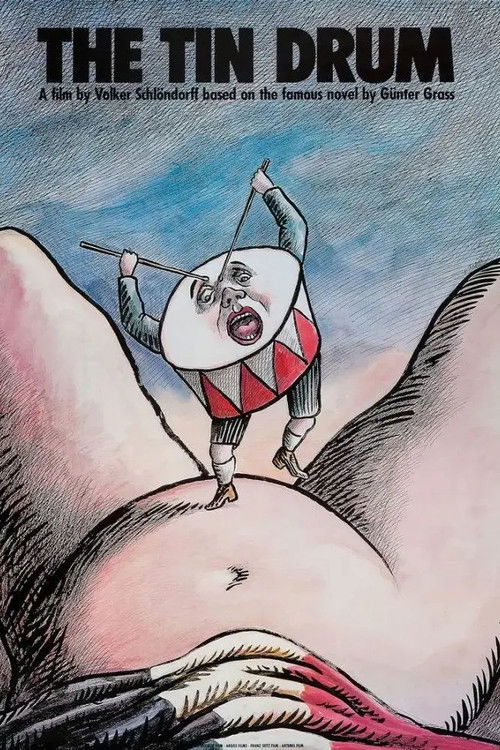
Spielzeiten zu The Tin Drum, jeden Morgen aktualisiert
Wähle dein Kino und bekomm einen Hinweis, bevor der Film aus dem Programm fällt.
For someone drumming for all those years, you'd think he'd be a little more talented.

There are three perfect moments in this film:The first is when Oskar's father Alfred picks up a potato and speaks lovingly of its tumescence. In or out of context, this is so ridiculous and bizarre that it deserves to be heralded as one of the best moments in film, ever. It serves as a minor note of characterization--he follows it up by yelling at Oskar for wanting to read and write, suggesting where his priorities lie--but mostly, it's a man talking about the tumescence of a potato.The second is the much ballyhooed (I love this word) scene where Oskar disrupts a Nazi rally by hiding near the band and drumming so much they end up confused. Everyone waltzes, and the fanatic is left out in the rain. Oskar, having opted out of adulthood, out of all the bullshit he sees around him, sits under the bleachers are created chaos, joy, and music. It's amazingly shot and choreographed, full of contrasts--Nazi red contrasts everything, but especially those blue greys and tans that dominate the rest of the scene. And the third is when Oskar punches his first (ex) love in the stomach. In this moment, Oskar proves that he is as petty and brutal as everyone around him. It's a quick moment, but in that moment, any illusions we have of his innocence die. He serves not as a symbol of childhood or opting out so much as arrested development (hey! that's the name of... a different show). He is Europe in the throes of war, a creature of instinctual appetites and territorialism and spite. He is the stunted growth of the nations, notably of both Polish and German blood--victim and conqueror in one; neither is exempt from this. He has the power to delight with his drum, to disrupt, to destroy with his voice, but he has not the wisdom to use such talents for anything other than his own self.In the end, blood is on his hands, a statement of culpability, and he finally wakes up and decides it's time to grow up.

Restored cut.THE CURIOUS CASE OF BENJAMIN BUTTON ÷ Emir Kusturica's UNDERGROUND + mad pubic hair and sexual taboo = THE TIN DRUM. what a beguiling film... hard to imagine such a resolutely strange, morally ambiguous epic winning an academy award in this day and age. David Bennent's alien embodiment of Oskar is one of the cinema's great child performances, embarrassing the precocious antics seen in infinitely easier fare like BEASTS OF THE SOUTHERN WILD. will review in full for Criterion Corner soon.
Im Danzig des Jahres 1924 stürzt der kleine Oskar die Treppe hinab und beschließt, nicht mehr zu wachsen. Er erlebt den Aufstieg des Nationalsozialismus und den Beginn des Zweiten Weltkriegs aus seiner ganz eigenen Perspektive.
Der Film wurde 1979 von dem deutschen Regisseur Volker Schlöndorff gedreht und gewann sowohl die Goldene Palme in Cannes als auch den Oscar als bester fremdsprachiger Film.
Ja, der Film gewann bei den Internationalen Filmfestspielen von Cannes 1979 gemeinsam mit einem anderen Beitrag die Goldene Palme und wurde mit dem Oscar als bester fremdsprachiger Film ausgezeichnet.