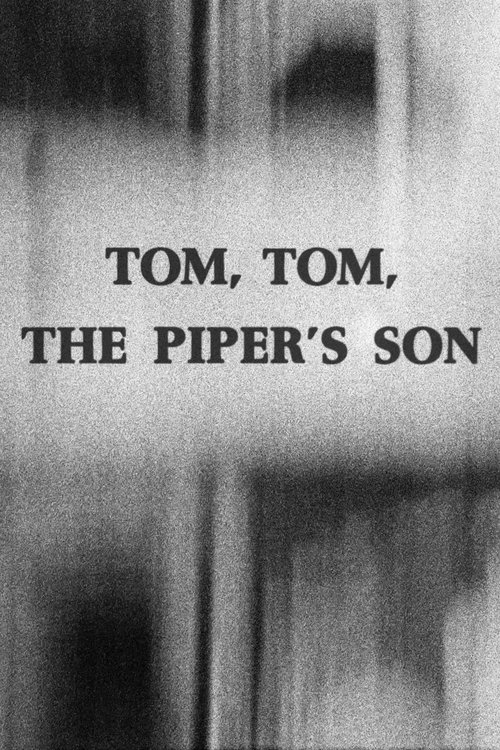
Uma nova revista de cinema.Que deve interessar quem se interessa por cinema.The inclusion of a lie in a work like Tom, Tom, the Piper’s Son is both pleasurable and shocking, because the work presents itself dryly (by showing the original film in full to bookend the 100~ minutes of rephotography). Like the pleasure of texture, the pleasure of uncovering a lie is more than technical, it is physical and rooted in memory and history as an oral fabric to be manipulated at the will of language. Everytime someone speaks a lie is spoken, be it through purposeful omission or warping of events or the constraints of language. The most obvious lie baked into the English language is the singular and consistent first person pronoun. “I saw”, which is the statement most apt for film, is untrue because the self that recounts is not the self that saw, time and the act of seeing has already separated the two selves.--------------------It's only recently that I've come to see some completely different films: two by Michael Snow which excited me very much, Back and Forth and La Region Centrale, although they bear no relation to the kind of cinema I do. I've also been very struck by films of Ken Jacobs (Tom Tom the Piper's Son) and Peter Kubelka (Unsere Afrikareise).
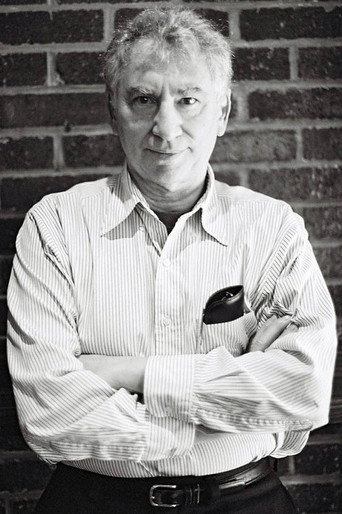
Ken Jacobs (1933-2025)-While Jacobs derives inspiration from the push/pull of modernist painting, the dimensions of movement continuously propel him into the realm of movies and into a confrontation with the most essential yet slippery property of film: time. While the linear trajectory of narrative seems to exhaust the range of times available to commercial cinema, Jacobs offers a full temporal menu.The Nervous System performances, in their hesitation and prolonged stutter between frames, frequently evoke a time struck in the groove, a nightmare of endless repetition. As if freeing themselves from some metaphysical mud, the figures in a Nervous System piece often seem caught in the cycles of the same motion. But in the midst of this repetition one begins to sense the moment of change as the returning flow of time becomes palpable. We skate on the intervals between moments, experiencing time's weight and its release as never before.Equally important, Jacobs occasionally celebrates an empty, "sitting-around" time, captured so eloquently in his Little Stabs At Happiness, made up of 100-foot rolls as they came out of the camera. Jacobs once evoked in conversation the image of a cave family sitting around on a rainy Stone Age day peering out into the drizzle, as the type of essential human time history so often loses track of. While commercial movies seem designed to evoke anxious expectations of an oncoming ending, Jacobs hopes to tune his viewers into the richness of the times that lie between. A moment which promises neither climax nor delay, but which possesses its own weight and presence, provides a utopian image of happiness in a number of Jacobs films.But time in Jacobs' films also involves a complex transaction between the immediate present moment of watching and the distanced past of the film image itself. Nearly every Jacobs film displays its pastness, whether by the actual marks of wear on the print (scratches and dirt particles on the original material play complex and paradoxical roles in the three-dimensional illusions of the Nervous System films), or the sense of history they capture. As the Nervous System pieces and Tom Tom The Piper's Son demonstrate, time can be taken apart, our whole perception of it altered, but it cannot be ignored. Jacobs lacks the romantic's thirst for eternity, and his films constitute a recurring critique of the attempt to deny time. Rather than a liberation, denying the many dimensions of time (or restricting it to only one) becomes an act of oppression.What Marey (a scientist seeking timeless principles and hoping to wrest a system from the apparent randomness of motion) could foresee about moving pictures was their eventual role as the memory of the 20th century. The relation between cinema and memory stands at the center of Jacobs' films and asserts its final paradox. Jacobs is well aware that cinema can be the enemy of memory as much as its embodiment. This paradox is ancient. Plato in The Phaedrus repeated the legend that when Thoth introduced writing as a boon to memory, he was rebuked by the kind of Egypt who recognized that, in fact, writing would bring forgetfulness, since men would now rely on the written reminder and neglect the living memory within them. In the 20th century, the deluge of photographic images has deadened our ability to see, and the constant imaging of the past threatens our experience of memory at the root. Things are filmed and recorded in order to be forgotten.But where danger is, there grows salvation also. Jacobs realizes that these images of the past need not serve only as inert matter, or as totalizing versions of the past. Unlike the written text, film images may be interrogated, not only to reveal their falsity, but to unearth their hidden truth as well. Jacobs crawls inside the images he finds and reveals that the camera really did catch it all—provided we know where and how to look. Psychoanalysis too involves an art of memory, the excavation of those things not only forgotten but repressed from consciousness. In both Freud and Jacobs, the process of recovery never regains the full embodied presence that commercial cinema seems to deliver, but a fragmented story and a consciousness of loss. With this acknowledgment of loss, the past becomes part of our conscious history, and the wounds of time are acknowledged, if not healed. The past exists only in remnants.Jacobs once characterized his role as filmmaker as a dealer in remnants. He jokingly (seriously) described it as part of his ethnic heritage, becoming a retailer of other people's discards, recycling the garbage of the culture. Jacobs' wit here cuts in several directions. Referring most obviously to his use of found footage, this invocation of his Jewish identity resonates with multiple meanings. Forced into the peripheries of society, Jews have always found unexpected uses for those things the culture did not value. From the Orchard Street merchant in fabric remnants, to the turn-of-the-century Jewish immigrants who invested in the disreputable movie business, to Sigmund Freud's valuing of the discards of conscious life (dreams and slips of the tongue), Jews have survived by converting the marginal into the essential.But for Jacobs, remnants primarily speak of time. Remnants are the remains, what is left over, what has survived in a marginal state. Remnants are the traces of time past, of events passed on, the crumbs from the feast. But like the trickster in Jewish legend who makes soup from a stone, Jacobs understands the feast that can be made on what others discard. It is a feast to which he invites us all, freely. And so let us sit and eat. But be sure you have good teeth.Tom GunningMais aqui.