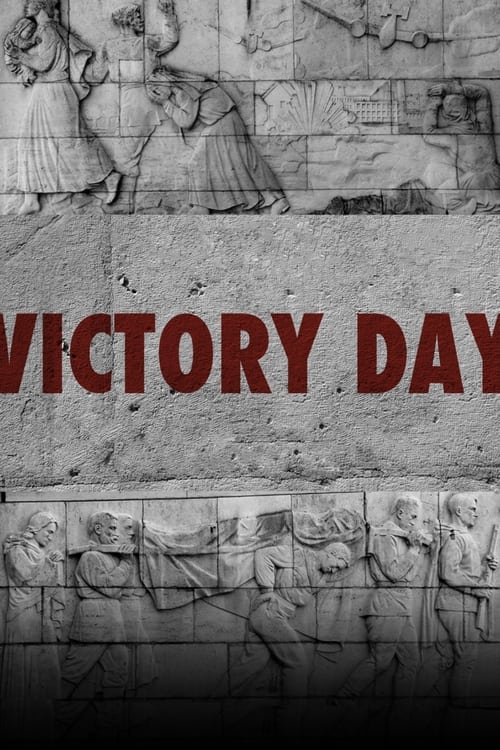
Friend of mine just logged this and reminded me that I never wrote anything about it here. Did jot two notes down on my phone, however (which have been sitting there for eight months), and here they are:Could be any lengthBas-relief, people milling in public space, DV/SL type singalongsFirst note represents a common criticism I level at films with no apparent structure—they all tend to run around 90 minutes, just because that's the feature-length standard, but could just as easily run 20 minutes, or six hours, and would look pretty much the same in either case. Second note just describes this documentary, which is 95% mundane shots of tourists walking through Berlin's Soviet War Memorial (on Victory Day, natch), interspersed with views of various bas-relief sculptures on display. Was momentarily baffled by "DV/SL type singalongs," then realized I meant Distant Voices, Still Lives and was referring to occasional interludes that observe visitors spontaneously (I think) singing anthems that sound like the Russian equivalent of "It's a Long Way to Tipperary." I was immensely grateful for these, as they were the only thing standing between me and a full-blown stupor; maybe those of you who are heavily into people-watching would enjoy this much footage of folks just walking around looking at stuff. I see my friend wasn't any more enthralled than I was. [FINALLY DELETES FUCKING NOTE.]
Never cared much for Loznitsa's work, and yet at this historical moment he might just be the most important filmmaker around; in fact, it probably isn't even a competition, as his oeuvre not only revolves around some of the key historical dynamics given rise to the present war, but also includes a film like this one, set in Germany and exploring topics relevant to the discursive matrix surrounding the war, as one might experience it in one's facebook feed, for example.To be sure, for the most part the victory celebrations, as depicted here, consist of people singing (often extremely beautiful) folk songs and commemorating dead fathers, grandfathers etc. In a way it's precisely this kind of benign anti-fascist backdrop that gives rise to other agendas establishing themselves in its vicinity and I do think it is a strength of the film that there are no clear break lines visible that would allow one to separate individual memories and private sentiment from a proactive and almost always murky repurposing of history.The one scene most clearly connected to the present day depicts a photo shoot of people holding flags of former soviet republics - the ones which are still part of Russia, I believe. At the edge of the frame, someone tries to cram a Ukrainian one in, too, but is getting pushed out (of the shoot, and of Loznitsa's frame, too) by others. Loznitsa does not provide any context for the scene, so it's far from clear what exactly happened there, just as he does not allow us, in another scene, a clear view of the banner presented by a particularly shady group of strong-men-types who seem to be after a "renewed Russian-German union" I think I would rather not see come to fruition.Yet, I think Loznitsa's detached style mostly works to his advantage in this one, because it allows one to focus on the social, rather than explicitly political, interactions of the people visiting the celebrations. Anyway, the most annoying characters are, to no-one's surprise, two German conspiracy theorists. One seems to be Reichsbürger-adjacent (ie right wing), the other one an leftist old-school tankie, and yet the "argument" is exactly the same bullshit in both cases.