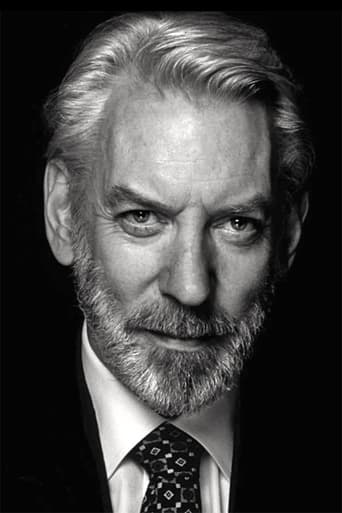

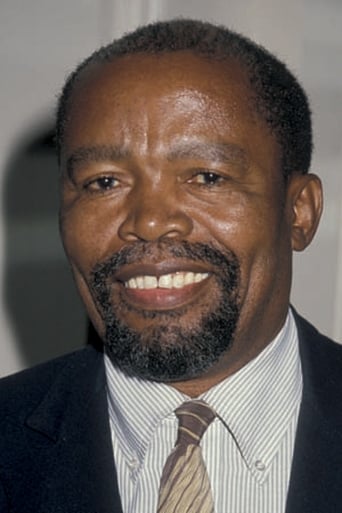


I used to want to express an idea about racism that I found difficult to put into words, and because of that, I often referred to it as complex. The idea was basically that it's not the responsibility of the oppressed to prove themselves worthy, but on the oppressors to stop oppressing. I've recently been able to boil that down to simplicity because Chris Rock put it rather eloquently:Here’s the thing. When we talk about race relations in America or racial progress, it’s all nonsense. There are no race relations. White people were crazy. Now they’re not as crazy. To say that black people have made progress would be to say they deserve what happened to them before.White people were crazy. Now they're not as crazy.My only complaint with that quote is that I feel like the degree of crazy hasn't changed, just the blatantness. I have no idea why this idea was hard to put into words before, except that growing up in a small Alabama town poorly equips a white kid for talking about race. I'm still bad at it. It's not a complex idea. It's very simple. But that idea really turns on its head the idea that a story about fighting racism should focus on the oppressed, which is an opinion I still hold. It's hard to sympathize with the privileged people awakening to their privilege (I've been there; it's embarrassing), but it's also just the sort of story that is told all the time in lieu of telling the stories of anyone else at all. It's not that the story of a white man realizing how fucking awful his government, culture, and society (and self) are is an unnecessary or even particularly offensive story; it's just that that story often takes pains to exclude the stories of the people that society is already marginalizing. It inadvertently (or perhaps not) furthers the same culture of self-congratulation and denial that allows racism to continue to flourish.But. Chris Rock is right. White people need to wake up and stop being fucking awful. To suggest that it's not a meaningful message to show a white man wake up and stop being fucking awful could potentially prevent some white men from waking up and stopping being fucking awful. So I will grudgingly admit there is some value to these stories. And to be fair, I'm white and need to stop being fucking awful. No matter how much less crazy I become, I can always been even less crazy.What I like about this film is how it really jumps right into the ugly morass of oppression. It shows brutal oppression that it does not flinch from depicting openly, earnestly, and unpleasantly. It does not give you the option of thinking it's not that bad. It shows the duplicity, manipulation, and violent coercion that ruling classes resort to, and it shows the societal pressures of the ruling classes amongst their own. It's bold and upfront about the facts of apartheid. It also features Zakes Mokae, a character actor too often relegated to minor roles, as a strong presence. He is not overshadowed by the white actors who get top billing (and feature on the poster!); if anything, he contrasts with Sutherland in a way that shows how bad Sutherland's accent really is. He is perhaps the most complexly depicted black character in the film, but it's better than most. He is not a wise mentor figure, nor is he the tragic sacrifice to save the white man. He's a leader, not a mystic or a clown or an angry caricature. While the film could stand to have focused more on him (and others), his presence is strong enough to make this not feel like a self-aggrandizing vanity project for Sutherland, Brando, or Sarandon. There are some moments that feel especially awkward at times. Flashbacks to scenes we've already seen stand out badly, and certain aspects of the story are heavily telegraphed. But there are other moments of skilled direction--a montage of witnesses gives some depth to underused characters, the tension of the final ruse, the beautiful shot of the protests converging early on--that break through the Hollywood dumbing down of plot and character that feel like they were inserted by clumsy hands. It's my instinct to give credit to the director for the good parts of any film and credit for the bad parts to Hollywood studio interference; I'd feel bad about that if it weren't for the damning fact that this is the only fuck Hollywood ever seemed to give about apartheid. Of course they hedged their bets.It's a good film, if not perfect, is what I'm trying to say, and it doesn't treat this like a movie-of-the-week, or Oscar bait tripe, or an after school special. It's direct and confrontational, but it has to be. Its central conceit is not the white man's awakening, but the struggle against apartheid. It simply uses that old trope as an excuse to tell a tale that would probably not have gotten told on such a large scale otherwise. What attracted me to this film, other than the fact that it was directed by Euzhan Palcy, who made the great Sugar Cane Alley, was that it was the only anti-apartheid film made by Hollywood during Nelson Mandela's years in prison. There were, I am sure, people in Hollywood patting themselves on the back for this film. There were people in Hollywood so pleased with this film, and happy to offer it awards. It is the classic example of a film that should be Oscar bait tripe, but somehow, Euzhan Palcy tricked them all. She made a passionate depiction of oppressed people fighting back despite the limitations of the story and because of them. Those people patting themselves on the back should look back in shame that this was the only film they managed to make about this subject, and god knows, my sanctimonious ass could stand to do more, too.The first thing you'll hear about this film from most people is that it convinced Marlon Brando out of retirement. Think about that: a film that is the first major film directed by a female African-American director in Hollywood, the only film made about apartheid before Mandela was released, and the argument for its notability you hear from so many is that it convinced a famous white man to work for scale. This film bears the proud distinction of having been banned in South Africa, but Marlon Brando is most people's go-to for validating it. Euzhan Palcy literally risked her life to make this film. Marlo Brando showed up and looked frustrated for a few days on camera. He was good, sure, but she didn't need him to validate this film. This could be better, but she still did something no one else was able to do at a time when it had impact. February count: 2/28