
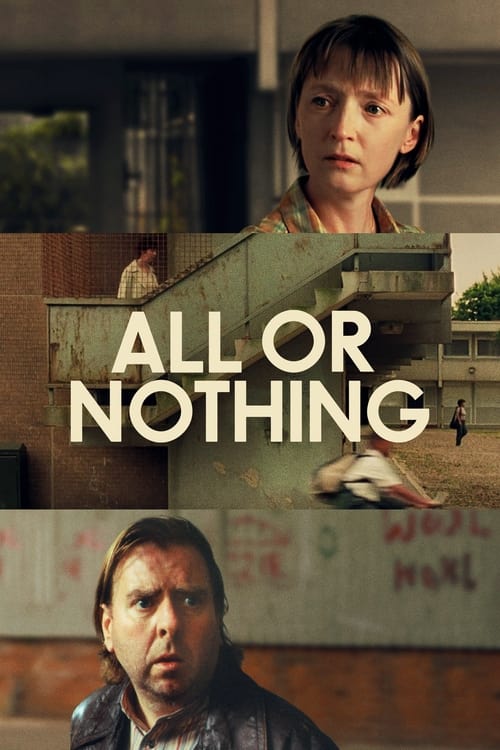






Perhaps the greatest strength Mike Leigh's films have are their casts. He finds people who are beautiful without the traditional magazine sheen, and he casts them with all of their flaws and quirks and sad eyes in things that draw from reality rather than fantasy. This is a film filled with sorrows and a weariness that is at times difficult to watch. Melodramas are supposed to be larger than life, full of huge emotions that emphasize the intensity of human interaction, derived from events as big as the emotional content. Leigh's film should be a melodrama--it has a few events that seem like they should be the focal point of some Sirkian or Fassbinderian* sprawl--but it comes across instead not even as drama but as something coming closer to reality. The emotional moments feel powerful, but they don't come with theme music, in other words. This isn't a story so much as a portrait. Poor (or at least not remotely rich) human beings and all their difficulties, from romantic entanglements to health issues, slowly but surely unfold before us, with the emptiness of rote and necessity playing the largest role here. The silent suffering of Penny is perhaps the most damning indictment of society in the film; what it took to bring her to such quiet, awful pain is unfathomable. What it takes for her to begin to see it is heartbreaking. She is the human embodiment of the working class suffering that pervades the capitalist world, certainly, and probably more, the crushed, sometimes nearly catatonic depression of an entire world wrapped up into one person, lost in a tense marriage, scorned or ignored by those she works so hard for. Her husband is an equal match of quiet desperation, but his pain is less evident at first. He seems to be an intelligent person but strangely naive. The two of them together seem almost doomed.But the film has a few small moments in it that dispel the depth of the despair present. There are people here who care for each other. It's not a cure for their misery, but it's a light spot in an ocean of bleakness and pain. If this were, say, a Bela Tarr film, the agony would never cease, but Mike Leigh shows us neighbors rushing to the aid of a young man in physical crisis and a mother comforting her pregnant daughter and two people finding the strength to say "I love you" after decades of emotional erosion. It's not a hopeless existence; it's just a hard one.December count: 99/100.* Sometimes, I feel bad for what I do to words.









