




and they were cousins
Χρησιμοποιούμε cookies για να προσαρμόζουμε την εμπειρία σου και να μετράμε την επισκεψιμότητα. Μπορείς να εξαιρεθείς όποτε θέλεις.
Σκηνοθεσία Wong Kar-Wai
As Tears Go By
Ατμοσφαιρικό, θρυλικό δράμα
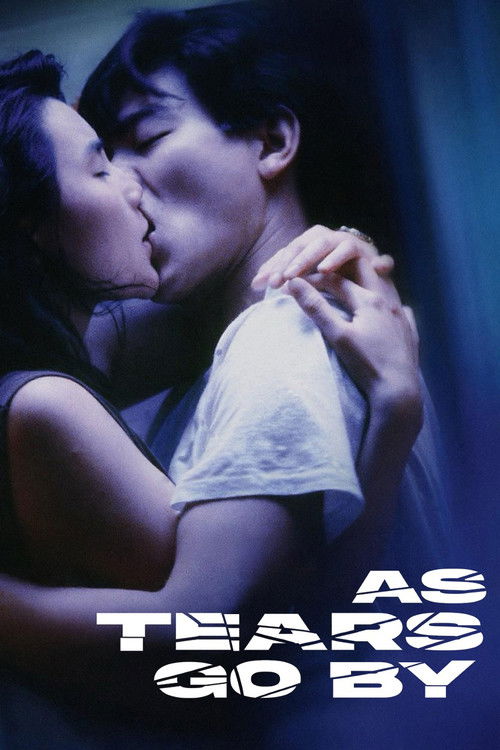
Ο Γουάχ δέχεται την επίσκεψη της δεύτερης ξαδέρφης του Νγκορ, από το νησί Αντάου, η οποία έχει να κάνει κάποιες ιατρικές εξετάσεις και μένει για λίγο σπίτι του. Ο Γουάχ μαζί με τον φίλο του "μύγα" είναι μικροαπατεώνες και o "μύγας" μπλέκει συνεχώς σε μπελάδες από τους οποίους τον ξεμπλέκει ο Γουάχ. Όταν η Νγκορ επιστρέφει στο νησί της, ο Γουάχ πάει να την επισκεφτεί. Ύστερα από ένα παθιασμένο φιλί αρχίζει μια ερωτική σχέση, η οποία, όμως, διακόπτεται κάθε φορά που ο Γουάχ πρέπει να γυρίσει στην πόλη για να ξελασπώσει τον "Μύγα"...
Η «Καθώς Κυλούν τα Δάκρυα μας» δεν παίζεται σε κινηματογράφους αυτή τη στιγμή.
Ακολούθησε την ταινία στην εφαρμογή για ειδοποίηση όταν προστεθούν προβολές.
Προβολές για Καθώς Κυλούν τα Δάκρυα μας, ενημερωμένες κάθε πρωί
Διάλεξε σινεμά και πάρε υπενθύμιση πριν κατέβει.


and they were cousins

It's a testament to Wong Kar-wai's skill as a filmmaker that this very mediocre Hong Kong triad film is still beautiful and frequently filled with genuine romantic yearning. What can I say? I'm a sucker for swooning synth sounds and dreamy neon photography. Also Maggie Cheung. 🥺

“None of us knows what’s going to happen tomorrow, right? Let’s eat.”It began, as all great careers should, with Maggie Cheung showing up on Andy Lau’s doorstep in a cotton face mask — and what better to set the tone for Wong Kar Wai’s filmography than a little social distancing? It’s easy to understand why people are quick to dismiss Wong’s debut as a foot-in-the-door movie beholden to the conventions of ‘80s Hong Kong crime thrillers (the film’s plot invites “Mean Streets” comparisons that haven’t extended to its place in the canon). “As Tears Go By” remains a fascinating document of a young artist trying to articulate his own identity through a language that lacked the vocabulary he needed — a language that he would ultimately have to invent. Tentative and brash in equal measure, it tells the story of mob enforcer Wah (Lau) and the delinquent best friend Fly (Jacky Cheung, a rolling wave of destructive id in the Robert De Niro role) who keeps threatening to get them both killed by the rest of the triads.The ins and outs of it are a little more complicated, but Wong can’t be bothered to sweat the details; he’s more interested in the rush of a camera through a snooker hall chase sequence, the “what might have been” that Cheung’s character offers from her seaside perch on Lantau Island, and the melted cheese of the Cantopop soundtrack that’s gooey enough to take your breath away. The gunplay and its attendant nihilism seem like afterthoughts compared to, say, the match-cut that transforms a paper airplane into a commercial airliner, or a gang fight that’s step-printed to abstraction. Many of the shot compositions in “As Tears Go By” reflect a conventionality that would soon disappear from Wong’s lexicon, and the broad melodrama they support (“I destroyed your baby!” a woman yells while thunder claps in the background) would mercifully dissolve into the atmosphere by the time the sun rose on “Days of Being Wild.” The haunted essence of Wong’s cinema — the sense of letting another life slip through your fingers — is here on full display. It’s possible that “As Tears Go By” is more rewarding to excavate than it is to watch (or perhaps it’s simply impossible to see outside of the context of its director’s career), even if Wong’s lifelong refusal to judge his characters whether they’re mob goons or cops or hitmen or home invaders or belligerently drunk David Strathairns adds a rich new wrinkle to a genre that’s long on blood and short on heart. It’s understandable that “Days of Being Wild” is seen as the birth of the Wong Kar Wai we’ve all come to know, that view unfairly dismisses the work he did to get there. In hindsight, it’s even more fascinating to see Wong find his rhythm amidst the noise of mainstream cinema than it is to see him conduct on his own terms for the first time.
A mid-level gangster balances his loyalty to his volatile partner-in-crime with a budding, complicated romance with his visiting cousin.
It was directed by Wong Kar-wai in 1988, marking the feature film debut of the acclaimed Hong Kong filmmaker.
While it features elements of the triad genre, it functions primarily as an atmospheric character drama and romance.