Mood
Ρώτα το Mood

Σκηνοθεσία Alfred Hitchcock

Σκότωσα για την Τιμή μου

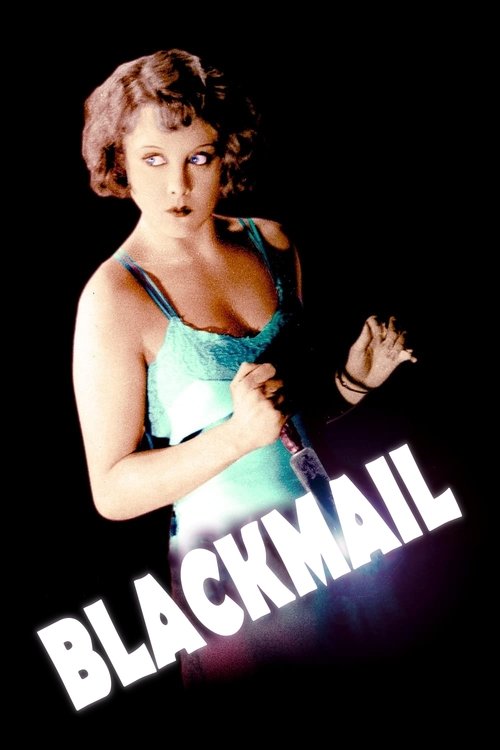
Blackmail

Αργό, μουντό δράμα

Λονδίνο, 1929. Ο Φρανκ Γουέμπερ, ένας πολυάσχολος ντετέκτιβ της Σκότλαντ Γιαρντ, φαίνεται να ενδιαφέρεται περισσότερο για τη δουλειά του παρά για την Άλις Γουάιτ, τη φίλη του. Νιώθοντας ότι αγνοείται, η Άλις δέχεται να βγει με έναν κομψό και καλομαθημένο καλλιτέχνη, ο οποίος την προσκαλεί να επισκεφθεί το φανταχτερό διαμέρισμά του.

Letterboxd

Πού παίζεται

1

Η «Σκότωσα για την Τιμή μου» παίζεται σε 1 σινεμά στην πόλη Λος Άντζελες — επόμενη προβολή Κυριακή 26 Ιουλίου στις 14:30 στο Academy Museum of Motion Pictures.

Κυριακή, 26 Ιουλίου

Χειμερινό

Ώρες προβολών για την Σκότωσα για την Τιμή μου

Σκότωσα για την Τιμή μου

Find more films like Σκότωσα για την Τιμή μου

Showtimes in your city.

Download on the App StoreGet it on Google Play

Συντελεστές

6

Κριτικές θεατών

theriverjordan3.0

Hitchcock finds himself caught in his own handcuffs with “Blackmail.”He’s saved in an astonishing magic act by a single word, perhaps the most important one ever uttered in British cinema: “Knife. Knife. Knife. Knife. KNIFE!” The single syllable, repeated again and again in the background babble of a scene of “Blackmail,” terrorizes a woman who has just committed murder. And, Hitchcock’s employment of that sound defined how sound itself could be used in all cinema to come. Much of the rest of “Blackmail,” however, is drowned in the din of the birth of the talking picture. Arrested by studio expectation to create one of Britain’s first sound features, the director cedes style to formality in “Blackmail.” The work has moments and ideas that could be claimed only by its director, though the work as a whole feels staid and muted, as Hitchcock’s voyeur of a camera now needs a sound booth as an escort. Beyond repetition of previous structures and themes, most notably the explosion of “The Lodger,” there is little that distinguishes “Blackmail” as extraordinary, beyond its extra historical significance as Hitchcock’s first sound feature. His camera seems more planted to take photographs than it does to capture film. The director’s yearning for motion is almost palpable. In a very Hitchcockian development to the story of “Blackmail’s” production, its most notable moment of stylistic freedom was done in darkness. “Blackmail’s” distinctive chase scene through the British Museum (one that very much portends Hitchcock’s most famous chase decades later in “North by Northwest”), used the Schüfftan process; a technique kept totally secret from the producers of picture. Most famously utilized by Fritz Lang in “Metropolis,” the trick of mirror and prolonged lens exposures not only allowed the director to film in a location of low light, but also are the most evident remnants of Hitchcock’s German Expressionist roots. Through the darkness, though, while the camera could not yet entirely follow, there is one word that still echoes. Knife. Knife. Knife.

SilentDawn2.5

45/100 An awkward and glacial early-Talkie by the great Alfred Hitchcock. A sharp and vicious opening leads to a film that is built out of flashes of brilliance and prolonged stretches of frazzled, diffuse dialogue. Not his best work by any means, but his cameo is particularly fun.

Will Sloan4.5

"KNIFE... KNIFE... KNIFE... KNIFE... KNIFE... KNIFE... KNIFE..."One of the early films in which Hitchcock established how FUNNY it is when people are haunted by guilt and paranoia, an insight that would separate him from all the other directors. Also one of his most visually striking movies! Keep an eye on a young director from England named Alfred Hitchcock!

Συχνές ερωτήσεις
What is Blackmail about?+

Alice White, a young London woman, kills an artist in self-defense after he attempts to assault her, only to be blackmailed by a stranger who witnessed the event.

Who directed Blackmail?+

Alfred Hitchcock directed the film in 1929, marking a pivotal transition in his career and British cinema as he moved from silent films into the sound era.

Has Blackmail won any awards?+

While it did not receive modern prestige awards, it is historically recognized as a landmark in British film history and one of the first successful British sound features.

    We use cookies to personalize your experience and analyze traffic. You can opt out at any time.