The greatest line in all of cinema is "Aniki says we must go to war with the cholos".
Ένας Ιάπωνας γκάνγκστερ των Yakuza εξορίζεται από την πατρίδα του στο Λος Άντζελες, όπου τον υποδέχονται ο μικρός του αδερφός και η συμμορία του τελευταίου.
Η «Brother» παίζεται σε 1 σινεμά στο Λονδίνο - επόμενη προβολή Τετάρτη 28 Οκτωβρίου στις 18:15 στο Prince Charles Cinema.
Επόμενες προβολές: Τετάρτη 28 Οκτωβρίου.
Πλήρες πρόγραμμα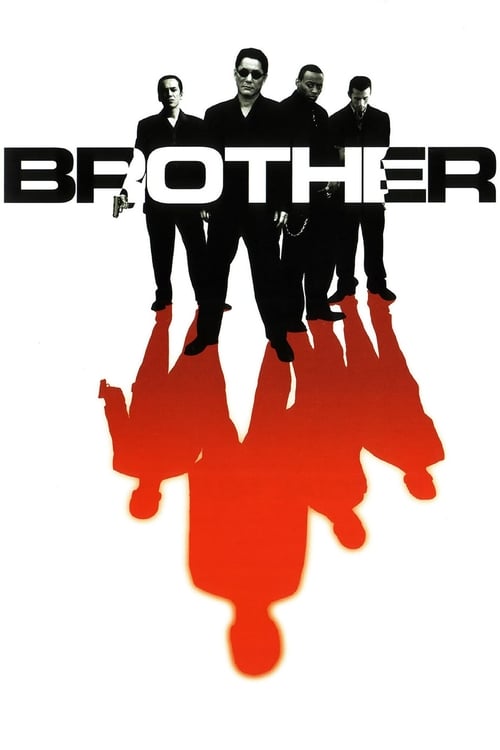
Προβολές για Brother, ενημερωμένες κάθε πρωί
Διάλεξε σινεμά και πάρε υπενθύμιση πριν κατέβει.
The greatest line in all of cinema is "Aniki says we must go to war with the cholos".

🧡 = Technical Merit (Cinematography | Editing | Musical Score)🧡 = Artistic Vision (Mood & Atmosphere)🧡 = Personal Affect (Style | Influence or Change in Perspective)***SPOILER ALERT***There is a scene in the second act of Brother in which Yamamoto/Aniki's lieutenant (as well as right hand man and closest thing to a friend) Kato, having failed to convince dangerous rival Shirase to join his boss, ponders his next move for a brief moment before excusing himself under the pretext of having to tend to a personal matter. A half-hearted plea by his boss to get in the car is repeatedly and respectfully rebuked. As the limo containing the rest of the gang pulls away, and with Kato having stayed behind, the camera fixes on Aniki's stony face in the backseat. It stays there long enough to suggest he is all too aware of what will ensue. Kato would beg for Shirase to reconsider at any cost-- including forfeiting his life. Anything to keep his boss from losing face. It's his tragic role in the hierarchy of the rigidly stratified Yakuza world (and more broadly, the traditional Samurai culture from which it descends.)Loyalty, honor and shame are the three major forces perpetually pulling our characters in different directions, and Aniki's zen-like tranquility suggests a quiet acceptance of these forces as bigger, more powerful than himself.I remember having watched Brother years ago and interpreting the film as "The Rise and Fall of Aniki and co."-- a Scarface-like, American Dream story arc of a bad dude building a criminal empire from the ground up and reaching lofty highs before its inevitable crash.This recent viewing, however, suggests that Brother is instead pure tragedy from its first frame. It registered more as "The Explosive Self-Destruction of Aniki" and plays out as a 2-hour-long unraveling of a character who no longer fits in, going out in a blaze of glory. In much the same way as a Ronin (in feudal Japan, a Samurai who has lost his master) loses his purpose in society and is left to choose his next move-- a shameful life of commonality, thuggery or suicide, the very first scene in the film showing Aniki's arrival to LA heralds not a new beginning, but rather a long, drawn out ritual suicide by a means of his choosing (not drugs, not alcohol, not gambling, not women)-- his own sensory addiction and the one thing he both excels at and is inextricably linked to: violence. Aniki chooses to burn out, not fade away. Language barrier or not, he is figuratively deaf to the variety of characters talking at him and is undeterred in his determination-- without batting an eyelash at what would ensue, catapulting the characters orbiting him towards a logical end. "We're all going to die", he says to his Western minions with a sorrowful smirk on his face. By design, it was always going to end this way-- they just didn't know it, and were just coming along for the ride. PS: Joe Hisaishi score, wine bottle scene, and staircase "Denny, shoot! Shoot!" scene are absolutely sublime. Also, the production suffers somewhat from a transcontinental disconnect (owing to Kitano's English language limitations, for one), resulting in a sometimes cartoonish heavy-handedness on the part of the American production unit, and a somewhat warped interpretation of the director's vision. While short of disowning it, Kitano has expressed dissatisfaction with the production. It would be his first and last outside of his native Japan.Film Scores by Famous Musicians 🧑🏼🎤

With Takeshi Kitano and Joe Hisaishi working together the outcome will always be heavenly Picked this up from the BFI gift shop whilst we were in London and it was definitely a good choice. Kitano always packs so much emotion into his films that you don't find in most English speaking gangster films.
Ένας εξόριστος Ιάπωνας γκάνγκστερ της yakuza ταξιδεύει στο Λος Άντζελες, όπου συνεργάζεται με τον νεότερο αδελφό του και μια τοπική συμμορία του δρόμου.
Το Brother σκηνοθετήθηκε από τον Ιάπωνα σκηνοθέτη Takeshi Kitano το 2000.
Το Brother έκανε πρεμιέρα στο Φεστιβάλ Κινηματογράφου της Βενετίας το 2000.