

Dear turtles,I apologize on behalf of the human race.Sincerely,Sally Jane Black
We use cookies to personalize your experience and analyze traffic. You can opt out at any time.

Σκηνοθεσία Ruggero Deodato
Cannibal Holocaust
Τραχιά, σκληρή ταινία τρόμου
Ένας καθηγητής ανθρωπολογίας πηγαίνει στη ζούγκλα του Αμαζονίου για να εντοπίσει 4 ανθρώπους που πήγαν εκεί για να γυρίσουν ένα ντοκιμαντέρ και έκτοτε χάθηκαν τα ίχνη τους. Δυστυχώς θα βρει μόνο το υλικό το οποίο τράβηξαν και όταν επιστρέψει στη Νέα Υόρκη, θα παρακολουθήσει το βασανισμό της ομάδας από τους ιθαγενείς
Η «Το Ολοκαύτωμα των Κανίβαλων» δεν παίζεται σε κινηματογράφους αυτή τη στιγμή.
Ακολούθησε την ταινία στην εφαρμογή για ειδοποίηση όταν προστεθούν προβολές.
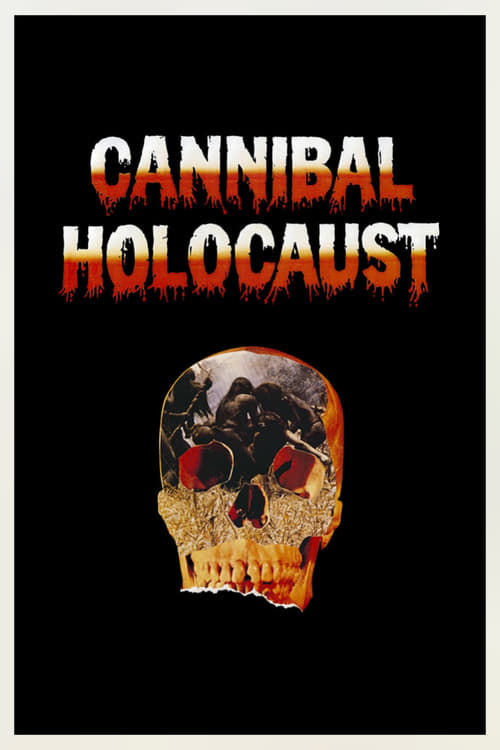
Προβολές για Το Ολοκαύτωμα των Κανίβαλων, ενημερωμένες κάθε πρωί
Διάλεξε σινεμά και πάρε υπενθύμιση πριν κατέβει.


Dear turtles,I apologize on behalf of the human race.Sincerely,Sally Jane Black

"Hey, intentionally malicious and violent acts are being done on camera to shock audiences these days - let's make a movie to point out this exploitation!"*intentionally does malicious and violent acts that are being done to shock the audience for a movie about how that's supposed to be wrong*
The native performers weren't paid. They were berated and treated like shit. The other actors were barely paid and also treated horribly, and everyone was subjected to acts of violence no one should have been experienced. The way the tribes were portrayed is inaccurate and inhumane, racist caricatures. The director's attempt at a meaningful critique of Western culture, media, and capitalism is lost in the execution of the film. Other films in this genre tried to derive the horror from sympathy with the victims. In this, the filmmakers wanted to make a film that derives horror from sympathy with the cannibals. It's an idea that is both trite and profound at once, too obvious to work and too accurate not to. White supremacy, which fueled the filmmaking, is depicted here without frills. The major flaw--and it is a grotesque one--is that the film portrays the native people as brutal in their own ways. This is not to say that no native people were capable of brutality, nor to say that all native people lived in matriarchal societies, but to say that as an encapsulation of the relationship between white supremacy and indigenous people, this film fails to capture the gulf between them in terms of brutality.White supremacy is the burning of people in their homes, the rape and murder. It is the massacre of the innocents, the stealing of their food, the intimidation, the true depths of horror shown here. It is the valuing of footage and ratings over people. But the film shows forced abortion, ritual patriarchal murders, and non-endocannibalism being partaken by the tribes portrayed, and none of that is an accurate portrayal of those particular tribes. It takes the film from the realm of a critique of/portrayal of white supremacist violence to misanthropic nihilism. Knowing that Deodato and the other filmmakers behind this were racist and exploitative reveals further the lies inherent here. This film, as I wrote before, devours itself. This film is too narrow a lens, seeing only a critique of journalistic ethics and media while still indulging in the violent bigotry that fuels that lack of ethics. It is an incomplete depiction, and for that, it suffers. And yet, it still feels impossible to turn away. The transgressive atrocity before us captures a deeply buried sense of disgust that few films can awaken. It is everything one expects of its reputation: gratuitous, gory, unflinching, uncensored, raw, misogynist, racist, stomach-churning, cruel, exploitative, vulgar, vile, truly horrible in every sense of the word. It leaves you feeling unclean and angry, outraged by its almost accurate portrayal of imperialist violence and still disturbed by the camera's refusal to turn away. If only it had the insight to capture the full context of that horror, it would be a masterpiece. Instead, it's white arrogance betraying itself on film.
An anthropology professor ventures into the Amazon rainforest to find a missing documentary team and returns with the harrowing footage they left behind. Watch Cannibal Holocaust on Mood.
The film was directed by Italian filmmaker Ruggero Deodato in 1980, known for his controversial contributions to the cannibal sub-genre.
Yes, it is widely cited as one of the earliest and most influential examples of the found footage technique.